Work begins on Mersey River Wind farm in Milton

A test tower collecting wind data on the site of the Mersey River Wind farm in Milton. (Renewall Energy)

The Mersey River wind farm in Milton has finally broken ground, with crews getting the site ready this fall for when turbines are delivered next year.

“We are moving forward with the construction of the wind farm,” said Dan Roscoe, CEO of Roswall Development, the company that plans to install 33 windmills on Crown land west of the Mersey River.

“What will take place over the coming weeks will mostly be work on roads and grading, and we’re going to get as much done as we can before the snow flies. It’ll probably take us into  the first week or two of January until we have to shut down, and then we’ll pick things up in probably March or April.”

Once the windmills are operational, Queens County residents will be able to buy power directly from Roswall’s subsidiary Renewall Energy.

Renewall promises that its rates will be lower and more stable than Nova Scotia Power’s. Hundreds of people have already signed up to be among the first residential customers, and the company also has agreements with more than 30 commercial, industrial, and government customers. The Region of Queens Municipality is one of them.

Roscoe told QCCR this week the company is in talks with about a dozen more big users.

“We’ve been engaging commercial and larger customers for some time, and that has continued. We continue to sign up new customers.”

Renewall sent out notices this week to people on its mailing list and to other local groups to tell them they’d be working at the site in Milton.

Roscoe said they’re still on schedule to have the wind turbines delivered by fall of 2026. He says people are excited about one of the first big wind projects in Nova Scotia that will sell power directly to homeowners.

“So it’s a big milestone for us, and I think it’s a big milestone for Nova Scotia. I think there’s a lot of interest in having choice of who we can buy electricity from. So we think it’s exciting for both electricity customers in Nova Scotia and the renewable energy industry in general.”

In 2021, Renewall was the first in Nova Scotia to be awarded a licence to sell power directly to consumers under the Renewable to Retail program introduced by the provincial government in 2015. The program allows companies to supply electricity directly to consumers while paying Nova Scotia Power a tariff for use of their grid.

People can sign up for updates on the project on the Mersey River Wind website.

Email: rickconradqccr@gmail.com

Listen to the audio version of this story below

Water-saving bid continues as Region of Queens ponders alternatives, relief

The Region of Queens is considering using Nickersons Pond and the Herring Cove Lake watershed area as a source for non-potable water. (Rick Conrad)

Despite recent rain showers, the Region of Queens is still struggling with low water levels in the Town Lake Reservoir.

On Wednesday, it continued voluntary water conservation measures that have been in place for a month.

The region is asking its 1,200 customers in Liverpool and Brooklyn to use less water.

In an update on its Facebook page on Thursday, the region said water levels continue to drop.

Almost 47 millimetres of rain has fallen in the area in the past week, according to Environment Canada.

“At full capacity, the Town Lake Reservoir has a maximum depth of nine feet above the water intake pipe,” the region wrote in a Facebook post

“At present, the water level is at six and a half feet. If levels reach five feet, it triggers the Warning Level, where reduced water pressure could impact the entire system. While the system is operating at lower pressure, it remains functional.”

Mayor Scott Christian said that the region is investigating alternative water sources to deal with future shortages because of climate change. 

“If that means accessing the Herring Cove watershed and drawing water down from Nickersons Pond, that potentially could be something for the future. But you’re talking a multi-multi-million-dollar investment to stand up a secondary source for the water utility.”

The Nickersons Pond area (Rick Conrad)

That watershed used to supply water to the old Bowater Mersey mill and some residents in Brooklyn.

He said municipal officials are considering that as a source for non-potable water for people with dry wells.

“There’s no draw on it and there’s a dam on it. There’s a significant amount of water there. My understanding is that when it was in full operation, it was drawing in excess of 6 million gallons of water a day.”

Christian said that at their meeting next week, councillors will be considering a proposal for low-interest or no-interest loans for people to switch to drilled wells.

The Municipality of the District of Lunenburg has a program like that. And Christian said it’s been so popular that there’s a backlog of about 60 properties on a waitlist.

“We know that there are pain points there and it also adds to the overall debt load as a property owner, so it’s not a magic bullet, but we’re exploring that channel.”

In the meantime, though, he said the municipality needs to fix the leaks and water loss in its system due to old infrastructure. 

In documents filed with the region’s application for water rate increases at the Nova Scotia Regulatory and Appeals Board, it was revealed that the Region of Queens Water Utility lost 69.1 per cent of its water in 2024 through leaks.

The $21-million project to extend and upgrade water and wastewater services to the Mount Pleasant area of Liverpool will help address that, Christian said.

“We know that we need to stop losing so much water, ensuring that the water utility is viable and sustainable is making the upgrade to the existing infrastructure so that we’re not losing so much water.”

Christian said Town Lake Reservoir is reliable, despite the challenges with water levels in the past two years.

“We’re really fortunate with the watershed that we have. We actually (issued) a conservation order on our water utility quite a bit later coming than it was in a lot of our adjacent municipalities and that’s reflective of the fact that is a very strong watershed.”

Christian said the municipality will work with the provincial and federal governments to create a more reliable water supply, especially if droughts continue due to climate change.

Email: rickconradqccr@gmail.com

Listen to the audio version of this story below

Region of Queens approves low-income water rebate

The Region of Queens is asking for hefty water rate hikes. (Rick Conrad)

Some municipal water customers in Liverpool and Brooklyn will get a break on their bills.

Region of Queens councillors recently approved the utility assistance rebate for those on low incomes.

Council created the rebate program because the 1,200 customers of the municipal water supply are expected to see a huge increase.

The Region of Queens Water Utility is asking provincial regulators for a 106 per cent increase to water bills. That’s to address an $800,000 deficit.

Under the rebate program, the region will give up to a $200 credit on the applicant’s utility account.

That is expected to cover just over half (58 per cent) of the expected $342 annual increase in people’s water bills. If someone gets the full rebate, they would still be paying about 50 per cent more than they do now, or about $472 annually.

Mayor Scott Christian said he was impressed with council, given that they’re asking customers for such a hefty increase.

“And so I’m proud, I’m proud of this piece of work, and I thank the staff for your efforts in helping us with our vision to get to a place where we can feel good about the fact that these water rates are going to impact a lot of our residents.”

If the Nova Scotia Regulatory and Appeals Board grants the region’s request, most people’s annual bills will rise to $672.

The provincial regulator will hold a public hearing at council chambers on Wed., Nov. 19 at 10:30 a.m. Residents can speak at the hearing, but they must notify the board by Nov. 14. Written comments can be sent by email to board@novascotia.ca or by sending a letter to the Clerk of the Board at P.O. Box 1692, Unit “M”, Halifax, NS B3J 3S3 by Nov. 14.

Councillors approved $15,000 in this year’s budget to pay for the rebate. If more money is needed for the program, staff will return to council to approve the extra spending.

The rebate took effect last Tuesday, after council’s vote. The region will publicize the rebate and tell people how to apply for it.

It is open to all water utility customers with an annual household income of $35,000 or less. 

More information on the region’s water rate application can be found here by searching for Matter Number M12363.

Email: rickconradqccr@gmail.com

Listen to the audio version of this story below

Region of Queens to allow ATVs on some Liverpool streets

Dave White, president of the Queens County ATV Association, at a July public information session on road trails. (Rick Conrad / File)

ATV users will soon be able to travel more easily through Queens County.

Regional councillors voted unanimously on Tuesday evening to create a bylaw that would allow the vehicles on some municipal roads.

The bylaw will designate five routes around Liverpool that riders can use to access services or other trails.

Dave White, president of the Queens County ATV Association, and about 30 supporters were at the council meeting for the vote.

“We’re really excited with the decision of council tonight to move forward to the bylaw phase with all five road trails in the Region of Queens Municipality, specifically in the former township, to create trail-to-trail and trail-to-amenities connections,” White said in an interview afterward.

“And I think this is going to be a really positive thing for our community so we’re very excited.”

It’s been about two years since the association and the Queens Rails to Trails Association approached the region to create a connected trail network similar to those that exist in neighbouring Lunenburg and Shelburne counties and in other parts of Atlantic Canada.

ATV groups say that the changes will bring more economic activity to Queens County. In 2022, ATV users said they spent  $454 million in Nova Scotia.

The Nova Scotia government passed the Road Trails Act in 2023, which allows off-highway vehicles on provincial and municipal roads with certain conditions.

The region formed an ad hoc committee with local ATV organizations. The groups consulted with property owners, held public engagement sessions and asked for feedback in an online survey.

The response was overwhelmingly positive. About 180 people attended an information session at the Liverpool Fire Hall in July. Nobody voted against any of the five proposed routes. (Note: The routes are explained in detail at the end of this story.)

The online survey garnered between 74 and 84 per cent support for each route.

Those routes are behind the municipal offices on White Point Road and at various points from the Trestle Trail that would allow access to the Visitor Information Centre, downtown shops and Queens Place Drive. 

In a staff report to council, project officer Richard Lane said comments from residents were mostly positive, but some were confused about the rules, while others worried about how those rules would be enforced.

The region’s traffic authority, Director of Infrastructure Adam Grant, said increased traffic from ATVs may contribute to driver confusion in some areas, like the intersection of Bristol Avenue and Milton Road.

He said he wanted to ensure that public safety remains the priority as the region moves ahead with a bylaw.

The region also consulted five other municipalities with road trail networks – the towns of Oxford, Pictou, Shelburne and Yarmouth and the city of Corner Brook, NL.

The municipality asked Queens District RCMP for their feedback but didn’t get a response. 

Mayor Scott Christian said Queens will likely use municipal bylaws in other jurisdictions as their guide.

“We’re going to take all those lessons and try to … do it right the first time and just make it really clear and easy for the users about how they can navigate the road trails through the town of Liverpool, where they can go, where they can’t go, how they can safely operate their vehicles in town. I’m really excited about it.”

As with any new bylaw, the region must notify the public and give them an opportunity to comment at a public hearing. Christian said it shouldn’t take long to draft it.

White says road trail bylaws in other places are usually brief, since a lot of the regulations are already in provincial legislation.

He says that after lobbying two separate councils for the past two years, he’s happy that ATV users will soon get a greenlight to ride on certain roads.

“There are lots of things going on in a muncipality at any given time and while this took a little longer than we had hoped, we’re very happy with the outcome.”


FIVE PROPOSED ROAD TRAIL ROUTES IN LIVERPOOL (Source: Region of Queens staff report from Richard Lane, presented at Oct. 28 council meeting)

Route #1

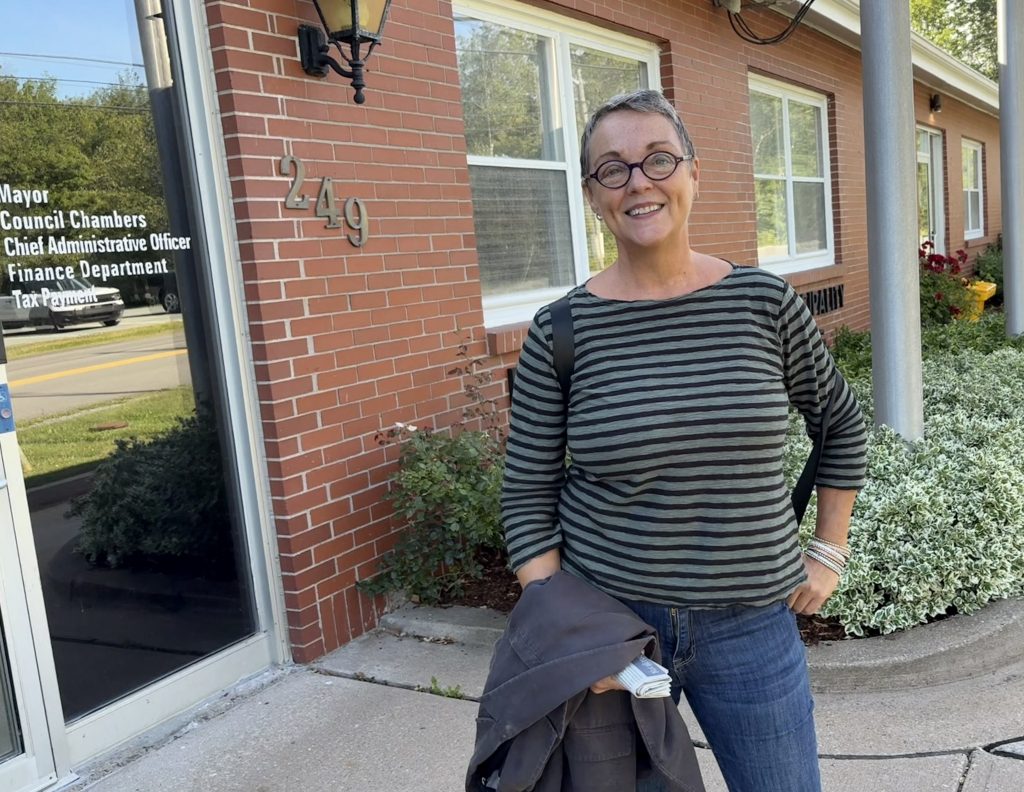
From the rail trail as it enters Liverpool from the Shelburne direction and emerges from the walking trail behind the municipal office at 249 White Point Road, the road trail would allow a right turn onto West Street and left onto Harley Umphrey Drive. The road trail would then cross Hwy 3 and join the Trestle Trail, the road trail would also continue along George Street and end at the intersection with Old Port Mouton Road.

Route #2

Diverging from the Trestle Trail, the road trail would turn right onto King Street, left onto Lawrence Street, and right onto Wolfe Street until rejoining the Trestle Trail at Central Boulevard. The purpose of this road trail would be to avoid travel through a residential backyard and a section with poor sight lines and steep gradient.

Route #3

From the Trestle Trail as it crosses Main Street, the road trail would allow a left turn as far as the end of municipal street jurisdiction at Mersey Place Court. This would allow access to the Cowie Well and prepare for connection to the Trestle Trail from outside town limits via Milton, should an application be submitted to the Province of Nova Scotia for access in the future.

Route #4

From the Trestle Trail, the road trail would allow a right turn onto Brunswick Street, slight left on Main Street and right onto Henry Hensey Drive as far as the Visitor Information Centre. No access to Market Street, Bristol Avenue, or Main Street would be available. This road trail would enable access to parking, shops, and services including the Visitor Information Centre.

Route #5

Following the Trestle Trail until a left turn onto an access road at 31 Milton Road, the proposed road trail joins Milton Road with a right turn to the traffic light. From the traffic lights, the route allows a right turn onto Bristol Avenue, and a left turn onto Hank Snow Drive – no further travel on Bristol Avenue would be permitted. The route also enables riders to go straight through the traffic light, or to turn left and then left again onto Queens Place Drive. The inclusion of Old Cobbs Barn Road enables future road trail designation of a section of Hwy 3 toward Brooklyn, should an application be submitted to the Province of Nova Scotia in the future. This route would enable access to multiple shops, gas stations, accommodation, and amenities such as the Hank Snow Hometown Museum and Queens Place Emera Centre.

Email: rickconradqccr@gmail.com

Listen to the audio version of this story below


Lax labour laws blamed as laid-off Liverpool call centre workers await back pay

office cubicles

Cubicles at Global Empire Corporation’s call centre in Liverpool. File photo: Ed Halverson

Sixty-nine people who used to work for Global Empire Corporation at its Liverpool call centre still haven’t been paid severance after being laid off last March.

That’s despite an order from Nova Scotia’s Labour Standards Division that Global Empire must pay the laid-off workers a total of $193,115.04. 

After a 14-month investigation, the province ruled in May that the company failed to give proper notice of the layoff under Nova Scotia’s Labour Standards Code and that the non-unionized workers were entitled to just over five weeks of severance.

It closed its operation in Liverpool shortly after the May 1 ruling. 

Debra Lalonde was one of those who lost her job. An official with the Department of Labour, Skills and Immigration told her recently that they were unable to collect the severance because Global Empire has no funds or assets in Nova Scotia.

“Come on. Really?” Lalonde says. “How about start protecting employee rights in Nova Scotia so that people living paycheque to paycheque feel protected by the government whose duty is to protect the non-unionized workers that are at risk for abuse from a predatory employer?”

The company says its head office is in Edmonton, so the department asked the Supreme Court of Nova Scotia to register the ruling as a judgment of the court.

They then sent that judgement to officials in Alberta to enforce the order on Nova Scotia’s behalf.

Company owner Moe Nashman, however, claims that the company’s assets are in Phoenix, Arizona. So Labour officials say that there are no funds or assets in Nova Scotia or Alberta to collect on.

“No government wants to take accountability when they can’t honour their own legislation, and that’s unfortunate,” Lalonde said.

Lalonde says she and other former employees feel abandoned by the province and the Region of Queens.

Liverpool was the company’s only Canadian location, employing as many as 120 people. It signed a five-year lease with the Region of Queens in December 2021 to move into the municipally owned Business Development Centre. 

A Facebook post from the Region of Queens celebrating its lease with Global Empire Corporation.

The region agreed to renegotiate the lease in February 2024, two weeks before the company issued layoff notices. The lease has never been made public.

In late May of this year, a few weeks after the labour board ruling, the municipality hired Global Empire’s former human resources manager.

After Lalonde told two NDP MLAs about the issue at this year’s Labour Day event in Liverpool, Labour critic Paul Wozney raised it in the Nova Scotia legislature with Labour, Skills and Immigration Minister Nolan Young.

“Recent labour board cases involving workers at Global Empire Corporation … show that our Labour Standards Code is outdated and makes it hard for workers to collect wages they’ve rightfully earned,” he said. “If this government is acting quickly to help businesses, why is it ignoring workers unprotected from predatory employers?”

Young responded: “Well, I can’t speak about specifics here on the floor for any specific case, we are working hard. We are. Look, we are working hard for workers. 
We are out there. We are doing things. Um, yeah, leave it there.”

Wozney replied: “I guess governmenting is hard. 
The fact is, our current legislation means workers are getting robbed. Despite the labour board ruling in their favour, dozens of people are out thousands of dollars in wages, due to legislation that’s been unchanged for five years under this government’s watch. … Workers need protection from wage theft, and their calls have gone ignored. 
When will this government update one of the weakest Labour Standards Code in the country to ensure workers actually get paid for the work that they’ve done?”

Lalonde says she’s disappointed that Queens MLA Kim Masland didn’t advocate harder for the employees.

“I have reached out to Minister Masland asking what are our next steps? You know, the government failed in protecting our rights. I haven’t heard back from Minister Masland if there are any any further steps to be taken for the 69 of us to be compensated.”

Masland told QCCR recently that she is “certainly concerned for those employees.”

“Those were earnings and they should be paid. My understanding is that this numbered company which is in a foreign land has gone bankrupt. So I’m not really sure how that is going to be retrieved, but do they deserve to be paid? Absolutely. And the company should have stepped up and paid those employees. But they left in the middle of the night.”

She said the government’s hands are tied.

“You can’t expect the province to pay out every business that goes bankrupt and doesn’t pay its employees. That was a private business, it’s not a government entity, there were no government funds that went into that project, so the business has to step up and find the ability to pay.

“My heart breaks for those folks. … We encourage growth, we encourage business to come to our communities. Sadly a government can’t tell a private business how to run their business.”

Lalonde said Masland’s comments are “typical and disappointing.”

“Actually that’s the first I have heard from her. … I think it’s right on par with the government’s lack of accountability for workers’ rights protection.”

She says that former employees are resigned to never being paid. Most workers were making little more than minimum wage, so they can’t afford to hire a lawyer.

Lalonde says she’s owed about $2,800. She’s contacted Nova Scotia’s ombudsman’s office to see if they can help. But she says the workers have little recourse.

“My next job is just to make sure that I don’t let this go without it being noted that our government did not protect our workers’ rights and unfortunately do not want to take any accountability.”

Email: rickconradqccr@gmail.com

Listen to the audio version of this story below

Crime, state of downtown among concerns at first Region of Queens town hall

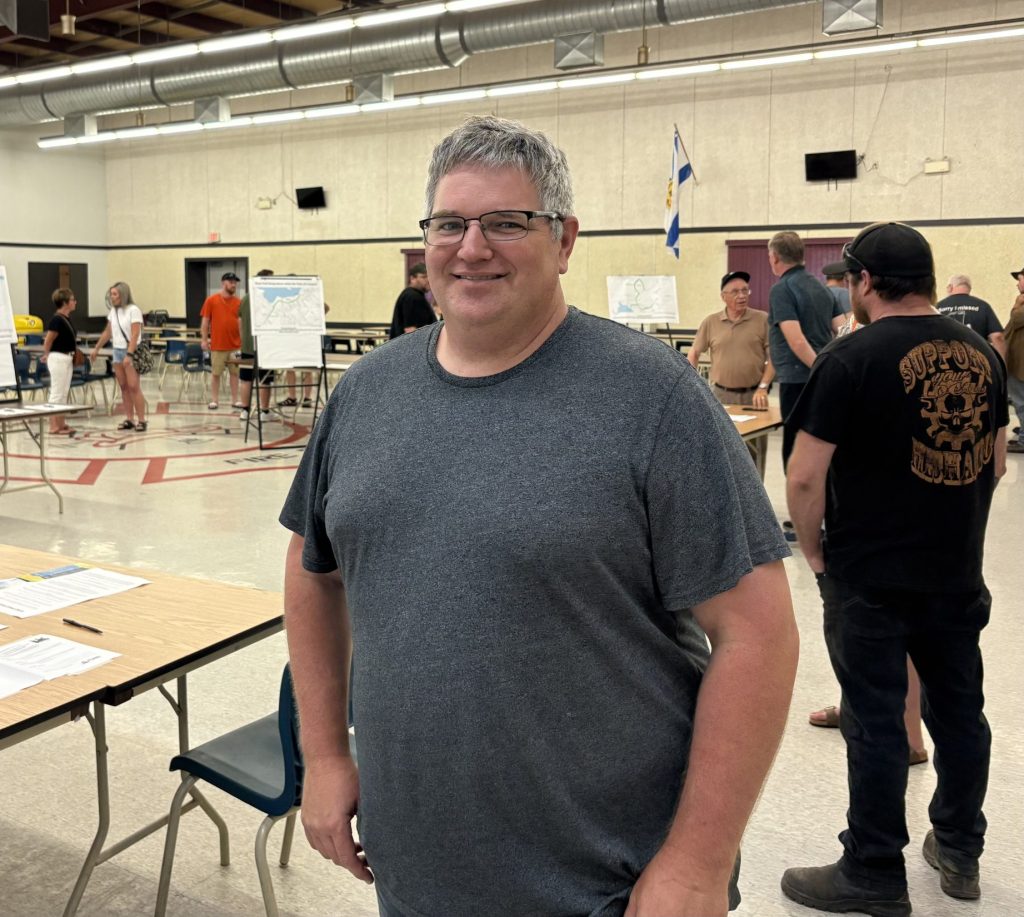
Region of Queens Mayor Scott Christian speaks to residents before a town hall meeting at the Liverpool Fire Hall on Thursday. (Rick Conrad)

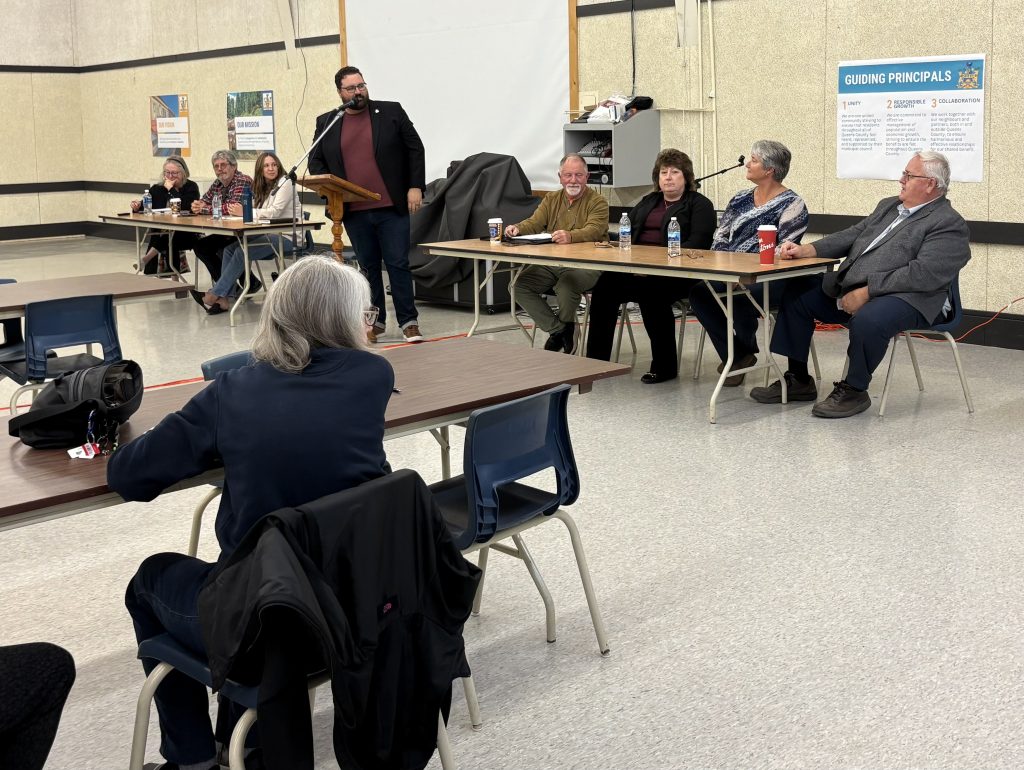
Community safety and downtown development dominated the first of seven town hall meetings held by Queens County councillors.

About 30 people attended the two-hour session at the Liverpool Fire Hall on Thursday evening to hear about council’s plans for the municipality and to ask some questions of their own.

Safety for people of all ages was a big concern.

Some residents said their grandchildren stay away from the Mersey Skatepark at Queens Place Emera Centre because of violence and bullying there. 

Others said they were worried about reckless riding of e-scooters and other vehicles on sidewalks.

And the owner of the Subway restaurant said she and her staff are dealing with problems from some students at the neighbouring Queens Adult High School.

Kim Moulton told councillors that her staff regularly witness drug use in front of the restaurant. She said they’ve called the RCMP, who take the students away but then bring them back. 

“Most times it’s pretty good. And then sometimes, when the new school year starts it starts over again and then we have to put our foot down,” she said in an interview.

“It’s not a very nice sight to sit and eat your lunch when you have a group of people hanging around loitering, smoking, cursing and swearing, spitting. It’s very unsightly.”

Other people told councillors they’re concerned about the lack of enforcement of e-scooters on sidewalks.

Nova Scotia’s Motor Vehicle Act clearly defines limits on e-scooter use, similar to bicycles. But Mayor Scott Christian said that Queens District RCMP have told the municipality that they can’t do anything about people riding them on sidewalks or recklessly on the road.

Some of the stuff that was raised here, it’s not safe for pedestrians and it’s intimidating for some pedestrians when they have users on electric vehicles bearing down on them,” Christian said after the meeting.

“We see a lot of youth, a lot of young kids, riding these scooters. They’re going quite quick. A lot of them aren’t wearing helmets. Something I’ve raised to the (RCMP) staff sergeant and they’ve identified as something that they need to do some public education around. When we raise it to them they say the municipality has to do their part and get effective bylaws in place as well.

According to the Motor Vehicle Act, which the RCMP usually enforce, riders of e-scooters or electric kick scooters are supposed to wear helmets at all times, just like users of bicycles and skateboards. They also must ride on the road or in designated bike lanes.

Municipalities can make their own bylaws governing their use, in addition to what’s in provincial legislation.

Region of Queens councillors held the first of seven town hall meetings Thursday evening. (Rick Conrad)

People also raised concerns about the state of downtown Liverpool.

Sylvia Hurley said much of Main Street looks rundown.

It needs to be revamped,” she said in an interview after the meeting.

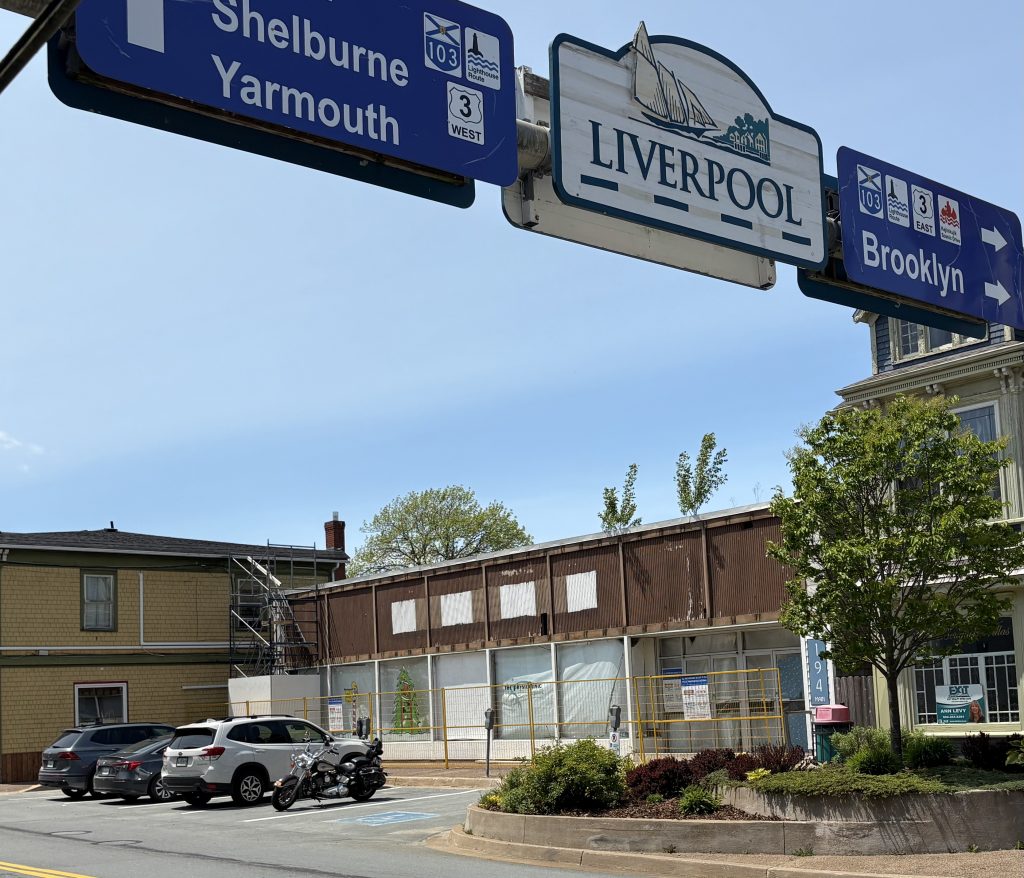
“It needs upgrading, those buildings. I mean, you go downtown and look at the old Stedman building. Just look at it. It’s not attractive. It’s not attractive. The old Scotiabank, not attractive. You know, it’s just not welcoming anymore.

“I was born and brought up here and I remember when on Friday or Saturday night you came into town, and there was no place to stand on the sidewalk and talk because there would be other people standing and talking, and you don’t get that anymore.

Christian and Deputy Mayor Maddie Charlton pointed to council’s recent decision to amend the land use bylaw to allow more residential development downtown, specifically at the old Stedman’s site at 194 Main St.

“Coming up with a winning strategy where we can get more vibrancy in the downtown core, that’s a big priority,” Christian said.

For the first part of the meeting, Christian took people through council’s vision for the municipality and the priorities they plan to work on in four areas – governance, economic development, community wellness and environment and infrastructure.

People were asked to choose one part of each of those areas that was most important to them. They could also write suggestions on Post-It notes. The Top 3 concerns appeared to be transparency and accountability, coming up with an economic development plan, and repairing and replacing aging infrastructure. 

Residents said afterward they appreciated the chance to air some of their concerns, though they said they wanted more time to ask questions.

Christian encouraged people to come out to one of the remaining six sessions, to be held over the next week and a half at locations around Queens County.

I think it’s an opportunity to hear about the direction we’re trying to take the municipality in Queen’s County and then an opportunity to bring your questions forward.

“You want to come out to speak to the issue or ask your question directly to your elected officials, this is your opportunity to do it.”

The town hall meetings are scheduled to run from 6:30 to 8:30 p.m. Here are the dates and locations of upcoming sessions:

  • Fri., Oct. 17 – Milton Memorial Hall
  • Mon., Oct. 20 – Mersey Point Hall
  • Tues., Oct. 21 – West Queens Recreation Centre
  • Thurs., Oct. 23 – Greenfield Fire Hall
  • Fri., Oct. 24 – Port Medway Fire Hall
  • Mon., Oct. 27 – North Queens Fire Hall

More information about the sessions is on the Region of Queens website. Residents can also fill out a survey here.

Email: rickconradqccr@gmail.com

Listen to the audio version of story below

Region of Queens closes tap on bulk water orders for dry wells

The Region of Queens is asking people to restrict their water usage. (Pixabay)

As drought conditions continue throughout Nova Scotia, the Region of Queens is taking its own measures to save water.

The municipality announced Thursday on Facebook that it will no longer be offering bulk water services to fill dry wells or water tanks.

Local fire departments who carried this out have been notified.

The region said the public Cowie Well at 733 Main St. in Liverpool is still open for potable water. And Queens Place Emera Centre has shower facilities available by appointment.

Coastal Queens Place and the West Queens Recreation Centre in Port Mouton also offer potable water and shower facilities.

The municipality is also into its second week of voluntary water restrictions to deal with dropping levels in the Town Lake Reservoir. It has asked its water customers in Liverpool and Brooklyn to limit their usage.

Groups wants more food, festivals and fun on Liverpool waterfront

QCCR hosted a session on Thursdy to generate ideas for events on the Liverpool waterfront and elsewhere. (Rick Conrad)

A food truck festival, a chili cookoff and Movies on the Mersey were among the dozens of ideas for Liverpool’s Privateer Park tossed around Wednesday evening at Queens Place Emera Centre.

QCCR hosted a community meeting to generate ideas for more events on the Liverpool waterfront and elsewhere in Queens County.

Station manager Norm Amirault said he wanted to hold the session after seeing some comments on Facebook about people wanting more to do in Privateer Park.

“And honestly, I’d felt that way myself,” he said in an interview. “You have this beautiful park, and you wonder why there aren’t more activities going on there. 
I always thought if you’re not part of the solution, you’re part of the problem. … And based on the feedback tonight, there’s a ton of good ideas out there that people really do want to see more activities there.”

About 20 people discussed ideas for a more vibrant waterfront, like holding more seasonal festivals similar to last March’s Light Up Queens Winter Night Festival, more events targeted toward youth, encouraging more performing arts besides music in the park. And there was even talk of a Beatles festival.

Min Smale is the secretary-treasurer of the South Queens Chamber of Commerce. She’s also the chair of the Privateer Days committee, which holds the popular annual festival in the park every June.

She was impressed with people’s ideas.

“I think they’re fantastic, and I think it’s really going to revitalize both the waterfront or Privateer Park as well as some of the smaller, lesser-known venues across Queens.

“I think it was great to see the younger folks come in here and enjoy the conversation. They need to be involved in the music and the entertainment scene here.”

One of those young people was Easton Goodwin. He and some of his high school bandmates were at the event.

“I’m glad I came out tonight. 
Usually, not a lot of people like me come out to this kind of thing. And it’s such a great opportunity, you know? There’s a lot of voices in Queens County that really need to be heard.”

“We definitely do have some highlights, such as the Astor Theatre, a lot to explore there, but also, you know, a group of teens want to hang out Friday night, where do they go? 
So, some spots for people to just explore, hang out with friends, and more opportunities for the youth.”

A couple of roadblocks exist in turning the ideas into reality — finding enough funding and volunteers. 

Deputy Mayor Maddie Charlton told the group that while the municipality can’t fund everything, there could be some money available for certain events.

Amirault said he’ll collect the ideas into some common themes, and then approach some local groups like the chamber to try to get things going.

“Maybe as we talked about bite sized pieces, partnerships, and focus on a few things and do them well. Maybe that’s a reasonable first step.”

Email: rickconradqccr@gmail.com

Listen to the audio version of this story below

Queens councillors OK revised Stedmans building apartment plan

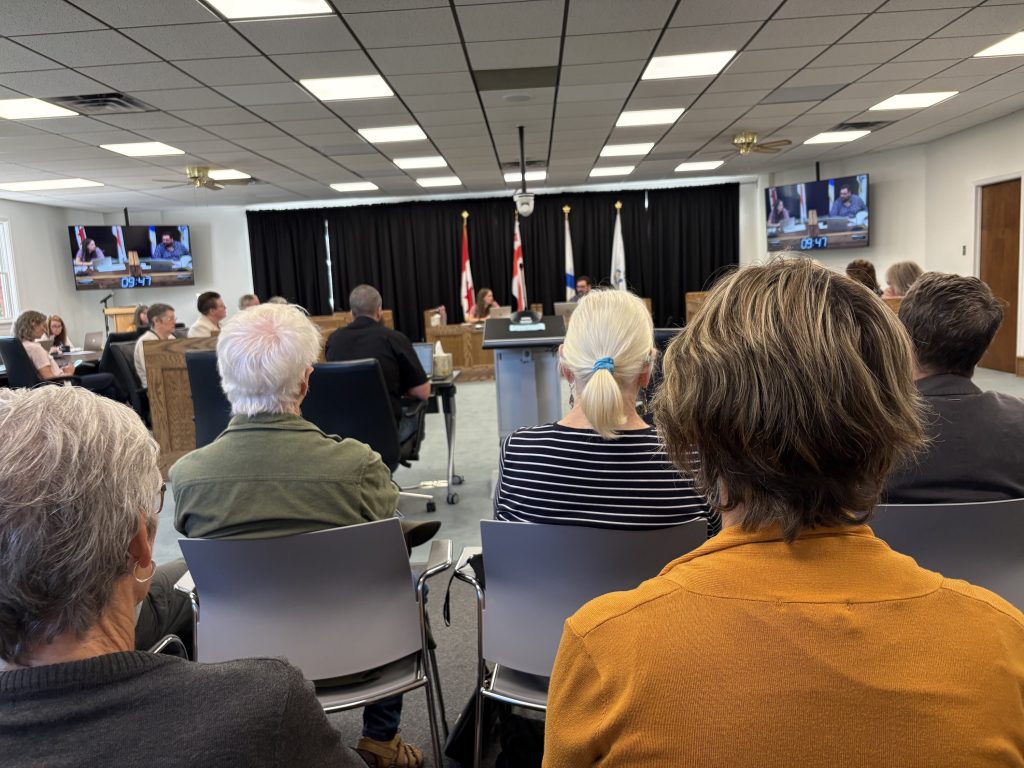
Region of Queens councillors on Tuesday voted on a revised plan to develop 194 Main St. in Liverpool. (Rick Conrad)

Region of Queens council have changed course to allow a developer to build apartments on Main Street in Liverpool after all.

At their regular meeting on Tuesday morning, councillors voted unanimously to start the process to amend the municipality’s land use bylaw. 

A public hearing will be held on Nov. 12 at 9 a.m. in council chambers about changing the bylaw to allow more ground floor space to be used for residential uses in the downtown commercial zone. 

Currently, no more than half of a building’s ground floor can be used for apartments.

RELATED: READ MORE ABOUT 194 MAIN ST.

Developer Eric Fry approached the region in February to change that rule to allow him to turn all of 194 Main St., commonly known as the old Stedman’s building, into apartments. His original plan was for 16 units, with indoor parking and storage.

In July, councillors rejected changing the bylaw. Fry immediately listed the property for sale. 

He returned to the region’s planning advisory committee in August with a new plan that would include two commercial units on the ground floor of the 30,000-square-foot building, in addition to 14 apartments. 

His latest proposal is for 18 residential units, four of which would be “hotel suites”, and two Main Street-level commercial units of 300 square feet each. One of those would be a laundromat. 

“So given the significant size of the building at 194 Main St., 50 per cent of the ground floor area of the building creates some challenges for the owners of the building,” Director of Land Use Mike MacLeod told councillors. 

MacLeod reminded councillors that if the bylaw is changed, it would apply to all property owners in the downtown commercial zone.

“Any proposed amendments would apply not only to the applicant’s property, but would apply to all other owners of property of commercial buildings who want to convert more than 50 per cent of the ground floor area to residential uses.”

Planning advisory committee members originally discussed recommending a minimum depth of 6 metres for commercial space on the ground floor, but settled on 3.66 metres or 12 feet and a minimum floor area of 27.88 square metres or 300 square feet.

The other changes proposed would require that commercial uses extend along the full width of the building facade from its main entrance.

Deputy Mayor Maddie Charlton, who is a member of the committee, said PAC members believe the bylaw needs to be more flexible for property owners in the commercial zone.

“There are buildings of significant sizes that make it really challenging to allow for more residential while protecting the commercial area. And so what this does is it protects the Main Street and surrounding streets in those commercial zones or commercial core zones anywhere.

“We do recognize that there are folks beyond this proposal that have an appetite to decrease the size of commercial space. They could put in more residential space, which we feel like is a win-win.”

Under the proposed amendments, the commercial units could not be used as office space by the building owner or manager.

Mayor Scott Christian said after the meeting that the changes would be good for downtown Liverpool.

“We’re hoping to see that generate more investment, because right now we all know that there’s a lot of vacancy and underutilized spaces in the downtown core and there’s also a lot of space that could be repurposed for residential units, which we know there’s a huge demand for. So we’re hoping that we’ve struck a good balance there.”

Christian said the municipality looked at rules in other areas for guidance on the changes. He pointed to Halifax, which encourages businesses to set up as boutique shops in some buildings.

“Like a fishmonger or a small deli or an ice cream shop or a candy shop or small sort of micro retail models,” he said in an interview. “If property owners take advantage of the opportunity to create really small spaces, that micro retail model,  which I think could be attractive to our residents and our visitors.”

Christian said he understands if some people might believe the process has been tailored to suit one developer. But he says it’s an issue the community had to tackle.

“That was certainly the impetus or the catalyst to have the conversation, but I’m quite excited about where we’re going to land. I think that if the amendment goes through, I think it’s a step in the right direction, in getting more flexible in the way that folks can use those buildings in the downtown core to make it more vibrant, breathe more life, bring more people into the downtown core.”

In a survey conducted by Halifax consultants UPLAND Planning in July, 18 of 30 respondents said they were fully or somewhat supportive of changing the bylaw. 

But 90 per cent of the business owners who responded were against a bylaw change. They said they were concerned about eroding the commercial area.

Email: rickconradqccr@gmail.com

Listen to the audio version of this story below

Week of fish farm hearings wraps up as fishermen, Region of Queens experts testify

The Nova Scotia Aquaculture Review Board finished in-person hearings Friday into Kelly Cove Salmon’s application to expand its operation in Queens County. (Rick Conrad)

There could be a decision on a proposed fish farm expansion in Liverpool Bay by the end of the year.

The Nova Scotia Aquaculture Review Board wrapped up a week of hearings Friday afternoon in Bridgewater into Kelly Cove Salmon’s application to add to its Atlantic salmon operation near Coffin Island, off Beach Meadows Beach.

Kelly Cove, which is owned by Cooke Aquaculture, originally wanted to expand the Coffin Island site and add two new farms in Brooklyn and Mersey Point. But it decided to pursue only the expansion for now.

That will add another six pens for a 20-cage farm, with up to 660,000 fish.

Lawyers for four intervenors were at the hearings this week: Protect Liverpool Bay, the Region of Queens, 22 Lobster Fishermen of Liverpool Bay, and Kwilmu’kw Maw-Klusuaqn, which includes the Wasoqopa’q First Nation.

Experts from the Region of Queens and the lobster fishermen were cross-examined on Friday morning, with a panel of three fishermen testifying in the afternoon.

The intervenors have various concerns with the expansion. 

Community group Protect Liverpool Bay says it will harm an ecologically sensitive area and risk the lucrative lobster industry. 

The Kwilmu’kw Maw-Klusuaqn objection concerns the Department of Fisheries and Aquaculture not properly consulting local Mi’kmaq communities on areas affecting their treaty rights.

The Region of Queens is concerned about how the operation could affect fish habitats and local tourism.

And the lobster fishermen are worried about how an expanded fish farm would affect sensitive lobster fishing grounds and populations.

Peter Stewart, a retired lobster fisherman near Moose Harbour, and two other fishermen were cross-examined on Friday by Kelly Cove’s lawyer.

The fishermen were asked how much of the lobster grounds usually fished would be affected by the Coffin Island expansion. She also challenged Stewart on underwater video taken by one of the company’s experts that appeared to show lobster living unharmed under the current fish farm.

Stewart told QCCR after the hearing that Kelly Cove’s scientific studies aren’t telling the whole story about the lobster grounds and aquaculture’s impact on juvenile and baby lobsters.

“I have concerns about the whole process,” Stewart said. “I think they try to do science-based studies and they’ve missed a mark there where there’s a lot of science that’s lacking of what’s going on in these bays. … So the board’s not getting the full story as far as us speaking. Hopefully through the submissions that we’ve put in and the ones that we’re going to put in, they’ll understand exactly how we feel and our thoughts on the matter.”

Much of the evidence for the hearing was collected based on Kelly Cove’s much larger original application. The board didn’t allow the parties to amend their evidence to account for only the Coffin Island expansion.

The fishermen’s lawyer Jamie Simpson of Juniper Law said it’s challenging to argue the case given that restriction.

“I mean, we thought that the process should have been restarted, given the significant change in scope of the application. … But anyway, the board didn’t allow that, so we just have to work with that challenge.”

James Gunvaldsen Klaassen is with Ecojustice, which is representing Protect Liverpool Bay at the hearings. He said his clients were pleased they finally got a chance to air their concerns about Kelly Cove’s plans.

“It’s obviously a huge concern of our clients that, you know, the issues with aquaculture and the impacts on Liverpool Bay are well understood by the board, and we feel we did a good job in explaining things as best we could, given the structure of this hearing. and I have every confidence that the board will make a good decision.”

The last session of the hearings will be virtual on Oct. 31 as the intervenors will get a chance to cross-examine Kelly Cove’s experts conclusions on lobster habitat in the area. After all the groups file their final written submissions with the three-member panel, the board has 30 days to release its decision.

Email: rickconradqccr@gmail.com

Listen to the audio version of this story below

N.S. premier ‘happy’ with Kelly Cove’s smaller fish farm expansion plans in Queens County

Queens MLA Kim Masland and Premier Tim Houston take questions at a business luncheon in Liverpool in February 2024. (Rick Conrad file photo)

As hearings continue this week into a proposed expanded fish farm in Queens County, Nova Scotia Premier Tim Houston has softened his stance against aquaculture in Liverpool Bay.

During a question-and-answer session at a business luncheon in Liverpool in February 2024, Houston said he was personally opposed to Kelly Cove Salmon’s plan to expand its operations near Coffin Island, off Beach Meadows Beach, and to add two new sites in Brooklyn and Mersey Point. That would have added 46 more open-net pens and 1.4 million more farmed salmon in Liverpool Bay. 

Kelly Cove is a subsidiary of Cooke Aquaculture.

 “I think some areas are great for aquaculture and I think that some others are maybe not the best place for it,” Houston said last year. “On this specific question on Liverpool Bay, … I personally don’t think Liverpool Bay is a suitable place for it.” 

But this week, Houston told QCCR that he’s more comfortable with the company’s application to add six cages for a 20-pen farm at its Coffin Island site.

“I think at the time the initial proposals were much larger than what is before the board now,” he said in an interview.

“I think there was some acknowledgement of the concerns that I and others had, certainly residents had, and modification, really bringing things down to size. So the board will make their decision now, but I was happy to see some kind of more appropriate sizing being put before the board.”

Queens MLA Kim Masland, however, told QCCR that she is still opposed to the expansion.

“My position’s never changed,” she said in an interview Wednesday. “And I think if you check the record, there is not another MLA that has said that in this province.”

A three-member panel of the Nova Scotia Aquaculture Review Board began hearings on Tuesday in Bridgewater. 

Panel chairman Damien Barry told the hearing that on July 18, the board granted Kelly Cove’s request to split the three applications. The company asked the board to proceed with the Coffin Island boundary amendment and leave the applications for two new farms “in abeyance”.

Lawyers are representing six groups at the tribunal, including Kelly Cove Salmon, the Nova Scotia Department of Fisheries and Aquaculture, the Region of Queens, community group Protect Liverpool Bay, 22 Lobster Fishermen of Liverpool Bay and the Wasoqopa’q First Nation.

Queens County residents opposed to the application were upset that the board didn’t hold hearings in Liverpool.

As the hearing began, Barry said the board tried to find a suitable location in Liverpool for the dates that were set aside. But nothing was available.

When asked on Wednesday, Masland said she was also upset when she found out the hearings were going to be held in Bridgewater.

“I immediately went and met with the minister of fisheries and aquaculture in person, expressed my displeasure and asked for the reasons why and asked him to investigate it. Again, ARB is independent from government, but he did look into it.

“Do I feel that they should have changed the date? Absolutely. It should have been held here in the community and where the fish farm expansion is going, and the minister knows that.”

The hearings are expected to continue until Friday afternoon at the Days Inn in Bridgewater. People can register here to watch a livestream of the proceedings.

Email: rickconradqccr@gmail.com

New track, field facility ‘game changer’ for athletes, community in Liverpool

Kristopher Snarby, Region of Queens Mayor Scott Christian, Queens MLA Kim Masland, Nova Scotia Premier Tim Houston and Olympian Sarah Mitton were among those at the official opening of the Steele Athletic Grounds in Liverpool on Wednesday. (Rick Conrad)

The South Shore’s first turf field and rubberized track officially opened in Liverpool on Wednesday with a new name and lots of community enthusiasm.

The $3.5-million facility at Liverpool Regional High School will be called the Steele Athletic Grounds after a $100,000 donation from Steele Auto Group.

Hundreds of people including Olympian Sarah Mitton, Nova Scotia Premier Tim Houston, Queens MLA Kim Masland and Region of Queens Mayor Scott Christian turned out for the ribbon cutting.

The Queens County Track Society spearheaded the project that began in 2018.

“It will be a place where both youth and adults can train and dream, where teams can compete and where a community can come together to celebrate with sport and achievement,” president Kristopher Snarby told the hundreds of students and others gathered for the event.

“Today’s grand opening is more than just a ribbon cutting, it’s the start of a new chapter for recreation, health and community pride in Queens County and across the South Shore.”

Snarby thanked the many people and organizations in the community that made the track and field a reality. The federal government contributed $1.8 million, the province gave $1.2 million and the Region of Queens granted $250,000, with local donors and sponsors chipping in another $250,000.

Snarby said after the event that thanks to the 10-year agreement with Steele Auto Group, the society has about $1,000 left over to put toward future improvements like seating and security cameras.

“Most people are bringing their own chairs, but we would like to have some seating, that’s probably the next thing. The other thing are security cameras, that’s probably the top priority. We need to get security cameras up and we’re putting things in place to get that done.”

In addition to the all-weather track and soccer field, the fully lighted facility also features an area for the long and triple jumps. A new shot put circle and area have also been installed next to the high school. The complex is open to everybody in the community.

“It’s getting a lot of use, the soccer kids are loving the field,” Snarby said. “Track doesn’t start until the spring, so the track hasn’t had like a lot of training but the cross-country team does use it to train as well and just the general public using it for walking and … to have some recreation.”

Masland said she was overwhelmed to see the facility completed and open.

“To actually stand on this field today, to see the kids out there really enjoying it, just an amazing day for me,” she said in an interview. “It’s been something that’s been very close to my heart since becoming elected in 2017. Glad I could be part of the project and work with such amazing dedicated folks with the society. This is a game changer for our athletes, for our community and for our students.”

Mitton is a champion shot putter who was a high school student in Liverpool more than 10 years ago. She said the state-of-the-art facility will help young athletes excel.

Before it opened, local track and field athletes had to leave the community to train or use the bus loop around the school.

“This is such an incredible thing for the kids that go to school in this area,” Mitton told QCCR.

“Anyone in the community can use this, whether it’s for just a healthy active lifestyle, a project like this can really change the lives of many people in the community. … I learned a lot not having a facility like this, but I think like this would have eliminated a lot of barriers for me. I drove to and from Bridgewater three or four times a week as a kid once I started joining a club and to have something like this here I think would have been a lot easier and maybe my progress could have been a little bit faster.

“But to have something like this, if you’re interested in throwing shot put, you can just come up and do it whenever you want like in the evenings, it just opens the door for kids to have the same opportunities other athletes and kids have in other communities on the South Shore and around Nova Scotia.”

The facility is operated by the Queens County Track Society and maintained by the South Shore Regional Centre for Education.

The society is selling annual memberships of $25 which entitle people to use the track whenever it’s available. More information can be found on the Liverpool community track and field Facebook page.

Email: rickconradqccr@gmail.com

Listen to the audio version of this story below

Fish farm hearings open with questions of sustainability, community support

Lawyers listen to Stacy Bruce, clerk with the Nova Scotia Aquaculture Review Board, on Tuesday in Bridgewater as hearings began into Kelly Cove Salmon’s application to expand its operation in Queens County. (Rick Conrad)

Hearings opened Tuesday into a proposed bigger fish farm in Liverpool Bay, with community members and others getting a chance to say what they think of the idea.

A three-member panel of the Nova Scotia Aquaculture Review Board is hearing an application from Kelly Cove Salmon, which is owned by Cooke Aquaculture, to expand its operation near Coffin Island off Beach Meadows Beach.

Kelly Cove wants to add six more cages for a 20-pen farm, with an extra 260,000 Atlantic salmon. 

Lawyers are representing six groups at the tribunal, including Kelly Cove Salmon, the Nova Scotia Department of Fisheries and Aquaculture, community group Protect Liverpool Bay, the Region of Queens, 22 Lobster Fishermen of Liverpool Bay and the Wasoqopa’q First Nation.

Six members of the public were given time at the beginning of Tuesday’s hearing to make statements about Kelly Cove’s application.

Jeff Bishop, executive director of the Aquaculture Association of Nova Scotia, urged panel members to allow the expansion. He said ocean-based aquaculture takes up less than half of one per cent of the coastline, creating jobs and pumping millions into local economies.

He warned them not to listen to groups opposing the application.

“They will tell you they are grassroots, community groups that represent the voice of most Nova Scotians, while they talk about potential hazards and not evidence of any actual risks. In fact, by looking at the members of these networks and coalitions publicly available annual reports to Canada Revenue Agency, we know that they take in millions of dollars of unreceipted foreign revenue from outside of Canada every year, and hundreds of thousands of dollars or more annually from other charities. That hardly sounds like grassroots local support to me. … These groups do not speak for most Nova Scotians, but simply their echo chambers.”

Bishop did not name any organizations and provided few other details. Protect Liverpool Bay has been the most prominent to oppose Cooke’s operation off Coffin Island. It’s a volunteer-run organization that began in 2018 and relies on local donations. 

He added that the review board should not allow “the hollow cry of ‘not in my backyard’ to have its way” and to “support growth by approving Kelly Cove Salmon’s application”.

Bob Iuliucci of Bear Cove Resources in East Berlin, who worked as a researcher in applied ocean sciences and marine geology for 50 years, said he was worried about how climate change and the ever-strengthening tides in Liverpool Bay would affect the expanded farm, and the resulting damage it could do to the coastal environment.

“Expansion multiplies risk on every front — ecological, biological, economic loss to wild fisheries and tourism.”

Elizabeth Hartt of Bear Cove Resources said she was concerned that an expanded operation could risk development of other industries that could set up in the area, such as sustainable seaweed, oyster or mussel farms.

She said those types of aquaculture exist lower in the ocean and are not in fixed structures at the surface.

“You can sail over a lot of those things. They’re not fixed structures that in storms are going to be trashed and then thrown on shore. They’re not heavily loaded with fish that are going to land up on the shores of Liverpool.”

Instead of more fish farms, she said the province should be encouraging more exploration and ocean research in Liverpool Bay.

Liverpool resident Andrew Tyler said he and his family moved to the area two years ago because of the natural beauty and the beaches.

He said when they first moved to the area, he didn’t know what the cages were off Beach Meadows Beach. But he said in noticing the signs peppered around the community protesting open-pen fish farms, he realized most residents are against it.

“This is a hearing, and I hope you’re listening, that the Liverpool community, by and large, doesn’t want this expansion,” Tyler said.

“The jobs that fish farming bring are very few. The investment is very little, and it doesn’t add to the draw that bring people like me, who want to move their families to the area, who want to invest in the area, who want to put down roots in the area. So in my view, fish farming takes. 
It doesn’t give back.

“There’s a way to do it that doesn’t risk one of our greatest natural assets at Beach Meadows. This isn’t it.” 

Stewart Lamont, managing director of Tangier Lobster, said he’s concerned how an expanded operation would affect the area’s lobster fishermen and their contribution to Nova Scotia’s $1.5-billion lobster export industry.

He said that up to 1,000 metric tonnes of fecal and food waste is deposited every year on the ocean floor below fish farms operations in Nova Scotia. In an era of foreign markets sensitive to where their food comes from, Lamont said “if any jurisdiction in Europe saw a viral video of our Nova Scotia lobster grazing on bottom below or near an open net pen, our lobster sector would be finished overnight.”

He said climate change will also only add to the problems as waters warm and storms become more intense.

“The greatest piece missing in this business model is the lack of community support referred to already this morning,” he said. “Academics call it social license. What is taking place now is effectively the privatization of public waters, and that is by so many standards, clearly wrong and absolutely unwanted. 
… The more citizens learn about fish farms and open-net pen fish farming, the less they want any part of them.”

For the rest of the day, a nine-member witness panel from Kelly Cove answered questions from lawyers about the company’s extensive application to the board.

Lawyers cross-examined the panel on its consultations with the local Indigenous community, the company’s various studies of impacts on the ocean and surrounding environment and the effects on lobster populations. 

Michael Szemerda, Cooke’s global chief sustainability officer, admitted under cross-examination from Region of Queens lawyer Natasha Puka that the company has been operating outside its lease boundaries since it took over the farm.

He also confirmed that there have been only two “mortality events” at the Coffin Island site, with an unknown number of fish dying in 2018 from insufficient oxygen and 2019 from storm damage. In 2012, Cooke reported an infectious salmon anemia, which led to the destruction of two pens of fish, and a bacterial kidney disease among its salmon.

About 20 community members travelled to Bridgewater to take in the proceedings. 

Beach Meadows resident Tim Nickerson said that he wanted to make the trip, though he was upset the review board didn’t hold the hearings in Liverpool.

“I’m really disappointed with the idea that the hearing’s being held in Bridgewater,” he said in an interview. “We heard the chair say that they made a big effort to be in Liverpool, based on the dates, but I’m like change the dates. I just think that’s such a big issue, and should be really concerning about a public exercise not really being done in the area that has the greatest impact.”

He said he was also disappointed in comments made by Jeff Bishop from the aquaculture association.

“I just didn’t think his comments were very respectful. I think people can have contrary views. 
I don’t think we need rhetoric about foreign investment and that kind of just silliness. … I didn’t appreciate that.”

The three-member panel is made up of Roger Percy, Bruce Morrison and chaired by Damien Barry.

Proceedings continue Wednesday at 9 a.m. at the Days Inn in Bridgewater. It’s open to the public. People can also register to watch a livestream of the hearings.

Email: rickconradqccr@gmail.com

Region of Queens asks users to cut back on water as system leaks on rise

The Region of Queens says its reservoir is getting low, so it’s asking customers to use less water. (Photo via SneakyElbow via Pixabay)

The Region of Queens is asking its municipal water customers to restrict their usage to deal with drought conditions, as system-wide leaks appear to worsen.

The municipality posted a notice on its Facebook page on Tuesday asking the 1,200 water users in Liverpool and Brooklyn to conserve water immediately.

The post said that water levels in the Town Lake Reservoir have been dropping because of months-long drought conditions. The region did not mention a chronic system-wide leak problem that outside consultants have said gives the region a poor rating of water loss volumes compared to Canadian and international standards.

Mayor Scott Christian has told QCCR that staff regularly monitor the reservoir’s levels. About two weeks ago, Christian said water levels were still fine.

The region is asking people to limit their lawn and garden watering, fix any leaky faucets, take shorter showers and run dishwashers and washing machines with only full loads.

The Region of Queens Water Utility is asking the Nova Scotia Regulatory and Appeals Board for a 106 per cent increase in water rates, or about a $348-a-year hike. In documents filed with the board, a consultant hired by the region says “there is excessive leakage within the (water) system”.

Another report done for the region in 2024 found that the water system was losing more than 611,000 cubic metres, or 611 megalitres, per year due to leaks. Customers were using about 303,000 cubic metres, or 303 megalitres per year.

That represents 69.1 per cent of total water supply. In 2021, that rate was 60.3 per cent.

Email: rickconradqccr@gmail.com

Queens mayor, councillors holding town hall meetings in October

Region of Queens Mayor Scott Christian. (Rick Conrad)

Region of Queens mayor and councillors are holding seven town hall meetings around Queens County this month to get public feedback on various issues.

Mayor Scott Christian says it’s important to hear from as many people as possible.

We’re looking to kill two birds with one stone in that we think it’s important to be accessible and engaging with our residents writ large, but it’s also timely because we have been working behind the scenes on identifying some five-year strategic priorities and a vision and a mission for the organization and we want to make sure that it’s aligned to what residents are seeing and feeling and experiencing in the community.”

Christian says the region will also have a survey available for people who can’t make it to one of the October sessions.

Council’s strategic plan has been mentioned regularly at council meetings since the new slate of councillors was sworn in in 2024. But it hasn’t been made public yet. 

Christian told QCCR that the town hall meetings will be a chance for people to get a look at some of the details of that plan.

“My expectation is that we provide folks with an opportunity to take a look at what we have thus far, provide their feedback on that, give everybody an opportunity to contribute in a way that they’re comfortable (with), but then also just open up the floor for more kind of question-and-answer to engage their councillors and myself as the mayor on particular issues or items of importance to them.”

Christian said that staff and councillors will incorporate what they hear at the town halls into the region’s five-year plan, which will also influence budget deliberations.

He said the region plans to start early budget talks and capital planning by December, with work on the budget set to begin in the new year. 

Municipalities are expected to finalize their fiscal plans by March 31. This year, the Region of Queens passed its budget in mid-May.

We were quite last minute last go-around so we’re going to start to look at the five-year capital improvement plan and updates to that … in December, so my expectation is that we’ll have those kind of those strategic priorities nailed down by that time.”

The seven town hall meetings are scheduled to run from 6:30 to 8:30 p.m. Christian, councillors and some staff will likely be at the meetings. Here is where they’ll be held:

  • Thurs., Oct. 16 – Liverpool Fire Hall
  • Fri., Oct. 17 – Milton Memorial Hall
  • Mon., Oct. 20 – Mersey Point Hall
  • Tues., Oct. 21 – West Queens Recreation Centre
  • Thurs., Oct. 23 – Greenfield Fire Hall
  • Fri., Oct. 24 – Port Medway Fire Hall
  • Mon., Oct. 27 – North Queens Fire Hall

Email: rickconradqccr@gmail.com

Listen to the audio version of this story below

Queens councillors seek changes to dry hydrant tenders after cost shocker

The dry hydrant at Bangs Falls pictured in early September, one of the photos of the condition of dry hydrants, posted by the Greenfield and District Fire Department. (Greenfield and District Fire Department)

A new dry hydrant will be installed behind the North Queens Nursing Home but at almost three times the cost that Region of Queens councillors were expecting.

The dry hydrant behind the manor in Caledonia has been on a list of planned work for the past five or six years, council heard at their meeting last week.

Councillors had budgeted $40,000 this year to install three new dry hydrants. The two others were planned for Mary Lake and Westfield Road, also in Caledonia.

But the one approved by council last week near the nursing home is the only one that will be installed this year, and at a cost of $40,000. The others will be pushed to next year, according to Garrett Chetwynd, the region’s manager of public works.

Chetwynd told councillors that staff decided to contract out the work because public works staff were busy with other projects.

The original request for pricing was posted to the provincial procurement site where we received no responses. When we received no submissions to that, it was submitted to, I believe, 12 local contractors. So that same RFP was sent to them and we only received one submission back.”

That was from C. Eugene Ingram Construction in Liverpool, who will install for $40,000 plus HST.

Dry hydrants are used where traditional hydrants aren’t available. They access water sources such as ponds, lakes or streams to help fight fires. The municipality maintains 51 dry hydrants around the county.

District 6 Coun. Stewart Jenkins said he was concerned that one hydrant will cost so much. He asked how much it’s historically cost to install a dry hydrant, but Chetwynd said he was familiar with only one being installed during his time with the region and he didn’t have those numbers.

“I’m not against dry hydrants coming in,” Jenkins said. “I am against one hydrant costing what three was expected to cost.”

He said he’d like to see council combine dry hydrant maintenance and installation into one larger tender to attract more bids.

If we as a region working with the fire departments came up with a plan of putting in new hydrants or fixing old ones and came up with a group of hydrants to have fixed, then we would get a tender because it would suddenly become a higher dollar value,” Jenkins told his fellow councillors.

“And I think if we had, you know, $150,000 worth of work out there or $200,000, we’d do it once every two years and fix up a whole bunch of things, it would make it more acceptable to get better quality quotes from the people that do this sort of work in Queens County.”

Deputy Mayor Maddie Charlton said bundling the work into a higher-value tender makes sense, especially if municipal staff can’t do it.

“We do have to try to make this more competitive for sustainability moving forward.”

Councillors voted to direct staff to compile a list of new dry hydrants requested to date and those in need of repair to attract more competitive bids for tender. 

Some councillors were also concerned about delaying the work on the other two new hydrants to next year.

With the recent drought conditions in Nova Scotia, many of the water sources for the hydrants have literally dried up. The Greenfield and District Fire Department recently sounded the alarm about the condition of some of the hydrants in their area. According to a Sept. 1 Facebook post, the department has reported problems with dry hydrants to the region many times.

Councillors had set aside $110,820 in this year’s budget for maintenance and installation.

Jenkins said that while the dry hydrants provide handy access to water, the county’s volunteer fire departments have other ways of getting water to a fire scene.

“I know from experience with the fire departments that they do have other ways of getting water out of water sources than the dry hydrants. 
There’s portable pumps that are high volume. Many of the trucks have front intakes so they can pull into a site and pump water. So I don’t think it’s a fact that they’re not going to have water to that site. 
There’s other ways of doing it. And Greenfield (fire) department has had to lay out the other ways of doing it because half of their dry hydrants are very dry and the other ones are plugged up with mud.

When asked, Chetwynd said he believes the work will likely begin in the next month, though he wasn’t sure exactly when or if the agreement dictates a timeline.

Email: rickconradqccr@gmail.com

Listen to the audio version of the story below

Region grants Brooklyn Recreation Committee $6,000 to finish work on hall

Region of Queens councillors have granted a funding request from the Brooklyn Recreation Committee. (File photo by Rick Conrad)

The Brooklyn Recreation Committee, which operates the Brooklyn Community Hall, the Hank Snow playground and Brooklyn Waterfront Park, has been given a grant of almost $6,000 to finish work on the hall.

At their Sept. 23 meeting, councillors unanimously approved a request from the society from the Community Investment Fund for fixing trim, walls and drywall as well as painting the whole interior of the building.

The group had asked for $8,976 under the fund’s capital investment portion. But councillors accepted a staff recommendation for $5,999.71 in funding.

The recreation committee said it needed help to pay for the final work after completing significant upgrades like new windows and heat pumps.

The region charges Brooklyn residents an area rate on behalf of the non-profit society. That rate is expected to generate $49,761 in revenue in 2026 to help with maintenance of the playground, park, hall and the cemetery in Brooklyn.

Before the request, $71,000 was left in the region’s Community Investment Fund to fund eligible applications.

“Accounting best practice would not normally consider painting and the repairing of trim a capital expense, however, it could be considered the final phase of the capital work that has taken place over the last year involving conservable investment in the hall and remediation of some damage caused by the installation,” according to the staff report from Steve Burns, community economic development officer.

District 4 Coun. Vicki Amirault declared a conflict and did not vote on the matter.

Region of Queens hires deputy CAO

The Region of Queens administration building. (Rick Conrad)

The Region of Queens has hired a deputy chief administrative officer.

Patrick Hirtle will start the job on Oct. 20. He’s currently the manager of community attraction and communications with the Town of Bridgewater.

“I’m thrilled that Patrick will be joining our team as deputy CAO. Patrick brings a unique perspective to this role – he has more than 10 years’ experience in municipal government, and has been a councillor in Town of Bridgewater several years ago,” Willa Thorpe, the region’s CAO, said in a news release.

“When we interviewed Patrick, we were very impressed with his extensive experience in municipal and private sector communications, strong skills and training in emergency management, and strength and proficiency leading a cohesive staff team.”

The deputy CAO new position was created this past year. Hirtle will assist Thorpe with projects and administration and he’ll oversee staff in administration, community economic development, communications, information technology, protective services, and policy and bylaw development.

According to his LinkedIn profile, Hirtle has worked for Bridgewater for almost 11 years. He is also the former communications co-ordinator at Covey Island Boatworks. He served one term as a Bridgewater town councillor. Before that, he worked as a journalist for Lighthouse Publishing, which used to print the Bridgewater Bulletin and Lunenburg Progress Enterprise.

He was born in Bridgewater and raised in Mahone Bay, according to the region’s news release.

“I’m both honoured and excited to have been selected as the Region of Queens’ new deputy CAO,” Hirtle said in the release.

“There are a lot of great things happening here in Queens, and I can’t wait to get to work with the team.”

The annual salary range for the deputy CAO position is $113,339 to $149,885.

Email: rickconradqccr@gmail.com

CAO: Queens trying to keep people on the job after recycling depot closes

Willa Thorpe is the chief administrative officer of the Region of Queens Municipality. (Rick Conrad)

Employees facing layoff when the Region of Queens closes its recycling depot may still have a job with the municipality.

The region announced this week that it would close its materials recovery facility on Dec. 1 in response to new regulations from the Nova Scotia government.

The province is shifting the responsibility for sorting plastics and other packaging to the companies that produce it. That means municipalities won’t need their own sorting facilities anymore.

In Queens, that will affect eight unionized employees.

Willa Thorpe, the region’s chief administrative officer, told QCCR on Thursday that the municipality will try to find other jobs for those workers.

So if there’s an opportunity through current vacancies here in the organization where we have the opportunity to train folks and have them shift to a different position, we’ll do that.

“So if there’s an opportunity through current vacancies here in the organization where we have the opportunity to train folks and have them shift to a different position, we’ll do that.”

She said they’re also going to hook workers up with provincial and federal supports from Nova Scotia Works and Service Canada.

Unionized employees at the Region of Queens Waste Management Facility are represented by Local 1928 of the International Brotherhood of Electrical Workers.

The local signed a new contract with the region after a week-long strike in January.

Thorpe said the agreement requires five days’ notice of any ceasing of operation or service that will affect jobs. She said managers wanted to give the affected employees more notice, so they met with workers and their local union representative as soon as council decided to close the facility.

We think it’s important that our employees know exactly what’s going on, that their livelihood may be impacted, and so rather than follow the (basic language) of the collective agreement, we think we hold ourselves to a higher standard. So we actually met with staff a few hours after meeting with council, so the same day as opposed to waiting, so that those employees can be confident they know exactly what’s going on.”

Some workers will continue to be employed until at least Dec. 1, depending on how long it takes to wind down the facility, Thorpe said.

She said the collective agreement does not provide for severance pay. But she said “the region is actually actively working on providing some severance to those employees.”

She didn’t have details yet on what that package might be.

Jim Sponagle, the business manager for IBEW, told QCCR earlier this week that relations between the union and the region have not improved since the strike.

Thorpe, who started as CAO in June, said that’s incorrect.

“I would disagree with that statement based on the conversations I’ve heard since the labour action, the relations have improved.” 

Nothing will change for residents in how garbage and recyclables are collected, and the municipality’s solid waste facility will remain open. 

A company called Circular Materials will be taking over the sorting of recyclables from the region. That’s an organization formed by large corporations like MacDonald’s, Nestle Canada and Pepsico.

Thorpe said municipalities are still working out details of the agreement with Circular Materials, so she’s not sure yet how much money the region might save.

“What the specific impacts are to municipalities we’re still determining where the dust will settle. But the idea is that the producer would bear the lion’s share of the cost.”

Thorpe said officials with the region plan to meet with affected employees again next week.

Email: rickconradqccr@gmail.com

Listen to the audio version of this story below

Queens council backtracks on proposed garbage changes after community outcry

Laura Methot is president of the Greater Molega Lake Lot Owners Association. (Rick Conrad)

Region of Queens councillors dumped proposed changes to garbage collection on Tuesday after residents packed the public gallery to protest the proposals.

More than 40 property owners from the region’s cottage country showed up at council’s regular meeting on Tuesday, concerned that the municipality was trying to download responsibility for illegal dumping onto volunteer-run residents’ groups.

More than 5,700 properties in Queens County are connected to roads that aren’t maintained by the municipality or the province. Most of these roads are in the areas of Molega, Ponhook and Annis lakes. Private lot owner groups collect fees from residents to maintain those roads.

People who live on public roads in Queens County usually get regular roadside garbage collection. Those on private roads, however, have to take their waste to a central location, known as grey box sites. From there, the municipality picks it up.

But under proposed changes discussed at Tuesday’s council meeting, responsibility for the maintenance and cleanup of those grey box sites would shift from the municipality to non-profit property owner groups.

Laura Methot, president of the Greater Molega Lake Lot Owners Association, which represents more than 1,200 property owners, told councillors on Tuesday that the proposed changes won’t address the longstanding problems of people dumping their trash illegally at the grey box sites.

“It is absolutely absurd to think that private road associations, managed by volunteer boards, would be able to solve the illegal dumping problem and unsightly premises that the region has not been able to tackle for years,” Laura Methot, president of the Greater Molega Lake Lot Owners Association, told councillors.

“Worse still, this bylaw update, if passed, would result in diverting resources, both time and money, away from our primary mandate, which is keeping our roads safe and passable in good condition.”

The Molega Lake area alone covers more than 1,200 hectares and 52 kilometres of roadway. It’s the largest recreational development in Atlantic Canada, though many people live in the area year-round.

Residents say they contribute disproportionately to the region’s tax base, while getting far fewer services than most other areas.

“The proposed amendments entrench this imbalance rather than resolving it,” Methot said.

Former regional councillor David Brown, who lives in Labelle, said that nobody would volunteer for lot owner groups if they were also now expected to clean up the grey box sites.

He said that at the lot owners annual general meeting in June, Mayor Scott Christian promised more collaboration and consultation.

“That didn’t happen,” Brown told councillors.

“
What we find is this is not a discussion, it’s not presented to us as options, but it’s a downloading of responsibility. It’s over 40 private law owners associations, and they’re volunteer associations.

“This bylaw, if passed, will be the end of all residential landowners associations. Nobody’s going to go out there and volunteer for a board and pick up garbage. It’s not going to happen. So as those lawowners associations disband because they can’t get volunteers, the roads won’t be maintained, Property values are going to go down.”

About 40 property owners showed up at Tuesday’s regional council meeting to protest proposed changes to garbage collection. (Rick Conrad)

After hearing from residents, councillors voted unanimously against the proposed amendments. And they voted instead to have councillors and staff consult with the lot owners groups about potential changes in garbage collection.

Christian said after the meeting that council heard the community loud and clear.

“There was a real, strong reaction from the community. Emails came flying in. Telephone messages came flying in to all members of council,” Christian said after the meeting. 

“We’re trying to get to a place, though, where we’re as transparent and open in the way that we do business as possible. … So I think we got it right and I think that it’s a tricky issue, though. It continues to be this persistent issue, but I’m hopeful that we can find good, creative solutions through broad-based engagement with everybody who’s impacted out there. 
Sit down, do some creative brainstorming, and figure out maybe we can pilot this solution, pilot that solution, see what works, you know, and then go from there.”

Methot of the Molega Lake lot owners group said after the meeting that she believes Christian and the rest of council are committed to working with residents. 

“I am very pleased with how it turned out, and particularly with the confirmation and recommitment of the mayor and council to working collaboratively with our association and with the broader community. It was a very positive outcome for us.”

Christian said the engagement sessions are already in the works. He said he hopes that the community consultations will result in a solution to the garbage problem that residents can live with.

Email: rickconradqccr@gmail.com

Listen to the audio version of this story below

Layoffs loom as Region of Queens to close recycling depot

The Region of Queens is closing its recycling facility, which will result in job losses. (Nick Fewings via Unsplash)

UPDATED AT 3 p.m. Wednesday

Employees at the Region of Queens materials recovery facility will be laid off when the depot closes on Dec. 1.

The region said in a news release late Tuesday afternoon that the layoffs and closure are because of provincial changes to how recyclables are handled. The region’s solid waste facility employs 13 people, but the release did not say how many employees are affected.

Mayor Scott Christian told QCCR on Wednesday that eight employees work at the recycling facility. But he said the municipality will try to move them or retrain them for other available positions with the region.

“The first step is to try to retain staff if that’s possible to keep people in the organization and if they can’t be kept then to lay them off. And then whatever is contained legally in the bargaining agreement, we’d go from there,” he said.

“It sucks, it sucks. It’s challenging times, life is tricky to afford and there’s not a lot of good paying jobs in the community. It’s certainly not a decision that we made lightly.”

Christian said waste collection won’t change in the municipality. Collection dates or methods won’t be affected. The solid waste management facility will remain open. This change affects only who sorts the recyclable material.

In August 2023, the Nova Scotia government amended the Environmental Act to make recycling packaging and paper the responsibility of the producer, otherwise known as extended producer responsibility.

“No impact to the resident experience, it’s just that now with the extended producer responsibility … the producers of the packaging waste are responsible for figuring out what’s happening to that waste,” Christian said.

“It’s now the responsibility of the Jeff Bezos and the Walmarts of the world to deal with their own packaging.”

Circular Materials is a company formed by corporations that produce packaging waste, such as Loblaw, Coca-Cola, McDonald’s and others.

Christian said that company also offered to collect the recyclables, but the region opted out of that.

Jim Sponagle, business manager for Local 1928 of the International Brotherhood of Electrical Workers, told QCCR on Tuesday that he found out about the job losses from a member of the local who works at the facility.

“The Region of Queens at no point contacted the union to advise the union what their intention was. Very disappointing,” he said in an interview.

“(We’ve) completely been blindsided by it. No discussion with the union, no conversation, we were completely in the dark.”

He said relations between the region and the union have not improved since a week-long strike in January, when almost 40 engineering and public works employees walked off the job for higher wages and improved overtime benefits.

Sponagle said Tuesday that some workplace issues are still outstanding from before the strike. He said he’d be contacting the union’s legal adviser to see how it can respond to the layoffs.

“I’m sympathetic to the members who will be losing their jobs. It’s disappointing for sure. We went through tough negotiation and we landed on a strike and I hope that wasn’t a determining factor as to why they chose to contract that work out that’s been done there for years. I can only sympathize with the members affected by the decision of the region.”

CAO Willa Thorpe said in the release that the municipality is “working directly with impacted employees at the MRF site to help them transition at this difficult time.”

Email: rickconradqccr@gmail.com

Listen to the audio version of this story below

Developer Eric Fry hasn’t given up on Stedman’s building in Liverpool yet

The old Stedman’s building in downtown Liverpool may still be developed into apartments. (Rick Conrad)

There may be a second life for the old Stedman’s building on Main Street in Liverpool after all.

Region of Queens councillors in July rejected developer Eric Fry’s attempt to turn 194 Main St. into 16 apartments.

The region’s land use bylaw limits the amount of residential space on the ground floor of of buildings in the downtown commercial zone to a maximum of 50 per cent.

Fry applied to amend the bylaw so that he could have only apartments in the building, but council rejected it.

He listed the building for sale shortly after council’s decision.

But he has since returned with a new proposal that would include two commercial units on the ground floor, with the rest of the 30,000-square-foot building devoted to 14 apartments, parking and storage space.

That would still require council’s approval and a public hearing.

On Wednesday, Fry said he wasn’t ready to comment on his amended proposal to the region’s planning advisory committee. 

The committee had a look at the new plan at their August meeting.

But Mayor Scott Christian said in a recent interview that the committee wasn’t comfortable making any new recommendations to council.

“And so I think just the devils in the detail from a bylaw, from a policy perspective of how do you get to a place where you land in a spot where you’re making sure that you have the right language to facilitate those policy objectives that we want to see, which is again, maintaining the commercial storefronts in the protected commercial zone while allowing flexibility for developers to repurpose other parts of those buildings for residential purposes.”

Fry said Wednesday that he’s still working with the region on options for the building. He said there may be something new to report in the next few weeks.

Email: rickconradqccr@gmail.com

Listen to the audio version of this story below

Region of Queens councillors want better traffic, drug enforcement

Region of Queens councillors want more traffic enforcement in places like Liverpool and Summerville. (Rick Conrad)

Region of Queens councillors want the RCMP to crack down on traffic violations and drug crime and they say they’re willing to put up the money to hire extra officers.

Staff Sgt. Dan Archibald is the commander of the Queens District RCMP detachment. He recently provided a quarterly police report to council. 

He said that having a dedicated street crime enforcement team of two officers to investigate drug complaints would free up other officers to address longstanding irritants like traffic.

“I feel that it’s too easy for individuals to sell illicit drugs from their residences with the lack of enforcement or capability in doing enforcement on our behalf. A designated street crime team or general investigations team would not only give us the resource power to do it, but it would come with the knowledge and experience that would be required to do it.

“To me, it would make (Queens County) that much better of a place to live to be able to enforce those on a routine.”

There was one charge under the controlled drugs and substances act from April to June this year. Last year, there were four in the same period.

The detachment is currently staffed with 10 constables, which includes one community policing officer. Two corporals act as shift supervisors and operations manager, in addition to Archibald himself. There are also two civilian employees.

The Region of Queens spends just under $3 million a year on policing. 

District 4 Coun. Vicki Amirault said council decided more than 10 years ago to pull funding for an extra officer. And she said another officer left the area soon after that and wasn’t replaced.

“I’ve been getting a lot of complaints lately of drugs, needles, within Pine Grove Park,” she said.

“I think council has to tackle that right away. 
… 
I think now we do have the need to support that extra officer without a doubt, with what’s going on now in today’s world. And I really hope that council will support this initiative.

Overall, Archibald said there was no big spike in crime in Queens County over the same period last year.

But calls for assaults, extortion, harassment or threats were up to 48 from 32. There 42 calls related to intimate partner violence. Twelve people, nine male and three female, were charged in those incidents.

RCMP also dealt with 388 traffic violations, up from 250 the year before.

Archibald said the increase in traffic-related charges is the result of targeted enforcement. 

“We’ve been doing some proactive traffic enforcement throughout Queens County,” he said.

“
For the two months of that first quarter, we’ve focused on North Queens, Caledonia area, and rural roads off of Caledonia, which has been great. And what that looks like is a day designated with some extra members coming in, doing strictly traffic enforcement, road safety things. People are happy to see us in places where they haven’t seen us previously. We’re looking at keeping that up every month at the very least focusing one day in various areas throughout the community.

Some councillors want more of it.

Coun. Courtney Wentzell said he regularly gets complaints from residents in his downtown Liverpool district that they never see police.

“The lack of police presence in this community, I find quite appalling. 
I never see a cop. Privateer Days, I think I’ve seen five of them in the tent, but I don’t see them. 
And I live on the west side of Main Street, which is a drag strip. They start around around the fire hall or Cameron’s Corner, and it is a drag strip, and you can talk to anybody on that street, and they’ll tell you. And we never see a cop. 
We never see a radar set up.”

Archibald said that covering a large area like Queens County can be challenging.

“Policing has changed over the last however many years, (and) the demand for police presence has grown. 
Every time someone calls the police, whether it’s North Queens, West Queens, East Queens, wherever it is, if we have two members on during a day shift or two on night shift, a call in North Queens drags two members, whether it’s mental health, whether it’s a mischief, whether it’s a domestic, whether it’s a traffic complaint, that drags the only police officers out of Liverpool to a different area which takes them away from town for two hours. 
So it’s harder to designate police to the town of Liverpool when there’s other needs.”

But Archibald said they’re trying to address those kinds of concerns with their monthly traffic initiative. And he said installing more digital speed signs in some areas would also help, especially during tourist season.

Archibald told councillors that residents should report traffic violations to the detachment as soon as they see them. 

“If they call us in real time, and we’ve got some new recruits here … who are gung ho on getting out there and if someone gives information as to who these people are, what they’re driving, like, they are out of the office to go look for them. So now’s a good time to report those people as well. You don’t always get that in certain detachments, but we have some young folks who who are enjoying traffic enforcement.”

Email: rickconradqccr@gmail.com

Listen to the audio version of this story below

Liverpool Bay fish farm expansion back on the menu in October hearings

Debris from the fish farm near Coffin Island on Beach Meadows Beach in 2021. (Rick Conrad file photo)

Supporters and opponents of a fish farm expansion in Liverpool Bay will get a chance to make their case in front of Nova Scotia’s aquaculture regulator after all.

The province’s aquaculture review board will hear an application in October from Kelly Cove Salmon to expand its current operation at Coffin Island, just off Beach Meadows Beach in Queens County.

Kelly Cove Salmon is owned by seafood giant Cooke Aquaculture. It applied in 2019 to expand its salmon farming operation off Coffin Island near Liverpool, and to add two new farms off Brooklyn and Mersey Point. 

All three applications would have increased Cooke’s operation to 60 pens from 14 and include trout as well as salmon. It would have meant up to 1.8 million farmed salmon in Liverpool Bay, compared to about 400,000 now.

The board had scheduled hearings for those proposals for March 2024. But it indefinitely adjourned the matter that month with no explanation.

According to groups involved in the hearing, Cooke applied to the board this June for a hearing on only the Coffin Island expansion.

The review board held a conference call with Kelly Cove and some intervenors last week. Hearing dates were set for Oct. 7, 8, 9 and 10 in Liverpool. 

Originally, the board had set aside only two days. But after lawyers for community group Protect Liverpool Bay objected, the board added two more hearing dates. The group is represented by environmental law charity Ecojustice.

“So there was no consultation at all in picking the dates,” said Brian Muldoon, spokesman for the group which has been fighting fish farms in the area since 2018.

“So our lawyers wrote to the ARB and said this is not reasonable and the ARB added two more dates.”

A board spokesman would not confirm the dates or comment on any upcoming hearings. He said any new information on hearings in Liverpool would be posted online.

A few days after this story was posted, the review board updated its website with the hearing notice.

The Region of Queens was one of the intervenors in the original hearings. Mayor Scott Christian told QCCR this week that the municipality still opposes the expansion at Coffin Island.

“We’re staying the course,” he said. 

Beach Meadows Beach is the beach where we have municipal amenities. That’s where we have our infrastructure, and we want to make sure that that beach continues to be a really attractive and great place for locals and for visitors to use, and so that’s certainly one element of the opposition to the expansion at that site. ”

Muldoon said he’s worried about the hearings in October. 

I believe they are not listening to the people or residents of Queens County. They’re moving forward with their agenda. They are going to put these fish farms over the areas where our local lobster fishermen lay their spring traps. This is taking income and disrupting our lobster industry. Right there, they should say, OK, we’re dismissing this application based on the data that we received that this is where lobster fishermen have been fishing for decades. And they’re going to turn around and ignore this information? It’s absurd, totally absurd.

“I have no confidence in the board listening to us.”

In the leadup to the originally scheduled hearings, more than 150 residents, businesses and community groups filed written submissions with the board. Most opposed the expansion and the new farms.

Five groups were granted intervenor status at the hearings: Protect Liverpool Bay, the Region of Queens, the Brooklyn Marina, 22 Lobster Fishermen of Liverpool Bay, and Kwilmu’kw Maw-Klusuaqn, which is representing the Acadia First Nation. 

Jamie Simpson of Juniper Law in Halifax represents the lobster fishermen.

He said his clients are still concerned about how the expansion will affect their fishing grounds and how new pens will affect their ability to set and reach their traps.

“Ever since the original hearing was postponed without a date, I think everyone was hopeful that maybe the entire application would be withdrawn but that’s not the case so we’ll deal with the revised application.”

Joel Richardson, spokesman for Cooke Aquaculture, said he didn’t have time for an interview. But in an emailed statement, he wrote that the company “welcomes the opportunity to appear before the aquaculture review board to seek approval of our applications which have been in the provincial system for many years.

“At every step of the way, Kelly Cove has complied with the application process. At the aquaculture review board hearings our representatives will present how the company meets all the regulatory criteria.”

Nova Scotia Premier Tim Houston told a business luncheon in Liverpool in February 2024 that he personally opposed new fish farms in Liverpool Bay, though he said he supports the aquaculture industry. 

It was shortly after that that the board postponed and then indefinitely adjourned the hearings.

The Nova Scotia government appointed a new board chair, and some other new members, in February 2024. 

Email: rickconradqccr@gmail.com

Listen to the audio version of this story below

Architects hired to begin process to upgrade Liverpool’s Astor Theatre

The exterior of the Liverpool Town Hall Arts and Cultural Centre

Architects will spend the next six weeks assessing what kinds of upgrades are needed at the Town Hall Arts and Cultural Centre, which houses the Astor Theatre. File photo by Ed Halverson

The Region of Queens has hired architects to come up with a plan to modernize the historic Astor Theatre in downtown Liverpool.

DSRA Architecture of Halifax has experience working on heritage buildings such as the Lunenburg Academy, Province House in Halifax and Halifax City Hall. Councillors approved spending $17,500 from the accumulated budget surplus.

The region owns the Town Hall Arts and Cultural Centre, which houses the Astor. The Astor Theatre Society leases it from the region.

The Astor is limited in what kinds of events it can hold, especially in summer and fall, because it does not have a modern climate control system.

It relies on an oil-fired hot water furnace for heat and windows for ventilation.

The building also needs many upgrades to meet provincial accessibility requirements.

Elise Johnston, who is the region’s former accessibility coordinator and now its manager of capital projects, says hiring the architects will kickstart the process to assess the building’s needs. 

“As we know it can be quite stifling hot, especially in the summer,” she told councillors at a recent meeting.

“It’s very uncomfortable. So it affects their operations. It’s a big project. 
We have looked at a few independent reviews and designs, but then that didn’t take into consideration the accessibility (concerns). So if we’re going to do this, we need to do it in a holistic way.”

Johnston told councillors that the region and the Astor have discussed installing a modern HVAC system before, as well as an accessible lift to get to the second floor and a universal washroom. But those projects were discussed in isolation and not part of one overall plan.

She said hiring the architects will help get the necessary work started, “which would be to look at all the applicable codes, all the top priority needs, get some community engagement, and plan the steps forward. The main question is, what is priority, what can come first? 
How do we phase this over a period of time?”

Eric Goulden, chairman of the Astor Theatre Society, told QCCR that the much-needed upgrades could potentially be a multimillion-dollar project.

“All in all, they’re going about it in the right way,” he said.

“It needs an architect. It’s an old building. It requires a significant amount of work to protect its heritage. All good, all very, very good. And great support from the council.”

District 6 Coun. Stewart Jenkins asked whether the region gets any revenue from ticket sales at the Astor. 

Joanne Veinotte, the region’s director of finance, said a portion of each ticket sold goes into a special capital projects fund for the building.

Jenkins said that because the Astor is such a big part of downtown Liverpool, he’d like the region to develop a five-year plan.

“I think we need to do more to preserve this building and make it a viable building moving forward.”

Johnston said this project is meant to do that and to make it “a more revenue-generating building”.

She told councillors the architects plan to begin work immediately with a report back to council in about six weeks.

Email: rickconradqccr@gmail.com
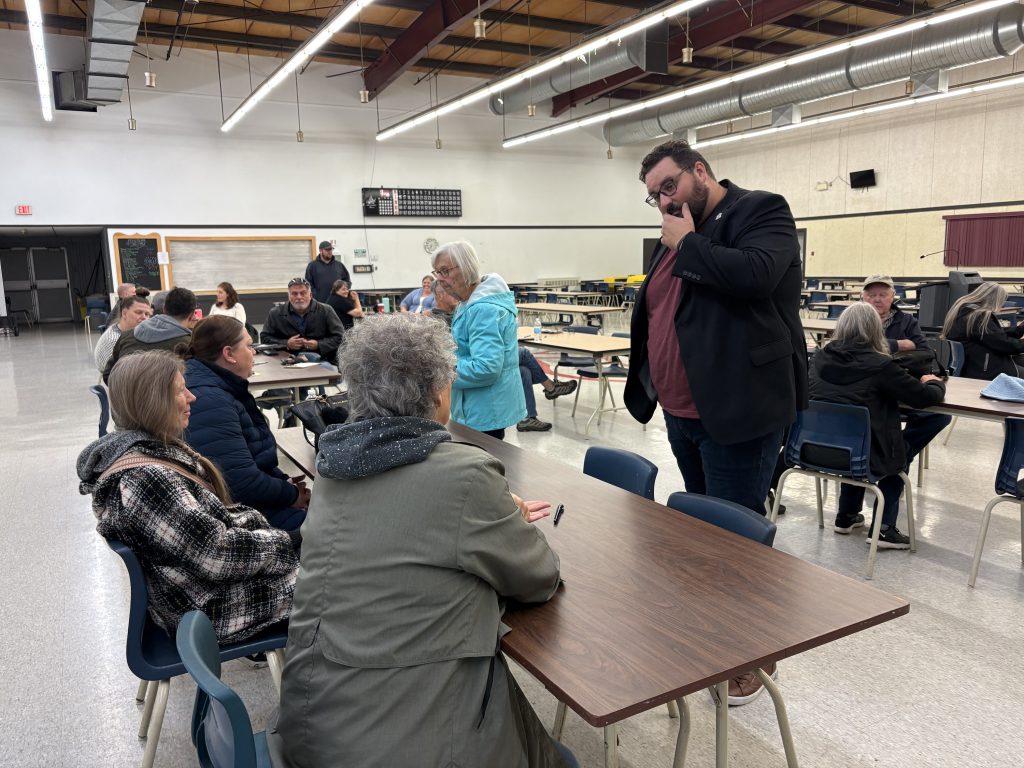
Listen to the audio version of this story below