The Housing Trust of Nova Scotia is a non-profit organization dedicated to creating community workforce housing rentals across the province. They partner with communities, governments, and local organizations to develop, preserve, and revitalize homes that facilitate and enable local economies, and are guided by their mission and values, and are committed to building strong, vibrant communities where everyone has a place to call home.
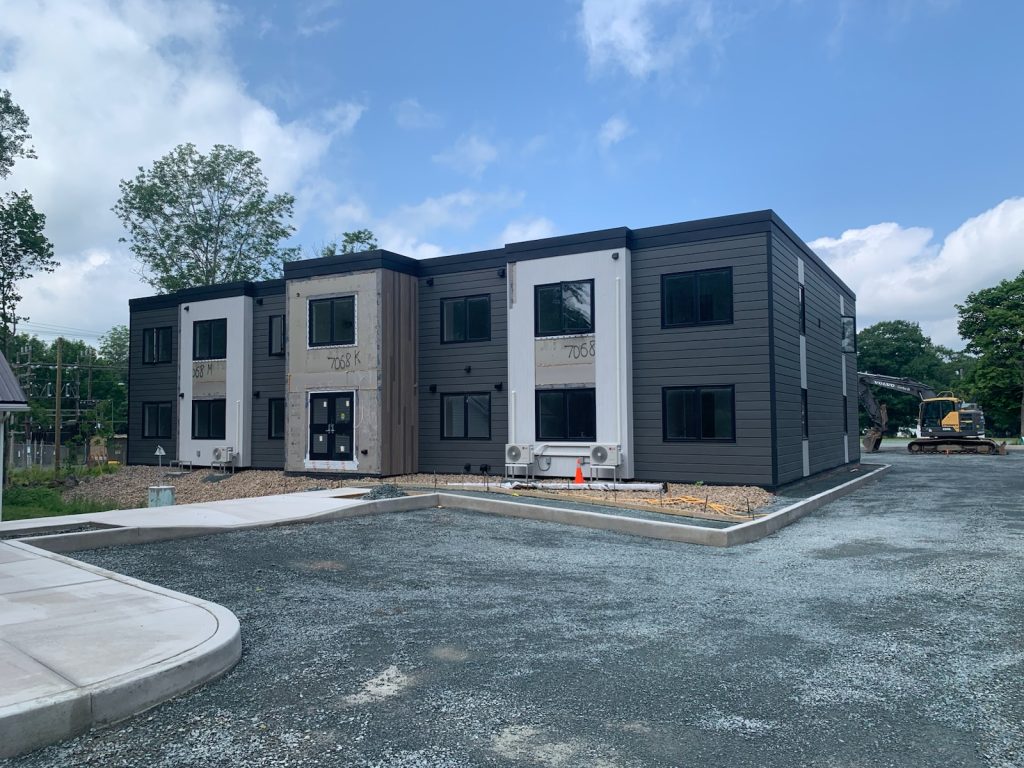
The “Housing for Healthcare” initiative, in partnership with the Government of Nova Scotia, builds and operates affordable, quality housing for essential workers, and work with local healthcare organizations to reach eligible residents, They are currently preparing to open 1-Bedroom and 2-Bedroom units on Waterloo Street in Liverpool.
This initiative addresses two pressing social issues: 1) Lack of housing for healthcare workers 2) Shortage of non-market rental housing
They will be available for healthcare or skilled worker sectors, including workers that support the operation of a healthcare facility including but not limited to:
– Doctors
– Nurses
– Technicians
– Administrative support staff
– Orderlies
– Continuing care assistants
– Support Staff
– Maintenance Staff
Rental rates will be based on a mixed income model, and some households may be eligible for an incentive towards or reduction in their rent based on total household income.
For more information call Heidi Bennett, Housing Advisor for the Housing Trust of Nova Scotia at (902) 410-0244 or via email – heidi@housingtrust.ca.
John Rogers says the proliferation of short-term rentals is violating his rights as a property owner. (Rick Conrad)
Imagine feeling like your neighbourhood has been turned into a party zone.
That’s what John Rogers says it’s like to live in White Point Estates, near Liverpool.
And he blames the Region of Queens for letting it happen.
He says the municipality’s zoning rules are essentially overriding property covenants that forbid short-term rentals like Airbnbs from operating in his subdivision.
“These houses are purpose-built for partying basically,” Rogers recently told QCCR in an interview.
“In the summertime, it’s like living in a campground. … It’s just people coming in and out every weekend.
“It’s frustrating. It’s disappointing. We’re being denied the right to enjoy our own property because council believes it’s better to give the rights to people who don’t live here and let them make money on their property.”
The Nova Scotia government requires short-term rentals to be registered with the province. To get that registration, property owners have to prove that land use bylaws in their municipality allow them to operate their house as an Airbnb.
In Queens, White Point Estates is in the “resort” zone, which allows short-term rentals.
“My neighbour’s 50 feet from me, and it’s an Airbnb, I can hear them all day, all night,” Rogers says.
“One group of renters lit a house on fire so we had fire trucks and all that wailing through the night. We’ve had fireworks when they’re not allowed to have fireworks. We’ve had full-out weddings in places, so the streets have been blocked with cars, traffic, you can’t get by.
“We have a lot of nosy renters who feel like they could just walk on other people’s property, so I’ve had people on my property filming my house. I’ve had people come into my driveway and do exercises because my driveway’s paved so they feel like, ‘Oh we can go in there and do jumping jacks and pushups.’
“So it’s a lot of nuisance and just the fact that 30 per cent of your neighbours change every weekend, … and you get new neighbours the following week and you don’t know who they are.”
When somebody buys a property in White Point Estates, they must agree to a list of 14 restrictive covenants on what they can do with the land. The first rule states that only one single-family dwelling is allowed. That structure must be used only for residential purposes, and property owners cannot do anything that creates a nuisance for their neighbours.
Click on the image to read the covenants in White Point Estates
Rogers says he and his wife bought the land and built their house five years ago partly because of those rules.
But he says that because municipal bylaws allow short-term rentals in White Point Estates, about a third of the subdivision’s property owners are ignoring those covenants and using their houses as Airbnbs. He said the problem has only gotten worse in the past five years.
He says it’s too expensive to take all those property owners — he estimates there are about 15 or 16 rentals in White Point Estates — to court.
He says some of the properties sleep up to 10 people and aren’t even owned by residents, but by companies based in Ontario or other parts of Nova Scotia.
“The only remedy is to change the bylaw in the zone to reflect the covenants, which is to not allow short-term rentals to operate within that zone. And it’s a small zone, so we’re contained to three streets. We’re not asking them to change the rules of the county. We’re just asking them to abide by the rules in our zone, which is our subdivision.”
Rogers and some of his neighbours met with Mayor Scott Christian and District 1 Coun. Roberta Roy in July.
Christian told QCCR he understands residents’ frustration, but he said there can’t be a quick fix.
“I don’t think it would be appropriate for us to make a hasty decision about short-term rentals as it pertains to the resort zone and not take a bigger-picture look at how we’re handling short-term rentals across Queens County.”
“I can understand and appreciate their frustrations,” Christian says, “but I do think that the way that council is going about it, the handling of it is appropriate that we do our homework and look at it with a big-picture mindset so that we land on an equitable and appropriate approach for all of Queens County.”
Christian said that change affected only the downtown commercial zone. Outlawing short-term rentals in White Point Estates would have bigger implications.
“Short-term rental properties are prevalent throughout all of Queens County. Not just in south Queens and not just in the White Point Estates. So this is a really complex one.”
In the meantime, residents like John Rogers will continue to press regional council to make a change so that they can enjoy their homes again.
“You know, this isn’t about me.I’m not on some glorious campaign. I’m challenging council to do the right thing. And I don’t believe council should be bestowing rights on people who don’t live in the county and trash on the rights of the people who do.
“Defend the rights of the people who live here and pay taxes here and vote here. That would be the right thing to do.”
Members of Queens Neighbourhood Co-operative Housing join local politicians on Monday as governments announced millions in funding for a co-op housing project in Liverpool. Pictured are QNCH’s Eric Goulden and Susan MacLeod, South Shore-St. Margarets MP Jessica Fancy, Region of Queens Mayor Scott Christian, Queens MLA Kim Masland, QNCH housing consultant Michael Blair, QNCH’s Janice Wentzell, Randi Dickie, housing consultant Earl Mielke and Queens Coun. Jack Fancy. (Rick Conrad)
As crews worked in the background, politicians from all levels of government on Monday officially announced millions in funding for a new co-operative housing development in Liverpool.
South Shore-St. Margarets MP Jessica Fancy, Queens MLA Kim Masland and Region of Queens Mayor Scott Christian were among those on hand for the announcement of $11.91 million from the federal and provincial governments for the development.
Fancy said the federal contribution of $6.96 million in low-interest loans through CMHC’s Co-operative Housing Development Program will help secure affordable housing for many in the area.
“It’s a chance for a fresh start for many, including some of our most vulnerable people in our community.”
Fancy said the Liverpool co-op housing project is one of seven approved across Canada. It’s being built by Bird Construction.
The province is contributing $4.95 million through its Department of Growth and Development.
Masland applauded the “passion, dedication, effort and grit” of the co-op’s board members to make the project a reality.
“Plain and simple, we need more affordable housing in our community, and it is because of organizations like Queens Neighbourhood Co-operative Housing that more people will have a safe and affordable place to call home.”
The co-operative got approval for the federal and provincial funding earlier this year, but Monday’s announcement was the first time they could speak about it publicly.
The Region of Queens sold four lots to the group in 2023 for $1 and rezoned the area to pave the way for the development. It also committed $203,000 for project management and architectural fees.
Other funding includes:
$175,000 from the Federation of Canadian Municipalities
$343,500 from the Nova Scotia Sustainable Communities Challenge Fund
$400,000 from Efficiency Nova Scotia
$75,000 from the Nova Scotia Community Housing Growth Fund
Mayor Scott Christian said the municipality is looking at other properties it can give to groups like QNCH to help spur more affordable housing in Queens.
“This is a step in the right direction. We all know that we need to do a lot more. We have a lot of folks who need access to affordable, accessible, barrier-free housing, and I commend these folks in terms of their environmental stewardship and working toward net-zero emissions too, because we also need to build homes in a way that’s climate resilient and is appropriate for the future.”
Planning for the project began about four years ago, with most of the work on design and funding happening in the past two and a half years.
The 30 fully accessible apartments will include one-bedroom, two-bedroom and three-bedroom units. It will be targeted toward seniors, with about 70 per cent occupancy set aside for older residents, but available for anyone who meets the application criteria.
Rents will be based on income, but the maximum charged for a one-bedroom will be $790 a month, $1,004 for a two-bedroom and $1,100 for a three-bedroom.
Queens County is in desperate need of affordable housing. Data from the 2021 census showed that 35 per cent of renters in Queens spend more than 30 per cent of their income on housing.
And 34 per cent of Queens residents have considered leaving the community due to housing issues, according to a report from the South Shore Housing Action Coaltiion.
To keep pace with population growth, the report projected that the county will need 555 new units by 2027.
On Monday, even the project’s construction foreman was interested when he heard about the rents.
Michael Blair, a housing consultant working with the co-op on the Lawrence Street project, said the group’s ultimate goal is to try to build 100 affordable units throughout Queens County.
“We’re thrilled to finally have the funding both by the CMHC through the Co-operative Housing Development Program and through the province with the Nova Scotia Department of Growth and Development announced. Now we’re able to tell the story about the exciting new neighbourhood that we’re building.”
He said the apartments’ net-zero, passive design means that tenants won’t have to worry as much about rising energy costs.
“Building with highly energy-efficient mechanical and electrical systems, triple-glazed windows, extra insulation, all those things contribute to the long-term sustainability of the co-op, of the neighbourhood, and kind of insulates it to a certain degree from increasing energy costs, which thus make (us) able to keep … (the units) affordable long-term.”
Region of Queens councillors changed the region’s land use bylaw on Tuesday to greenlight a plan to turn 194 Main St. in Liverpool into apartments. (Rick Conrad / File)
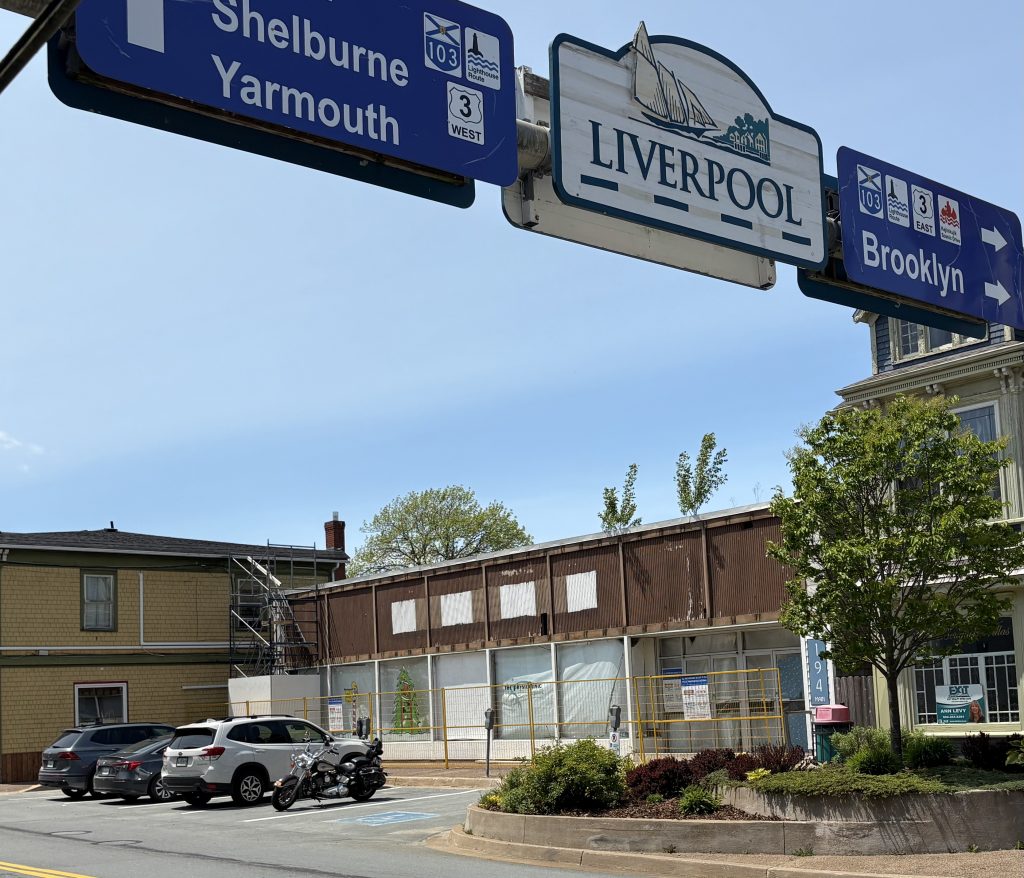
The Region of Queens has cleared the way for a developer to turn the old Stedmans building in downtown Liverpool into apartments.
Councillors voted unanimously on Tuesday evening to change the region’s land use bylaw to remove the requirement for more than half of a property’s ground floor to be commercial space.
Developer Eric Fry originally wanted to build 16 apartments, with indoor parking and storage at 194 Main St.
When councillors rejected that plan in July, he returned with a new proposal that would include two small commercial units on the ground floor, in addition to 14 apartments.
The region’s planning advisory committee initially wanted to amend the bylaw to include a prohibition against a building owner using commercial space as an office.
But after a public hearing on the proposed bylaw changes on Nov. 12, the municipality’s lawyer told them they didn’t have the authority to dictate who uses a property.
On Tuesday evening, councillors voted for no restrictions on how the commercial areas can be used.
Under the new bylaw, ground-floor dwellings need to be at the back of the building behind the commercial space.
That commercial space must be a minimum of 12 feet deep and 300 square feet.
District 3 Coun. Courtney Wentzell, whose area includes downtown Liverpool, said he had mixed feelings about the changes.
“I have talked to some residents and some business owners and I do understand the aspect of maintaining commercial space,” he told his fellow councillors.
“And I know with the new businesses coming into town, many new businesses, there’s been a concerted effort to maintain Main Street as a commercial zone. I get that, … but I also look at that Stedman’s building with the rats playing outside and the trees growing through the roof, and I got to say that the commitment of somebody that actually wants to put money into that building and what’s the alternative, that we let it rot and let it fall down, or we tear it down?”
Denaige McDonnell, who lives on Main Street, spoke against the changes at the public hearing.
She told QCCR on Tuesday evening that council’s decision was shortsighted, especially without a comprehensive plan for the downtown.
“When we’re talking about bylaws that affect an entire region, I think that it’s flawed thinking to make a decision when it’s based on a single building,” she said.
“It seems that things really are being dealt with, I guess, maybe on a transactional basis and not having a holistic view of the overall system quite so much. … And so I would like to see a little bit more strategy around how we get those buildings up to a standard where they can be used. I think that what we’re doing here is sort of like, well, any use is better than commercial use, but we’re not going to the systemic root of the problem.”
Mayor Scott Christian said he understands those concerns and agrees that a strategic plan for the downtown is needed. But he said the region can’t wait for that process to happen.
“I’m really pleased to see that amendment to our land use bylaw because we weren’t fostering an environment that was business friendly,” he said in an interview.
“So I’m excited to see how the business community responds to a new bylaw infrastructure. And I agree that only changing the bylaw is not a magic bullet to revitalize downtown. We need a good strategy. But I think that providing for more flexibility in our bylaw in a way that’s quite innovative, you don’t see a lot of downtowns and small towns that have this level of flexibility. And so I’m hoping that it sets us apart and creates an environment where we can then pursue a robust strategy to revitalize downtown.”
The new land use bylaw hasn’t gone into effect yet.
People have 14 days to appeal council’s decision to the Nova Scotia Regulatory and Appeals Board.
Eric Fry speaks during a public hearing Wednesday on proposed changes to the Region of Queens land use bylaw. (Region of Queens YouTube)
It will take a little longer to find out if the old Stedman’s building on Main Street in Liverpool will have a new life as an apartment complex.
The Region of Queens held a public hearing on Wednesday on proposed changes to the municipality’s land use bylaw that would allow for more residential space on the ground floor of buildings in the downtown commercial district.
At their meeting afterward, councillors voted to seek legal advice on whether they have the authority to make one of those changes.
Developer Eric Fry wants to turn 194 Main St. into 18 residential units, four of which would be “hotel suites”, and two main-level commercial units of 300 square feet each.
Fry bought the 30,000-square-foot building earlier this year and has been trying to get municipal approval for his apartment proposal since February. His original plan was for 16 residential units, indoor parking, storage and no commercial space. Councillors refused to change the bylaw to allow that to proceed.
After Fry listed his property for sale, the region’s planning advisory committee agreed to consider a revised a proposal and return it council.
Municipal rules require that at least half of a building’s ground floor must be commercial space.
On Wednesday, Fry spoke briefly in support of the bylaw changes. Four Liverpool residents spoke against them.
Tara Druzina said she wasn’t sure whether councillors had the authority under the Municipal Government Act to dictate who uses space in a building. A proposed change would forbid the owner or property manager from using one of the commercial spaces as an office.
“Municipalities regulate land-use types and their characteristics, but discriminating against and between identical uses based on ownership arrangements may exceed municipal jurisdiction,” she told councillors.
Denaige McDonnell said she was concerned that councillors were missing the mark in trying to change the bylaw.
“A common argument for expanding residential use is that there isn’t enough demand for commercial space, but deeper issues are at play here,” she said.
“ Many of our commercial buildings simply do not meet current building code, accessibility, or safety standards that are required for occupancy or for commercial use. And really what that’s telling us is that it’s not a demand problem, but it’s a readiness problem.”
McDonnell said the region is trying to change its bylaw to appease one property owner without having a comprehensive commercial plan.
“Structural changes like this need to be informed by clear, data-driven, county-wide strategy, not as reactions to individual development proposals.
“This proposed bylaw change may offer a short-term perception of flexibility and reward a single proponent, but it comes at a long-term strategic cost. Our commercial spaces are a very valuable part of our community. They are our most valuable assets for the future, and they deserve to be protected, planned and leveraged as part of a larger vision for economic sustainability.”
Susan McGibbon said she was worried the process is moving too quickly without a proper assessment of business in downtown Liverpool.
“I’m not saying that is your fault, council. This goes way back. There’s been no development of an economic plan for the downtown for a very long time. So there’s no research, there’s no data, and there’s been little to no expertise in the understanding of commercial and retail in the downtown.”
Paul Deveau pointed out that during public consultations in the spring, residents and business owners said that there needed to be a downtown plan that protects commercial space while adding more housing.
“But here we are a few months later, and you’re again trying to amend a bylaw without a comprehensive plan.”
Later in the meeting, councillors decided that they couldn’t make a decision on the proposed changes until they got legal advice.
Mayor Scott Christian asked whether staff sought advice on the wording around what landlords can do with the commercial space.
Staff conceded they had not.
Council asked staff to have that information ready for their next meeting on Nov. 25.
Until then, the land use bylaw remains unchanged. Any substantive changes would likely restart the process and require council to have another public hearing.
Once councillors voted for a legal opinion, Christian called a break and met with Fry in his office for about 15 minutes.
Afterward, Fry told QCCR that he appreciated residents’ comments and their passion for the downtown. He said he understands that council has to make sure they have authority to make the changes.
“It’s unfortunate that this wasn’t flushed out as maybe as thoughtfully as it should have been. So, I understand there is a process to remedy, so we’ll have to wait until we hear what those next steps are.”
Region of Queens councillors on Tuesday voted on a revised plan to develop 194 Main St. in Liverpool. (Rick Conrad)
Region of Queens council have changed course to allow a developer to build apartments on Main Street in Liverpool after all.
At their regular meeting on Tuesday morning, councillors voted unanimously to start the process to amend the municipality’s land use bylaw.
A public hearing will be held on Nov. 12 at 9 a.m. in council chambers about changing the bylaw to allow more ground floor space to be used for residential uses in the downtown commercial zone.
Currently, no more than half of a building’s ground floor can be used for apartments.
Developer Eric Fry approached the region in February to change that rule to allow him to turn all of 194 Main St., commonly known as the old Stedman’s building, into apartments. His original plan was for 16 units, with indoor parking and storage.
In July, councillors rejected changing the bylaw. Fry immediately listed the property for sale.
He returned to the region’s planning advisory committee in August with a new plan that would include two commercial units on the ground floor of the 30,000-square-foot building, in addition to 14 apartments.
His latest proposal is for 18 residential units, four of which would be “hotel suites”, and two Main Street-level commercial units of 300 square feet each. One of those would be a laundromat.
“So given the significant size of the building at 194 Main St., 50 per cent of the ground floor area of the building creates some challenges for the owners of the building,” Director of Land Use Mike MacLeod told councillors.
MacLeod reminded councillors that if the bylaw is changed, it would apply to all property owners in the downtown commercial zone.
“Any proposed amendments would apply not only to the applicant’s property, but would apply to all other owners of property of commercial buildings who want to convert more than 50 per cent of the ground floor area to residential uses.”
Planning advisory committee members originally discussed recommending a minimum depth of 6 metres for commercial space on the ground floor, but settled on 3.66 metres or 12 feet and a minimum floor area of 27.88 square metres or 300 square feet.
The other changes proposed would require that commercial uses extend along the full width of the building facade from its main entrance.
Deputy Mayor Maddie Charlton, who is a member of the committee, said PAC members believe the bylaw needs to be more flexible for property owners in the commercial zone.
“There are buildings of significant sizes that make it really challenging to allow for more residential while protecting the commercial area. And so what this does is it protects the Main Street and surrounding streets in those commercial zones or commercial core zones anywhere.
“We do recognize that there are folks beyond this proposal that have an appetite to decrease the size of commercial space. They could put in more residential space, which we feel like is a win-win.”
Under the proposed amendments, the commercial units could not be used as office space by the building owner or manager.
Mayor Scott Christian said after the meeting that the changes would be good for downtown Liverpool.
“We’re hoping to see that generate more investment, because right now we all know that there’s a lot of vacancy and underutilized spaces in the downtown core and there’s also a lot of space that could be repurposed for residential units, which we know there’s a huge demand for. So we’re hoping that we’ve struck a good balance there.”
Christian said the municipality looked at rules in other areas for guidance on the changes. He pointed to Halifax, which encourages businesses to set up as boutique shops in some buildings.
“Like a fishmonger or a small deli or an ice cream shop or a candy shop or small sort of micro retail models,” he said in an interview. “If property owners take advantage of the opportunity to create really small spaces, that micro retail model, which I think could be attractive to our residents and our visitors.”
Christian said he understands if some people might believe the process has been tailored to suit one developer. But he says it’s an issue the community had to tackle.
“That was certainly the impetus or the catalyst to have the conversation, but I’m quite excited about where we’re going to land. I think that if the amendment goes through, I think it’s a step in the right direction, in getting more flexible in the way that folks can use those buildings in the downtown core to make it more vibrant, breathe more life, bring more people into the downtown core.”
In a survey conducted by Halifax consultants UPLAND Planning in July, 18 of 30 respondents said they were fully or somewhat supportive of changing the bylaw.
But 90 per cent of the business owners who responded were against a bylaw change. They said they were concerned about eroding the commercial area.
A new group wants to hear from you on the need for transition housing services in Queens County for survivors of domestic violence.
Jane’s Place Society is holding two public consultation sessions Monday night at the Liverpool Fire Hall at 6:30 and on Oct. 2 at 6:30 at the North Queens Fire Hall in Caledonia.
The group wants to provide second-stage housing for women and families who are leaving shelters, but still need supportive places to live.
Volunteers with the society want to buy a property and develop it into apartments to provide stable, secure housing.
The sessions on Monday and on Oct. 2 are designed to get as much feedback as possible from residents all over Queens County.
Deborah Herman-Spartinelli is the chair of Jane’s Place Society, a group working to bring second-stage housing to Queens County for survivors of domestic abuse. (Rick Conrad)
A new group is in the early stages of trying to create safe and secure housing for Queens County residents fleeing domestic violence.
Jane’s Place Society wants to provide second stage housing for women and families who are leaving shelters, but still need supportive places to live.
Group chair Deborah Herman-Spartinelli says Queens County needs more supports for victims of intimate partner violence.
“The plan is to buy a property and develop it into second-stage housing, which means making apartments. When you leave a transition house you go into this second-stage housing for a limited time. It gives women and their families a step in the right direction to get their finances in order and get back into the regular (housing) market eventually.”
She says a small group of Queens County residents got together about two years ago to talk about forming the society. They’ve recently been meeting with officials from all levels of government, including Queens MLA Kim Masland and South Shore-St. Margarets MP Jessica Fancy-Landry. They’ve also met with representatives from Harbour House, a transition house in Bridgewater that provides services in Queens County.
“This is new. Even though the idea was brought together two years ago it didn’t really get any feet under it till this spring,” Herman-Spartinelli says.
“I think Queens County is underserved and we felt like we needed to do something. And we have the seed money from some donors and we felt like this was the best way to (do it). After talking to Harbour House and various levels of government and so on. We’re still meeting with different levels of government again to go over this second-stage housing and how to go about it.”
The Nova Scotia government declared intimate partner violence an epidemic last September and increased funding to transition houses across the province.
The Transition House Association of Nova Scotia says its member organizations supported about 4,500 women and children in abusive situations in 2024. It says the problem is only getting worse.
Kelly Ann Hamshaw, the executive director of the South Shore Transition House Association which operates Harbour House, says there’s a critical need for second-stage housing on the South Shore.
“We desperately need access to second-stage housing,” she told QCCR earlier this year. “For women to be able to access our shelter environment, they need to be able to transition to safe and secure housing. So there’s a critical shortage of that across the entire province.”
Herman-Spartinelli, who has a background in construction, says the group will have up to nine members on its board. And it will be looking for volunteers to help in other ways.
She says they’re also planning public consultation sessions around Queens County, likely to begin in the next month.
“We’re trying to get enough people on the board from all parts of Queens County, trying to get their opinion and their thoughts because it’s a big community. It can’t just be focused on Liverpool. It might have the secondary housing in Liverpool, but it is for the whole community, and it could even house people from other communities too if there was room.”
Jane’s Place is named after Jane Hurshman, the Queens County woman convicted of killing her abusive ex-husband in 1982.
Herman-Spartinelli was a friend of Hurshman’s. She says the problem of intimate partner violence is just as prevalent more than 40 years later.
She says the group’s members know there’s a lot of work ahead of them. But they’re committed to creating safe and secure second-stage housing for women and their families in Queens County.
“We’re going to work very hard and we have positive support from the people we’ve met so far, so I think it’s not going to be quick because nothing ever is. So it’s not going to happen tomorrow, but it’s going to happen.”
If you’re interested in volunteering with Jane’s Place Society, you can email Deborah Herman-Spartinelli at dahsnseb@gmail.com.
The old Stedman’s building in downtown Liverpool may still be developed into apartments. (Rick Conrad)
There may be a second life for the old Stedman’s building on Main Street in Liverpool after all.
Region of Queens councillors in July rejected developer Eric Fry’s attempt to turn 194 Main St. into 16 apartments.
The region’s land use bylaw limits the amount of residential space on the ground floor of of buildings in the downtown commercial zone to a maximum of 50 per cent.
Fry applied to amend the bylaw so that he could have only apartments in the building, but council rejected it.
He listed the building for sale shortly after council’s decision.
But he has since returned with a new proposal that would include two commercial units on the ground floor, with the rest of the 30,000-square-foot building devoted to 14 apartments, parking and storage space.
That would still require council’s approval and a public hearing.
On Wednesday, Fry said he wasn’t ready to comment on his amended proposal to the region’s planning advisory committee.
The committee had a look at the new plan at their August meeting.
But Mayor Scott Christian said in a recent interview that the committee wasn’t comfortable making any new recommendations to council.
“And so I think just the devils in the detail from a bylaw, from a policy perspective of how do you get to a place where you land in a spot where you’re making sure that you have the right language to facilitate those policy objectives that we want to see, which is again, maintaining the commercial storefronts in the protected commercial zone while allowing flexibility for developers to repurpose other parts of those buildings for residential purposes.”
Fry said Wednesday that he’s still working with the region on options for the building. He said there may be something new to report in the next few weeks.
Thomas Bjerke of Waterloo Street in Liverpool during an appeal hearing Tuesday of a proposed development next to his house. (Region of Queens YouTube)
A 10-unit apartment building in Liverpool, geared toward health-care workers, will go ahead after regional councillors turned down an appeal by local residents on Tuesday.
Thomas Bjerke and his wife live next to the undeveloped land on Waterloo Street. Bjerke told councillors he was worried about how the development would affect his and his neighbours’ quality of life. He appealed the site plan filed with the region.
“We are opposed to this project from the get-go,” he said at the appeal hearing, which was held during the regular council meeting.
“You’re taking the essence out of the neighbourhood by plopping a big building into essentially a house lot. So now we’re just foregoing any stage of quality of life.”
Bjerke said he and his neighbours are worried about increased traffic, noise and light pollution from the two-storey complex once it’s built.
He said that an enclosed garbage area planned for the property would be less than six metres from his bedroom window and about two metres from his backyard fence.
He said the area already has a problem with raccoons and rodents.
“But rats are the biggest issue in that area and we fear that by putting a garbage area that close to us and any of our neighbours is a deterrent to any healthy living because we have a backyard that will be right behind this and this is where we do most of our recreation during the summer months.”
The Housing Trust of Nova Scotia has been working on plans for the building for about a year.
They have a contract with the Nova Scotia government to build 116 modular units for health-care workers around the province.
Jordan Rogers, an engineer and project manager with the trust, told councillors that the plan is to build six two-bedroom units and four one-bedroom units on Waterloo Street, just around the corner from Old Bridge Street.
He said tenants are required to be nurses, doctors, hospital cafeteria workers or others who work in health care. If workers from that sector don’t fill the apartments, then they would be offered to those in the skilled trades. But Rogers said that the housing trust hasn’t had a problem finding tenants who work in health care.
He said they worked closely with Region of Queens officials to ensure they complied with all bylaws. He also said they could look at relocating the garbage enclosure to another part of the property.
“We had to go through and check all of the boxes based on the bylaws, working with Mike (MacLeod) and his team to ensure that everything meets all those requirements with respect to, for example, garbage and parking, for meeting the absolute minimum and where we can, go further and beyond to those requirements.”
Mike McLeod, the region’s director of land use, told councillors that the Housing Trust’s proposal meets all municipal requirements.
Councillors voted unanimously to deny the residents’ appeal.
After the meeting, Bjerke and other residents said the municipality’s appeal process was rushed and excluded some adjacent property owners.
“The engineer himself said they worked on this for over a year now and we got two weeks to appeal something that affects our lives and everybody in the neighbourhood,” Bjerke said in an interview.
“I find that unacceptable.”
Dina Dexter of Liverpool was at the meeting to speak on behalf of her father and brother who live next door to Bjerke. Their backyard also borders the lot where the new building will be.
She said her family didn’t receive a notice that they could appeal, and when she asked municipal officials about it she was told the appeal period was over. Then she was given the wrong date for the hearing. On Tuesday, she wasn’t given a chance to speak.
“And if it wasn’t for my neighbours telling me about this we would not have even known,” Dexter told QCCR. “There’s no posting of a sign. There’s nothing.
“We desperately, desperately want more housing, but in a place like Liverpool, Nova Scotia, where there is so much space. There’s been a derelict abandoned piece of land since the Canadian Tire burnt down in the ’90s on Main Street. Why is it that (this building) is being placed in such a bizarre manner in essentially a backyard lot?”
Deputy Mayor Maddie Charlton told QCCR that she understands the residents’ frustration but that the region fulfilled its obligations under the Municipal Government Act.
She said if residents encounter any problems with the development, they can report those to the region’s bylaw enforcement officer.
Workers were cleaning up in front of 194 Main St. on Wednesday morning. The construction barricades have been removed and work has stopped. (Rick Conrad)
UPDATED Wed., July 9 at 1:55 p.m.
A rundown building in downtown Liverpool will go back on the market after regional council denied a developer’s request to turn it into apartments.
Councillors voted Tuesday not to change the municipal land use bylaw to allow Eric Fry to build up to 16 apartments at 194 Main St., known locally as the old Stedmans building.
Fry, president of SDL Investments Limited, told QCCR in an emailed statement on Wednesday evening that he won’t pursue the project any further.
“Unfortunately, we will be ceasing any further work on this project and putting the building up for sale immediately,” Fry said.
“While I understand that Liverpool does not wish to abandon its commercial presence on Main Street, we firmly believe that this decision is very short-sighted and does absolutely nothing to move the town forward, encourage new residents to move here or assist in revitalizing the downtown.”
He could not be reached for a followup interview about his statement.
The municipal planning strategy allows residential development downtown only in buildings with a primary commercial use. The bylaw requires that residential buildings in the downtown core have at least 50 per cent commercial space on the ground floor.
Fry’s proposal was to transform the whole building into living space.
Deputy Mayor Maddie Charlton told QCCR on Tuesday morning after the council meeting that even though councillors voted 5-2 against a bylaw change, she hopes Fry continues with some apartments in the space. She made the comments before Fry’s evening statement.
“I think our community and our council members have made it very clear that they want there to be a downtown core commercial presence. And that is our Main Street,” Charlton said in an interview. She chaired Tuesday’s meeting because Mayor Scott Christian was on vacation.
“And there is allowance now for residential units to go in there to still allow for some housing. So there is flexibility there. I do certainly hope that the developer will continue with this project in the revised way that it reads in our bylaws now, but certainly if he chooses not to, that’s certainly up to him.”
Fry bought the building in January for $235,000. In February, he applied to the region for a bylaw amendment to allow a residential-only development with indoor parking.
Councillors considered three options: to allow residential development as a main use in downtown, to allow it by development agreement with council’s approval or to keep the bylaw unchanged.
Before Fry acquired the property, it sat vacant for a few years and was heavily damaged by extreme weather. Before that, it housed a dollar store and office space on the ground floor.
Workers have been cleaning up the building’s interior and fixing damage since early spring.
“We are extremely shocked and disappointed in council’s decision this morning to deny our application to amend the Land Use Bylaw and Municipal Planning Strategy language,” Fry said in the statement.
“Having owned properties in Queens for more than 10 years, our understanding was that Liverpool needs more housing. Our initial residential building, The Falls in Milton, has been fully occupied since it opened last fall and there is a list of residents wanting to move in when a unit becomes available. This led us to approach RQM about an additional project that would create 16 additional units in the heart of Liverpool. Not to mention, convert an otherwise dilapidated structure into a signature building to anchor the town’s Main Street.
“Liverpool needs residential housing and not additional commercial space clearly demonstrated by the number of For Rent signs in the downtown core.”
The region hired consultants UPLAND Planning from Halifax to hold two public engagement sessions and an online survey on the potential bylaw change.
Thirty people responded to the survey, and only seven people attended the information sessions at Queens Place Emera Centre.
Eighteen of the 30 survey respondents said they were supportive of removing the commercial requirement from the bylaw.
But local business owners told the consultants they were worried about how it could potentially erode the downtown commercial zone.
The region’s planning advisory committee met on Monday to discuss the consultants’ report.
They recommended sticking with the status quo and keeping the bylaw unchanged.
District 5 Coun. Jack Fancy voted against the motion to maintain the status quo.
He said the building needs a lot of work and he’s worried Fry might sell it.
“So in order to make it so it’s profitable, it has to be a lot of money coming back,” he told his fellow councillors.
“ That’s the whole idea. You don’t put money into something if you’re not going to get your money back out of it.”
Fry also owns The Falls in Milton, a three-storey apartment complex on the Mersey River, geared toward people 55 and over.
His plan for 194 Main St. was to have apartments on two levels, with a parking entrance at the back of the building on Water Street.
“I’m not an expert,” Fry said in his statement to QCCR, “but from my experience, I don’t think this type of thinking is going to move the needle in a town with so much promise and potential.”
Here is what councillors voted on and how they voted:
MOTION: That Council of the Region of Queens Municipality maintain status quo and deny the application to amend the Municipal Planning Strategy and Land Use Bylaw to allow new multiple unit residential dwellings as a permitted main use in the Downtown Commercial (CD) Zone.
FOR: Maddie Charlton, Courtney Wentzell, Stewart Jenkins, Vicki Amirault, Wanda Carver
Ryan MacLean with UPLAND Planning and Design Studio takes people through the options regarding a proposed change to how residential developments are handled in downtown Liverpool. (Rick Conrad/File)
It was a small group, but an opinionated one.
Some Queens County business owners and residents who responded to a survey don’t want a bylaw change that could dramatically alter Liverpool’s Main Street commercial landscape.
Developer Eric Fry of SDL Investments Limited wants the Region of Queens to amend its land use bylaw to allow him to build a 16-unit apartment building in the old Stedmans space at 194 Main St.
The bylaw allows residential development downtown only in buildings with a primary commercial use.
Fry doesn’t plan any commercial presence in the building. So he applied to the region in February to change the bylaw.
The region held public engagement sessions on June 17 and 19 for business owners and residents. It also created an online feedback form that was available from June 12 to 24.
Consultants UPLAND Planning of Halifax conducted the sessions and survey.
The public had three options to consider: to allow residential developments in the commercial district as a main use by right, to allow them by development agreement which would require council approval, or to stay with the status quo and reject any amendments to the bylaw.
In their report for this week’s regular council meeting, UPLAND said seven people who weren’t members of the region’s planning advisory committee, the media or council attended the engagement sessions at Queens Place Emera Centre.
Thirty people replied to the online survey. Nineteen of those said they live in Liverpool, while 17 said they live in another part of Queens County.
Eighteen of the 30 respondents said they were either fully or somewhat supportive of changing the bylaw to remove the commercial requirement.
Ten were either fully or somewhat against it.
But 90 per cent of the business owners who responded were against a bylaw change. They said they were concerned about eroding the commercial area.
Half of the business owners said they would support standalone residential use by development agreement. And 40 per cent said they wanted no change to the current bylaw.
Many people were concerned that there seems to be no vision or strategic plan for Main Street or downtown Liverpool. They want to see a plan driven by the community, not by developers.
Some were also frustrated by the lack of communication from the region about the proposal, the engagement sessions or the survey.
And the consultants found that there was a divide between those who want to see more housing downtown and those who want to preserve Main Street as a commercial zone.
Councillors are due to discuss the report at Tuesday morning’s council meeting, which begins at 9.
Ryan MacLean with UPLAND Planning and Design Studio explains the options regarding a proposed change to how residential developments are handled in downtown Liverpool. (Rick Conrad)
It was a small turnout for the first public engagement session about a proposed change to downtown development in Liverpool.
The Region of Queens land use bylaw allows residential development downtown only in buildings with a primary commercial use.
Three options are on the table for the public to consider: to allow residential developments in the commercial district as a main use by right, to allow them by development agreement which would require council approval, or to stay with the status quo and reject any amendments to the bylaw.
The first drop-in session on Tuesday evening was geared toward the business community. The second session is focused on hearing from residents. That is scheduled for Thursday from 5 to 8 p.m. in the community room at Queens Place Emera Centre. There is also an online survey available.
The region hired UPLAND Planning and Design Studio from Halifax to lead the public engagement. Two representatives from that company were at Tuesday’s session, along with Mike MacLeod, the region’s director of land use.
Ryan MacLean, an engagement manager with UPLAND, said they’ve already heard a variety of opinions.
“People have expressed great support for any opportunity to increase residential development, expressing their concerns around the housing crisis, but then we’ve also heard concern around the potential for if you permit more residential uses, then it could erode the commercial character of the downtown.”
Beach Meadows resident Mary White is a member of the region’s planning advisory committee, which recommended having the public sessions.
She doesn’t want the bylaw to change. And she said she’d like to see the region do more to support local businesses.
“I think that we need to maintain the commercial spaces on Main Street and I think that we need to decide as a community what we want the future of our community to be. And if that’s to have a main core then we need to support that. And as a municipality, I would hope they would get together and decide some intitiatives to help the (businesspeople) that are there that have been struggling and hanging on for so long.”
Rigel Jones, executive director of the South Queens Chamber of Commerce, said she was staying open-minded about any changes to downtown development.
“I know the feedback we’ve gotten from members in the chamber is they’re struggling with foot traffic and that having more residents on main street could change that.”
Liverpool resident Paul Deveau said he’s against the bylaw change, though he’s in favour of more residential development on Main Street.
“I firmly believe that, yes, we should allow some apartments to be built down there under the current use. All across Canada municipality have come up with urban plans for their main streets. … It’s a work-live-play. So they should have apartments on top of these businesses but still have the businesses stay. The moment you start allowing them to be converted into residential that’s the moment that all the street is going to be turned into residential because that’s where they’re going to make the most money.”
He said he’s happy the municipality is “finally” having some public engagement, but said two sessions aren’t enough for such a significant discussion.
The consultants will prepare a report for council by the end of June. The region’s planning advisory committee will then review the report and make recommendations to council.
If there are proposed amendments to the land use bylaw, councillors would vote on those. If they’re approved initially, then there would be a two-week notice period for a public hearing to be held before the final vote.
Katharina Cochrane, vice-president of the South Queens Chamber of Commerce, says voters seem to be ‘dialled in’ during this election. (Rick Conrad)
Nova Scotia’s South Shore is known for its ocean breezes and waterfront vistas, drawing thousands of tourists each year to relax on its many beaches.
But in the 2025 federal election campaign, there’s nothing laidback about the race to win the riding of South Shore-St. Margarets.
Incumbent Rick Perkins is trying to keep the seat for the Conservatives, while newcomer Jessica Fancy-Landry hopes to win it back for the Liberals. Mark Embrett is running for the Green Party and Patrick Boyd is representing the People’s Party of Canada. Hayden Henderson is running as an Independent.
In the 2021 election, Perkins beat Liberal incumbent Bernadette Jordan by about four per cent, or 1,800 votes. The NDP finished a strong third, capturing 19 per cent of the vote. Turnout was about 63 per cent.
This time, however, with no declared NDP candidate, it appears to be a two-way race between Conservative Perkins and Liberal Fancy-Landry in the April 28 vote.
2025 FEDERAL ELECTION: QCCR INTERVIEWS THE CANDIDATES
Perkins lives in St. Margarets Bay and says this is the most enthusiastic voters have been since he first ran in 2019.
“I’m getting a great response, a lot of people appreciating the job I’ve done for the last four years, and we’re almost running out of signs,” he told QCCR in early April.
Fancy-Landry is originally from Caledonia, Queens Co., and now lives in Bridgewater. The teacher, community volunteer and first-time candidate says it’s been an energetic campaign so far, with lots of great conversations with voters.
“Tariffs and Trump seem to be on the lips of everybody that we are talking to,” she says.
“Affordability. We’re hearing a lot about environmental (concerns), coastal impact, whether it’s fishing, whether it’s Christmas tree farming, whether it’s some of our forestry. People have really been reaching out to see what we can do to help bolster and support the different economies along our South Shore.”
The Greens’ Embrett is an implementation scientist with Nova Scotia Health. This is the Queensland resident’s first full campaign, though he’s had his name on the ballot in previous elections for the Greens.
“I decided to align myself with the Green Party because their values around equity and transparency and government and fairness and policies really echoed my own beliefs and my own values.”
The People’s Party’s Boyd is originally from Vancouver and moved to Sable River three years ago, after spending some time overseas in international banking. This the first campaign for the consultant and hobby farmer.
“We’re sicker than we’ve ever been. We’re poorer than we’ve ever been. We’re more censored than we’ve ever been. And at the same time, you can see the parties that are running, they can really be described as a globalist uniparty. So whether you’re on the Liberal side or the Conservative side, it’s really hard to differentiate or distinguish between policies.”
The riding covers a vast territory, stretching from Head of St. Margarets Bay outside Halifax to Clark’s Harbour at the southwestern tip of Nova Scotia.
In the 2021 election, it counted just under 80,000 voters. But it lost some of those electors when the boundaries were redrawn in 2023.
People seem motivated this time to get out and vote. About 19,000 people voted in advance polls over the Easter weekend, mirroring early turnout in the rest of Nova Scotia at about 25 per cent.
Katharina Cochrane is vice-president of the South Queens Chamber of Commerce.
“I think people are really dialed in on this election this time which in the past people (were) not really that interested, but even younger people, first-time voters, they’re very anxious about the whole situation with America. And in general, it’s not as easy to get yourself in a situation where you can afford a house or get a place, live a middle-class life.
“So I think people are very anxious to see some changes.”
Cochrane says some of the main concerns in the Liverpool area are housing, poverty and rural development.
“There’s a lot of low-income housing that needs to be built. We’re one of the poorest ridings, probably in Nova Scotia, so that needs to be addressed. And then the whole rural development for small businesses, like what can be done to help small businesses to get on their feet when they start up. Come up with maybe tax breaks that would be helpful for the community.”
She said the commercial fishery and the environmental impacts of open-pen fish farming are also among the issues at play.
At a recent candidates meet and greet in Liverpool, voters said the lucrative lobster fishery, the fear of Trump tariffs and the overall tenor of politics were on people’s minds.
Danielle Robertson of Port Joli said she wants to see the federal government enforce fisheries regulations to help protect an industry that generates close to $500 million for southwestern Nova Scotia.
Fishermen are upset with what they see as illegal fishing in the wake of the Marshall decisions that guaranteed Indigenous communities a moderate livelihood in the fishery.
“Where I live I can see evidence of abuse of the fishery and overfishing,” Robertson said.
“And I’ve talked to fisheries officers who feel like they’re not able to do their job. And I think our resources are really taking a hit. I think our fish are being overfished. And I’m really hoping that the federal government will step up and enforce their federal fishing policies.”
Conservative Perkins says he’s been a big advocate for fish harvesters since he was elected in 2021. And he says the Liberals haven’t done enough to crack down on poachers.
“We believe it begins with enforcing the law, and then sitting down once the law is enforced and people are abiding by the law and negotiating for more access for First Nations. As long as there’s no penalty and no enforcement, why would I come to the table to negotiate when the government lets me do whatever I want, whenever I want?”
Liberal Fancy-Landry says that she wants to bring all sides to the table, while acknowledging the Department of Fisheries and Oceans must be allowed to enforce the law.
“Another thing is how many of the fishermen have actually been brought to the table when policy and draft bills have been in place. So it’s that engagement piece,” she says.
“I think a lot of the time people feel disenfranchised or disempowered because they haven’t been asked to be at the table. … The line’s drawn in the sand right now with Conservative versus Liberal versus whatever party. It’s time for us to all come together and actually have some courageous conversations.”
Scot Slessor, a stained glass artist in Liverpool, says this election is an opportunity to tackle interprovincial trade barriers. But he says regardless of the issue, he wants more co-operation among the parties.
“I’m looking for people who are going to be willing to work together,” Slessor says.
“You know, we’ve seen that minority governments get a lot done for our country, but the way people are interacting has been extremely negative. And I’m really hopeful that we can bring that a little bit back to some civility.”
Eric and Dawn Fry are hoping to build 16 apartments in the old Stedmans building on Main Street in Liverpool. (Rick Conrad)
A developer is hoping to turn an old storefront on Liverpool’s Main Street into apartments.
Eric and Dawn Fry of Fall River bought 194 Main St. in January and hope to turn it into 16 one-bedroom and two-bedroom rental units.
Eric Fry told QCCR that they applied a few weeks ago to the Region of Queens to allow for apartments on the ground floor. The region’s land use bylaws permit residential units on Main Street only in buildings with a commercial storefront.
“We would rather see it as 100 per cent residential because there’s more of a need in that area for residential than for additional commercial space because there’s a fair amount of vacant commercial space on Main Street.”
The property is known locally as the old Stedmans building. Before it was bought by the Frys, it sat vacant for a few years and was heavily damaged by extreme weather. And before that, it housed a dollar store and office space on the ground floor.
Fry said Tuesday that they’re also planning indoor parking, which would be accessed on the Water Street side at the back of the building.
“We’re hoping that there won’t be any or too much opposition to what we’re trying to do because we know that there’s a need for housing there and I think this would lend itself nicely. … So it could be a pretty desirable development when it’s completed.”
Tenants recently moved into the couple’s other development, The Falls in Milton, located on the Mersey River. That building is full and targeted to people 55 and over.
This new development would be marketed to a more mixed demographic. Fry says he hopes to attract health care or other professionals. And two or three units could qualify as affordable housing.
According to Viewpoint, the 30,000-square-foot building sold for $235,000 after almost a year on the market. Fry said it’s too early to estimate the budget for the project or what the rents will be.
“The two criteria that I typically use are location and potential. And I think that’s got both in spades. It’s very central and a lot of potential. It took a little creativity with our design team and our construction manager to work through a feasible plan, in order to make it all accessible. We’ll be adding windows and skylights for the upper units. We think it’s really going to begin to transform Main Street, so we’re excited about it.”
They’re working with a partner on the project and have named their company SDL Developments, as an homage to the building’s former life as a Stedmans department store.
While they wait to see how their application goes with the municipality, Fry said workers have been cleaning up debris inside the building.
He said he and his wife wanted to invest in the community after they bought a cottage in Port Mouton in 2015 and fell in love with the area.
“We’re not trying to disrupt anything or upset the apple cart. My wife and I have lots of great relationships in Liverpool and we’ve gotten to know a lot of folks in the municipality and we love it. What we’ve done with The Falls in Milton would be frankly representative of the type of approach we would take, very open and communicative with the public and a quality product that people can be proud to call home.”
Fry said that if their application with the municipality succeeds, they hope to begin construction by the end of June.
The Falls in Milton under construction on the banks of the Mersey River. (Rick Conrad photo)
The Region of Queens is going to pay the builder of an apartment building on the Mersey River in Milton to connect to the municipal sewer system.
Councillors voted at their meeting last week to compensate Eric and Dawn Fry, the owners of The Falls in Milton at 314 Highway 8 for the costs of running a sewer line from their new 15-unit apartment complex.
That would be for a lateral connection, the section of pipe that connects a private property to the municipal collection system. Ownership and maintenance of the lateral on private property are the owner’s responsibility.
The municipality’s sewer system bylaw states that “all costs associated with the installation, connection, maintenance or repair” of a building connection to the sewer system are the responsibility of the owner.
But because the connection for this property is across the road, the municipality would be on the hook for the work of at least $50,000, according to a staff report.
Adam Grant, director of engineering and public works, says past practice has been for the municipality to pay for the portion of the lateral that would have to cross a road.
Mayor Darlene Norman said the bylaw isn’t as cut and dried as it seems.
“The bylaw is grey,” she said in a recent interview.
“And when we look at what we’ve been doing up until now, the homeowner or developer or anyone is simply told to put their pipe out to the road. And then the region connects to our lateral that’s running. And that’s what that developer was told. When he did his site plan and his permits, he was told and approved to run his pipe directly out to the No. 8 highway which is what he did.
“Now it’s been determined by staff that … the cost to connect him to our lateral because it’s on the other side of the road which was never discussed with them, it’s $50,000-plus because it’s provincial highway, it’s permits, it’s all those items.”
So, municipal staff have been working with the owners to run a pipe on the property parallel to Highway 8 into a manhole at the edge of the property. That would connect the building to the municipal system.
That option would cost up to $27,500, according to the staff report. The developer would do the work and be compensated by the municipality.
“To suddenly say to a person that you have all their approvals in place, they’ve done what they’re told and then to say, ‘Oh, by the way, there’s another $50,000 price tag that you have to pick up,’ that’s a little unfair,” Norman said.
“You can’t tell someone to do something and then a year or two later, say, ‘Oh, maybe we shouldn’t have told you that.’ So the region will pick up the cost of running it to the manhole cover.”
Councillors voted in August 2022 to sell the former Garika Park to the Frys. And in October of that year, councillors also rezoned the land to allow the Frys to go ahead with their development.
Geared toward seniors, the three-storey building is slated for an October opening.
Bob Chouinard, Valerie Wilcox, Carolyn Campbell, Janet Perry, Tony Flint and Roger Wilcox, all residents of Bristol Avenue in Liverpool, were among a group of people who told Region of Queens councillors on Tuesday that they oppose a 24-unit apartment building proposed for their street. (Rick Conrad photo)
Residents on a busy street in Liverpool are concerned it will only get more hectic if a 24-unit apartment building is built in their neighbourhood.
About a dozen people presented a petition to regional council on Tuesday and spoke against the development planned for 48 Bristol Ave., during the meeting’s regular time for public comments or questions.
They say they have 35 signatures of residents upset that the proposed four-storey building is too big for the area. They are worried about increased traffic, motorist and pedestrian safety and increased noise.
They say the design doesn’t fit with the character of the many historical homes in the area. And they’re also concerned that existing water and sewer services can’t handle up to 100 new residents.
Tony Flint, who lives right across from the proposed development, organized the petition. He told councillors on Tuesday that it would be a mistake to allow the development to go ahead.
“I think a 24-unit, four-storey building with the potential of housing as many as 100 people and 50 vehicles is way too much for the footprint of the real estate,” Flint said in an interview after the meeting. “It’s just an inadequate property to handle a building of this nature.”
Bristol Avenue is a busy thoroughfare into and out of Liverpool. The two-lane road is the main access to and from downtown Liverpool. If you live in downtown Liverpool, Western Head or Mersey Point, it’s the most direct route to get to many services like the town’s two grocery stores, Queens Place Emera Centre and gas stations, or to get onto Highway 103.
There is no sidewalk on the side of the road where the development is proposed. It’s currently undeveloped green space with mature chestnut trees. The 6,720 square-foot building would be set back 10 feet from the street, with 24 parking spots behind and on the side of the building. The lot is about 36,000 square feet.
As part of the site plan approval process, residents within 100 feet of the development were notified by the municipality in a letter dated June 19. According to a letter from development officer Mike MacLeod, they had 14 days to appeal.
Mayor Darlene Norman said Wednesday that councillors found out about the development last week when they received their meeting package.
“There’s a process for appealing. They write a letter to the planner stating that they wish to appeal and then they give their reasons of which they’re appealing. And it has to be based on the criteria that the site plan was approved on.
“Unless there are appellants, unless people within the 100 feet of the subject property make application to be an appellant and to appeal the site plan approval then there is nothing council can do at this time.”
Norman said the proposed building meets the zoning requirements. She added that staff take a serious look at new developments to ensure they follow the municipality’s land use bylaws.
“People don’t understand that council do not have the ability to simply shut down stuff just because people don’t like it. We have to live within the rules that we’ve established.”
Flint said he wrote a letter to MacLeod objecting to the proposal. He said that he and his neighbours believed they were getting their appeal on Tuesday, with the petition and speaking to council.
“But we presented the petition and what they do about it, yeah, I would consider that’s a written appeal,” Flint said Wednesday.
“We would like to proceed and continue further if necessary. Whether we’re beating our head against a brick wall, we don’t know. We all feel like we accomplished something by bringing it to the council’s attention. And there were several people that were completely unaware of it.”
Carolyn Campbell is another Bristol Avenue resident who also expressed her opposition Tuesday about the new building.
“I’m concerned that it could possibly be a death trap. As far as I know, there’s only one entrance off of Bristol and they all have to come out the same way. … If there’s a fire or if there’s an emergency vehicle needing to get in there, it could be bad.”
She and others worry about increased congestion caused by this development and a 45-unit building under construction behind Bristol Avenue on Mersey Avenue.
Janet Perry said residents agree with the need for more housing in Liverpool, just not in that location.
“We all live in close proximity to each other and we’re all going to be facing that building. The traffic is horrendous on that street, the noise is horrendous. There’ll be so many other things happening. … Garbage pickup in the mornings, can you imagine how long there are going to be trucks parked on the street? It’s just going to be a nightmare. I’m sure there’s another site (where) it can be built. We’re not opposed to housing, we’re just opposed to that location.”
Norman said that if the development goes ahead, a new council may decide to address any traffic issues that arise.
“It always has been and it always will be a busy street. If these apartments are built and it’s deemed that there’s a need to put a crosswalk, there’s a need to put streetlights to improve traffic flow … then I’m certain that council at the time will do those things. But at this point in time, we are going through the process as it is.”
The South Shore Open Doors Association will receive $25,000 in provincial funding to help those who are housing insecure.
The South Shore Open Doors Association will receive $25,000 from the Nova Scotia government to help people in Queens and Lunenburg counties in precarious housing situations.
It’s part of a total of $500,000 in one-time funding announced this week for community groups across the province.
“Our government continues to invest in initiatives that support vulnerable Nova Scotians,” Queens MLA Kim Masland said in a news release.
“This funding is another step in assisting our residents who require safe and affordable housing.”
The money will be used to assist with costs such as rental arrears, overdue power bills and other expenses that could affect someone’s ability to get or maintain housing, according to the release.
People will also be directed to other supports and services to help in the long term.
Region of Queens Mayor Darlene Norman says new public housing announced for Liverpool is ‘desperately needed’. (Rick Conrad / File)
Liverpool is getting new public housing in the next 12 months, the Nova Scotia government announced Wednesday.
An eightplex is planned for land next to 183 and 185 Old Port Mouton Rd. The building will be modular housing, divided into eight separate residences.
John Lohr, Nova Scotia’s minister of municipal affairs and housing, said in a news release Wednesday that it’s part of 26 new modular housing units being built in the next 12 months in Shelburne, Digby, Wedgeport and Liverpool.
Lohr said it will provide affordable housing for up to 82 people. He said the province is going with modular housing to get the units built as quickly as possible.
The new housing is a mix of one-, two- and three-bedroom units, with 14 ground-floor units that will be barrier-free.
The units will be affordable, with rents tied to income.
Region of Queens Mayor Darlene Norman said in an interview Wednesday that she’s happy to see the province is building more public housing in Liverpool.
“I think it’s excellent. It is desperately needed throughout the entire province, so, pleased to see that the province is now looking at (the) western (end of the province) and that we will be getting one eightplex.”
Norman said provincial officials told her on Tuesday that 77 people are currently waiting for public housing in the Liverpool area.
“It will move quickly and (be) a much needed relief,” she said. “I know people have been impatient as the government has been announcing units in other areas, bu they’ve been going zone by zone and now we’re in the western zone.
“So they’re basically already designed. They’re very nice. They’re four units on the bottom, and the four bottom units will be totally accessible and there are four units on the top.”
The province is investing $11.8 million to build the 26 units in the four communities. That’s in addition to the 247 units previously announced, bringing the total to 273.
The Nova Scotia Provincial Housing Agency will issue a tender for a design and construction team to deliver the homes.
Kim Masland, Queens MLA and Nova Scotia’s public works minister, announces $10.7 million in provincial funding for a $21.5-million water and sewer expansion that gives the green light to two new housing developments in the Liverpool area. (Rick Conrad)
The Nova Scotia government and the Region of Queens are teaming up on a $21.5-million project to extend and improve water and sewer services in the Liverpool area.
Queens MLA Kim Masland on Monday announced $10.7 million in provincial funding to expand water and wastewater service to the Mount Pleasant area. The region will pitch in $10.8 million.
The project means that two new private housing developments will go ahead on more than 60 acres of land. About 325 new housing units will be built for up to 1,200 people. It will be a mix of sold and rented space. About a third of those units could be affordable housing.
Masland, who is also Nova Scotia’s public works minister, made the announcement at the region’s municipal offices in Liverpool on behalf of John Lohr, the minister of municipal affairs and housing.
“We need this funding, we know our community’s growing, we certainly need affordable and more housing stock within our community,” she said in an interview after the announcement.
“We’re attracting people to our community every day, there are med professionals that want to come here. This is a great project. This will allow us to build more houses.”
Masland said a municipal housing needs assessment found that Queens County needs 555 more housing units by the end of 2027. She said it’s difficult to recruit health care staff to move to the area if there’s nowhere to live.
“We need people building faster. We need homes up, we need places for people to live. We are in a housing crisis in the province and we’re going to do whatever we can to make sure we can help.”
The funding will also improve existing water and sewer services to more than 1,200 homes and businesses in the area, and help improve the amount of water available for firefighting efforts.
Region of Queens Mayor Darlene Norman emphasized that the funding will do more than help developers build new homes.
She said the current infrastructure is at or over capacity. The project will improve service for residents in Liverpool, Brooklyn and Milton.
“There are some really crucial repairs that need to be made to our system, so it can expand in all directions. This is not case-specific for specific people.”
The provincial portion of the funding comes from the $102-million Municipal Capital Growth Program. The region applied in December for the funding.
Norman said the region’s finance staff are working now to figure out how the municipal portion will be funded. The region is currently working on its 2024/25 budget.
Adam Grant, the region’s director of engineering and public works, said Monday he hopes the work will be finished in 24 to 36 months.
“So work is already underway. Following the feasibility study, we’ve migrated into some design work preliminary and that’s underway right now, looking at having designs rolled out in the fall and construction starting in the next 12 months ideally.”
The developers behind the two housing projects said Monday they were excited by the news. They’ve lobbied the municipality for the past few years to extend water and sewer services to those areas.
Both projects are near downtown Liverpool.
Larry Cochrane plans an 87-unit development on the old Dauphinee Farm property near Queens General Hospital, which would include a 24-unit apartment building.
He said he will soon begin the design phase of the project.
“I wish it was faster of course, but we’ll take that because there’s lots of work I need to do to get ready to start a project like this.”
Graham van der Pas is a partner with Rumclo Developments. They plan a three-stage development on about 30 acres of land farther up the road from Cochrane’s project.
“We’re very, very excited. We’ve been lobbying for this for the past two years. So it’s amazing.”
The Rumclo development will feature The Point, which will have 124, two-bedroom homes for sale, The Curve, with 22 three-bedroom townhouses, and Birchwood Gardens, 82 affordable rental apartments. Van der Pas said the affordable rentals will be 80 per cent of the median market rate. A one-bedroom would be about $800 a month, a two-bedroom $1,000 and a three-bedroom would rent for $1,200.
A section of The Curve will also be reserved for staff from Queens General Hospital to rent.
“I think a community like this needs it,” van der Pas said.
“I think what our developments will bring to the town is … a significant amount of property taxes. The revenue will go up there, the economic revenue of people potentially starting businesses, new patrons for the businesses that are already existing. It’s significant.”
Ashley Christian, president of the South Queens Chamber of Commerce, said she’s happy that such a big investment is being made in Queens.
“We have been advocating through the chamber of commerce for more housing for a couple of years. So we’re so excited to see this huge investment, especially made by the municipality, really impressed by that.”
Christian said she’s especially happy that half the funding is coming from the province. She said she hopes that means the project won’t be a big burden on municipal taxpayers.
Prime Minister Justin Trudeau was in Dartmouth on Tuesday to announce more than $6 billion in funding for housing initiatives. Sean Fraser, minister of housing, infrastructure and communities, is in the background. (CPAC)
Prime Minister Justin Trudeau unveiled more funding on Tuesday for affordable housing across the country.
Trudeau was in Dartmouth to announce the federal government will include more than $6 billion in the April 16 budget for housing initiatives.
The Canada Housing Infrastructure Fund would help speed up construction or upgrade needed infrastructure to build more homes for Canadians.
“If we want build more homes faster, we also need to be upgrading critical water and wastewater infrastructure. … We’ll launch the Canada Housing Infrastructure Fund with a billion dollars available to be allocated in the short term for municipalities to support needs that will directly create more housing, and $5 billion for agreements with provinces and territories to support investments in long-term priorities paired with key provincial and territorial actions to boost housing supply.”
The $5 billion would go to provinces over a longer period. Federal and provincial officials would have to negotiate the terms for that funding.
According to The Canadian Press, provinces and territories would have to agree to a set of conditions, including a renters’ bill of rights. The deadline for provinces to reach a deal with Ottawa would be Jan. 1, 2025.
And provinces would have to freeze development charges for three years. They would also have to adopt changes to the national building code and automatically approve homes that follow designs from the federal government’s housing design catalogue.
Trudeau said the government also plans to add another $400 million to the Housing Accelerator Fund to help make it easier at the municipal level to build more housing.
Traffic study by Harbourside Transportation Consultants from Region of Queens variance appeal agenda
A development on Bristol Avenue in Liverpool will be building more units than initially planned.
The numbered company 4206749 Nova Scotia Limited led by Francis Fares had proposed the construction of 36 units in a building located behind 87 Bristol Ave.
The company no wants to build 45 living spaces within the same footprint by decreasing the size of each unit.
Several neighbours spoke against the increase at a variance appeal meeting held before the most recent Region of Queens council meeting on Tuesday.
They raised concerns that more units would mean increased traffic, less available street parking and impacts on the adjoining waterway.
Under the Region of Queens zoning regulations, the area is zoned R3, which allows high density housing.
Greg Zwicker, a planner with Zzap Consulting spoke via Zoom on behalf of the developer.
Zwicker says he hears the residents’ concerns and is willing to discuss how the development plan answers each one.
But regarding this specific appeal, Zwicker says the building meets all the municipality’s height, parking, yard, setbacks and coastal protections requirements and also respects the buffer from the water.
He says the changes they are requesting are in line with the intent of the Region’s development rules.
“That building as you’ve seen as drawn is permitted in the zone under your land use bylaw and your municipal plan,” said Zwicker. “What we’re asking is to put eight more units in that building.”
Region of Queens Mayor Darlene Norman says council must follow their own rules in the Land Use Bylaw and Municipal Planning Strategy. And while some neighbours may not be pleased, council had to agree with Zwicker’s interpretation.
“So, the question simply is: have all the requirements been met from the applicant? The height is legal, the footprint is legal, the buffers are legal. The applicant simply wishes to place more smaller units in the size of a building that is legal. That is what council has to consider.”
After some discussion during the council session, councillors voted unanimously to reject the variance appeal, permitting the developer to build the increased number of 45 units.
Property map of proposed triplex development. Photo Region of Queens agenda
Most of the units in a proposed Beach Meadows triplex will be reserved for long-term renters.
The developers, Albert and Paula Doucet asked Region of Queens to issue a development agreement permitting all three planned units, to be used for short-term rentals.
The proponents wanted the property zoning changed from Hamlet Residential (HR) to Hamlet Core (HC) to allow the rentals.
During a public hearing held ahead of the last Region of Queens council meeting, residents spoke overwhelmingly in favour of maintaining the current planning rules which limits the number of short-term rentals to one.
Mayor Darlene Norman says the residents who spoke were passionate about keeping their community residential.
“And they see the possibility of three short-term rental units as the demise or negative to their residential way of life in that community.”
After a discussion, a majority of council agreed that the area is residential and should remain so.
They voted to maintain the status quo and allow one short-term and two long-term rentals on the property.
The Point on the Mersey promotional photo from Region of Queens Council agenda
Region of Queens Council is again being asked to extend municipal services to a new housing development in Liverpool.
Rumclo Developments Ltd and Van Der Pas design are proposing to build 124 units on 23 acres of water-frontage at 133 Shore Road.
The Development called, “the Point” envisions the construction of 40 semi-detached, 72 multi-level and 12 single family homes in three phases at prices starting at $350,000.
After testing, the planners have determined there is not enough water on the site to support that many homes and are looking to the municipality to extend the former town’s water supply to their development.
This is the second time in a month a developer has come to council to ask for municipal services.
At the November 8 council meeting developer Larry Cochrane asked the Region to spend over $700,000 to extend municipal services to allow the construction of 87 housing units on the former Dauphinee Farm land.
Rumclo Developments Ltd and Van Der Pas Design hired Strum Consulting to look into the cost of extending services for their proposed site.
Their estimates peg the amount at $1.49 million.
Based on assumed water tax of $71,756 and Property tax of $462,240 on 124 units the designers suggest the Region of Queens will recoup the cost of the service extension in three years.
Mayor Darlene Norman says council will need to think about these request in the broader context of the Region’s budget plan.
‘They will receive the same response that the earlier developer presented and that is this all matter for council to consider as part of the 23/24 budget,” said Norman.
If council decides to extend water service, the developers estimate the first phase could be complete and ready to move in sometime in 2024.
An organization helping people find and keep housing has opened its doors in Queens.
South Shore Open Doors Association launched in Lunenburg County in 2021 and expanded to Queens in October with the hiring of housing support worker Krista Miller.
Miller has lived in Queens all her life and says people can come to SSODA to learn what supports are available to them and how to get that help.
“We would help access all of the local, provincial, federal resources that are around that can help out with housing insecurity. We reach out to some churches, Lions Club, Salvation Army, just other organisations to see if they’d be willing to partner with us to help folks,” said Miller. “We also are able to help ourselves in times of need so people would just have to call and do an intake with us. Once we can see what their needs are we can go from there and see if we are able to help them”
South Shore Open Doors Association is part of network of organizations using the online Homeless Individuals and Families Information System, or HIFIS.
HIFIS allows member organizations to quickly find resources for their clients that are offered from within the group.
Since starting in October, Miller has been working to gain a clearer picture of the housing needs in Queens.
Early results of an online survey she is conducting show 31 percent of respondents are between 45-54 years of age and come from across Queens County. Most people are renting their home, 85.7 percent consider themselves at risk of homelessness and 63 percent live in energy poverty.
She is also hosting a series of housing clinics with the next two sessions set for Nov 29 at Queens Place and Nov 30 at the North Queens Hub.
Miller plans to continue to offer the workshops on a regular basis, alternating between the two locations.
She says it’s a great opportunity for people to start the process of getting the support they need.
“There will be lots of information on low-income housing options. I have subsidy forms to fill out if anyone would like to fill out for rent subsidy. We can do an intake for SSODA while they’re there so they can have a housing support worker, look for apartments for them and just sort of system with the process of finding or keeping their housing,” said Miller. “Lots of resources like property tax exemption forms for Queens, just lots of forms, the heat rebate all that kind of stuff I have on file that I take copies of with me. And then, again, the B and L funding list and the HIFIS referrals as soon as I do an intake with somebody I put their information right into that”