Region of Queens to launch comprehensive review of land use rules

Ryan MacLean with UPLAND Planning and Design Studio at a public engagement session in Liverpool in July. (Rick Conrad/File)

The Region of Queens will be looking for outside help for a planned overhaul of some parts of its land use bylaw.

Councillors voted this week to hire an external firm to review the bylaw and municipal planning strategy.

The region passed an extensively reworked bylaw and planning strategy in May 2022. The process cost $140,000 and was led by UPLAND Planning from Halifax. It was also supposed to take 18 months, but ended up taking almost four years because of the pandemic.

The 2022 bylaw changes were controversial, with many residents upset that proposed livestock provisions could prevent many people from raising small numbers of animals on their land.

Mayor Scott Christian said this week that it’s time for a review.

“The municipal planning strategy and land use bylaw, I think, is second only to a budget deliberation as an allocation of the public resources, and setting of the tax rate in terms of the levers that we have available to us as a council to impact our community, impact business owners, impact residents, in terms of the regulations, the protections and regulations, and avenues that residents and businesses have with respect to permitted use of property in our municipality,” Christian said.

“And I think that it’s really important to me that our land use bylaw or municipal planning strategy is reflective of the priorities and the concerns and the direction that this council wants to take the community.”

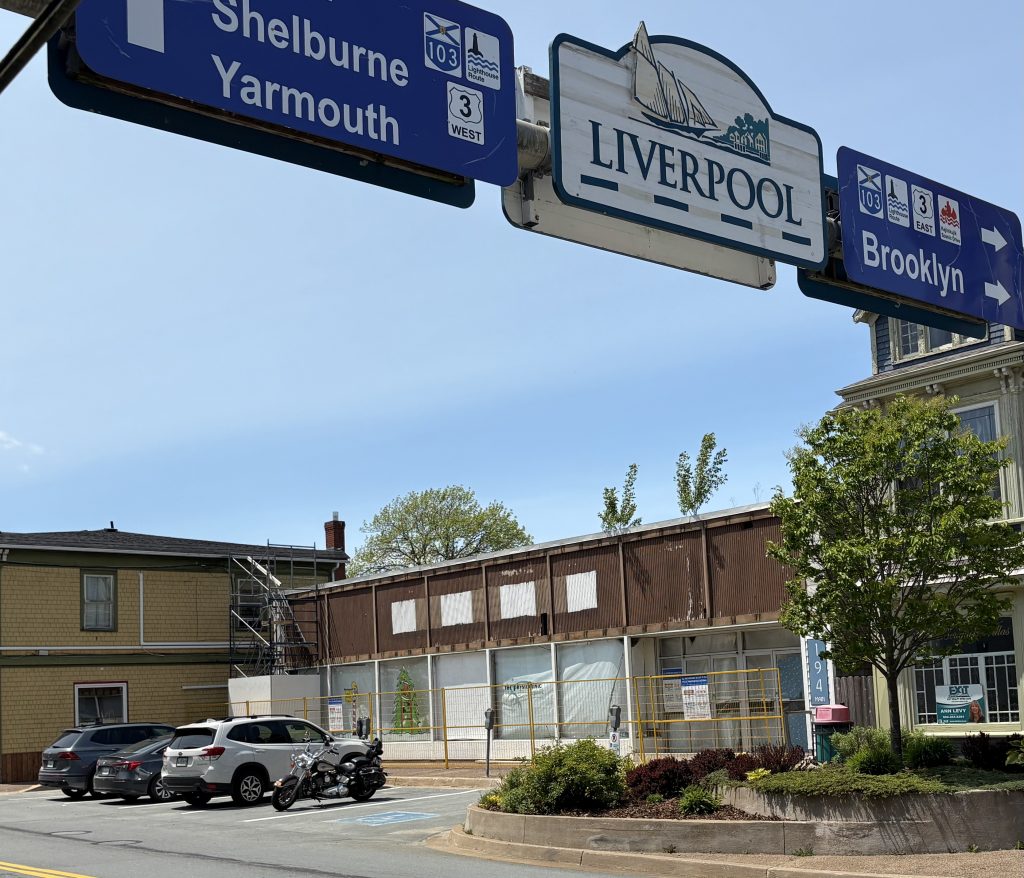
The land use bylaw returned to council’s radar earlier this year as developer Eric Fry applied to turn the dilapidated former Stedmans building on Main Street in Liverpool into apartments.

Councillors initially rejected his plan because it contained no commercial space. The rules required that at least half of a downtown building’s ground floor be devoted to businesses.

But after Fry threatened to sell the property, councillors relented. They changed the bylaw in late November to allow a modified version of Fry’s plan to go ahead, with two much smaller spaces for commercial use.

The region hired UPLAND to conduct citizen engagement sessions in relation to Fry’s development and proposal to change the bylaw.

Mike MacLeod, the municipality’s director of land use, told councillors at their regular meeting this week that hiring outside consultants would be more efficient, since the region’s staff don’t have the capacity to carry out the review in a timely manner.

“There is considerable work involved in even an interim planning review,” he said. 

“So if staff were to undertake it, the timeframe will be considerably lengthened to complete the review, as well as staff’s ability to carry out the day-to-day operations at the department. We would be very challenged to do it in-house.”

The region has about $50,000 set aside already for future planning review projects. MacLeod said that money could go toward the cost of this review.

Councillors want to create or review regulations regarding

  • Commercial uses in residential zones
  • Short-term rentals
  • Keeping of livestock in residential and rural zones
  • Light pollution
  • Additional coastal protection measures and climate resilient land use regulations
  • Minimum property standards

District 3 Coun. Courtney Wentzell said he was concerned about getting one firm to do all the work.

“I still have some deep concerns about one firm looking after so many different items, and the cost that will be,” he told his fellow councillors.

“And I think of our town hall meetings, and our priorities, where coastal protection and climate resilience is way up there. I didn’t see a whole lot about livestock in our planning meetings and town halls. I think there’s nothing prioritized here, and I am still leery of one contractor looking after all of this.”

MacLeod said that even though an outside company will be hired, staff would still be involved. And he added that professional planning firms are experienced in work like this.

Deputy Mayor Maddie Charlton said that the region could rely on lessons learned in other municipalities who have already addressed things like coastal protection.

Councillors will have input on details of the tender before it’s issued. 

Email: rickconradqccr@gmail.com

Listen to the audio version of this story below
Region of Queens greenlights bylaw changes to allow Stedmans building plan

Region of Queens councillors changed the region’s land use bylaw on Tuesday to greenlight a plan to turn 194 Main St. in Liverpool into apartments. (Rick Conrad / File)

The Region of Queens has cleared the way for a developer to turn the old Stedmans building in downtown Liverpool into apartments.

Councillors voted unanimously on Tuesday evening to change the region’s land use bylaw to remove the requirement for more than half of a property’s ground floor to be commercial space.

Developer Eric Fry originally wanted to build 16 apartments, with indoor parking and storage at 194 Main St. 

When councillors rejected that plan in July, he returned with a new proposal that would include two small commercial units on the ground floor, in addition to 14 apartments.

The region’s planning advisory committee initially wanted to amend the bylaw to include a prohibition against a building owner using commercial space as an office. 

But after a public hearing on the proposed bylaw changes on Nov. 12, the municipality’s lawyer told them they didn’t have the authority to dictate who uses a property.

On Tuesday evening, councillors voted for no restrictions on how the commercial areas can be used.

Under the new bylaw, ground-floor dwellings need to be at the back of the building behind the commercial space.

That commercial space must be a minimum of 12 feet deep and 300 square feet.

District 3 Coun. Courtney Wentzell, whose area includes downtown Liverpool, said he had mixed feelings about the changes.

“I have talked to some residents and some business owners and I do understand the aspect of maintaining commercial space,” he told his fellow councillors.

“And I know with the new businesses coming into town, many new businesses, there’s been a concerted effort to maintain Main Street as a commercial zone. I get that, … but I also look at that Stedman’s building with the rats playing outside and the trees growing through the roof, and I got to say that the commitment of somebody that actually wants to put money into that building and what’s the alternative, that we let it rot and let it fall down, or we tear it down?”

Denaige McDonnell, who lives on Main Street, spoke against the changes at the public hearing.

She told QCCR on Tuesday evening that council’s decision was shortsighted, especially without a comprehensive plan for the downtown.

“When we’re talking about bylaws that affect an entire region, I think that it’s flawed thinking to make a decision when it’s based on a single building,” she said.

“It seems that things really are being dealt with, I guess, maybe on a transactional basis and not having a holistic view of the overall system quite so much. … And so I would like to see a little bit more strategy around how we get those buildings up to a standard where they can be used. I think that what we’re doing here is sort of like, well, any use is better than commercial use, but we’re not going to the systemic root of the problem.”

Mayor Scott Christian said he understands those concerns and agrees that a strategic plan for the downtown is needed. But he said the region can’t wait for that process to happen.

“I’m really pleased to see that amendment to our land use bylaw because we weren’t fostering an environment that was business friendly,” he said in an interview.

“So I’m excited to see how the business community responds to a new bylaw infrastructure. And I agree that only changing the bylaw is not a magic bullet to revitalize downtown. We need a good strategy. But I think that providing for more flexibility in our bylaw in a way that’s quite innovative, you don’t see a lot of downtowns and small towns that have this level of flexibility. And so I’m hoping that it sets us apart and creates an environment where we can then pursue a robust strategy to revitalize downtown.

The new land use bylaw hasn’t gone into effect yet.

People have 14 days to appeal council’s decision to the Nova Scotia Regulatory and Appeals Board.

Email: rickconradqccr@gmail.com

Listen to the audio version of this story below

Astor Theatre board responds to members’ concerns before upcoming AGM

John Simmonds, chairman of the Astor Theatre Society, addresses a members’ meeting on Thursday at the Liverpool theatre. (Rick Conrad)

The board of the Astor Theatre Society on Thursday clarified who can vote and who can be nominated to its board at its upcoming general meeting.

Some members who signed up in the past two months were concerned that the Astor would not allow them to vote. 

About 50 people turned out for the members meeting on Thursday evening at the theatre. Board chairman John Simmonds explained that all members in good standing will be able to vote at its upcoming annual general meeting.

“There’s been controversy over conflicting bylaws and conflicting interpretations and we’ve tried to remain as quiet as we could on those issues. But it was necessary to do a lot of research to make sure we were on good ground in what we were proposing. Every member who is in good standing who is over 18 years of age and a resident of Nova Scotia can vote at the AGM.”

The meeting was held in response to a request from the ad hoc group Queens County Community Theatre Advocates. That group was formed after the resignation of associate artistic director Ashley-Rose Goodwin in March.

The group said it was concerned about recent decisions made by executive director Jerri Southcott and the Astor Board. The group said that as Astor members they wanted  to hold the board accountable.

In an April 25 update to the group’s members, one of the founding members of the group Kevin Colwell wrote that the Astor appeared to be taking a “restrictive” approach to voting at the upcoming AGM. He said that in discussions with the Astor, it appeared they were planning to prevent anyone who became a member after Dec. 31, 2023 from voting.

He called on group members to attend the May 2 members meeting and the May 9 AGM.  

About 50 people were at the Astor Theatre in Liverpool on Thursday evening for a meeting on voting at the upcoming annual general meeting. (Rick Conrad)

The issue over voting arose because of confusion about which set of bylaws was valid.

Simmonds said Thursday that until the board did a “deep dive” into their archives, even they were unsure of the proper voting procedures. So they hired Marjorie Hickey, a lawyer with McInnes Cooper in Halifax, to look into it and give an opinion.

“It outlines in great detail exactly what all the steps were, how the three sets of bylaws compare and contrast, where we stand legally now. And she has confirmed through case law and others that we are in good position now using the 2017 bylaws.”

As a result of that legal advice, the Astor has also changed the date of the May 9 AGM to June 24.

According to its most recent bylaws, the Astor will appoint people to replace three directors who resigned in the past couple of months.

There will be four open spots on the board of directors at the June AGM. Any member can be nominated to sit on the board.

“So hopefully this will set the record straight on where we stand and where we propose going with all of this,” Simmonds said. “It will be a true democratic process at the AGM in terms of nominations. We look forward to having many of you putting your name forward.”

Some members of the Queens County Community Theatre Advocates were at the meeting. But they didn’t want to comment until they could read the lawyer’s report to the Astor.

Simmonds said after the meeting that he believes it addressed many concerns from community members. He said the board believes it’s on solid legal ground.

“We’re very comfortable that we’re in good shape now with our current bylaws. And that allows us to move forward and alleviates a lot of the issues and controversy brought to us by the community,” he said in an interview. 

“It clarified things that we didn’t know ourselves. So it was new to us. So once we digested it all ourselves and came up with a final conclusion verified by the lawyer, … all the rest of what went on in the past is not really relevant now.”

Simmonds said the Astor will announce the new appointed members of the board in the next week. He said it will also send notice about the June 24 annual general meeting to all members and advertise it in local newspapers and online.

Email: rickconradqccr@gmail.com

Listen to the audio version of this story below