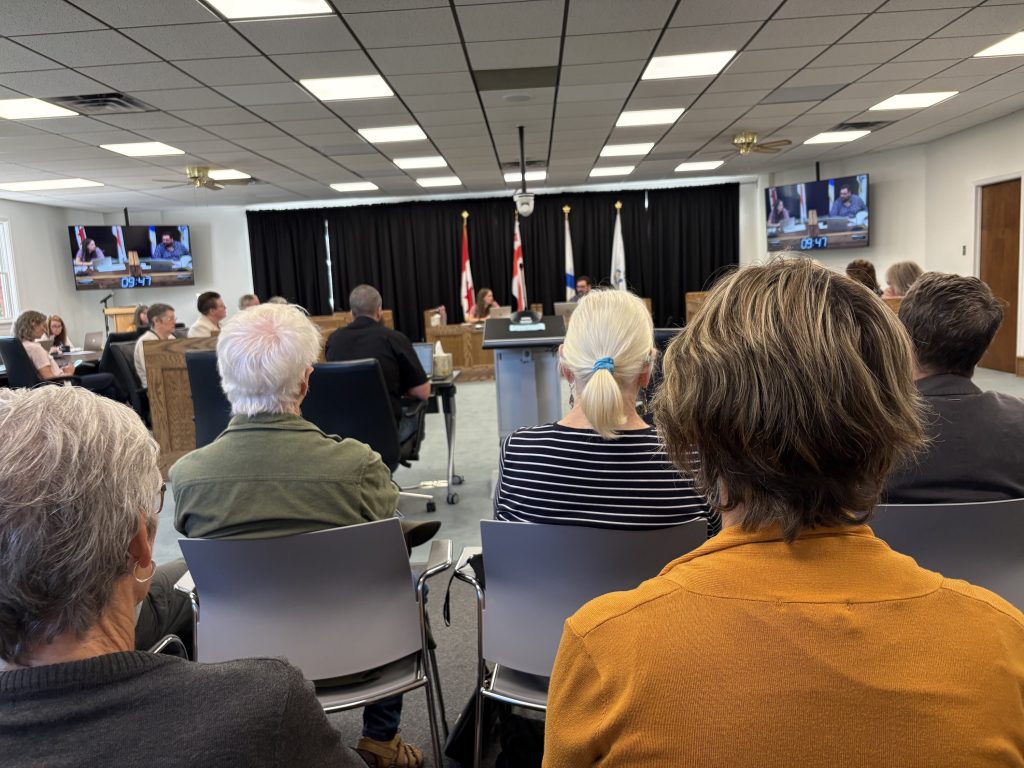
Region of Queens greenlights bylaw changes to allow Stedmans building plan
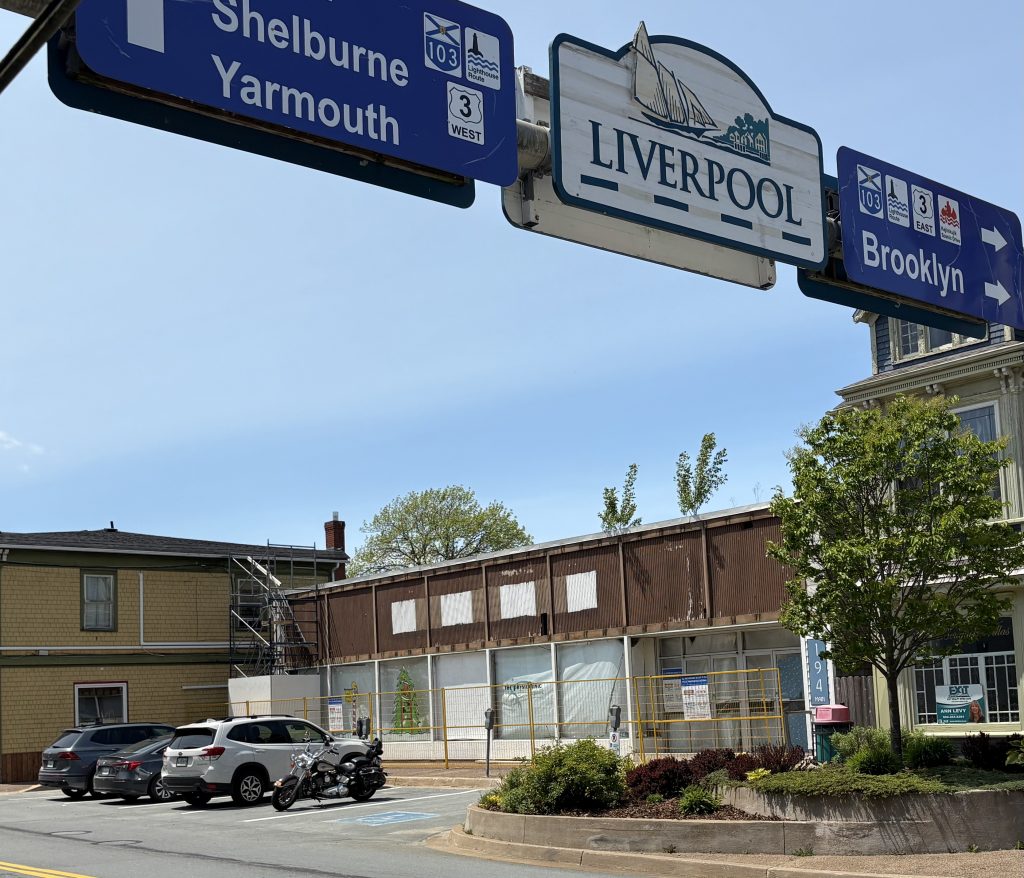
Region of Queens councillors changed the region’s land use bylaw on Tuesday to greenlight a plan to turn 194 Main St. in Liverpool into apartments. (Rick Conrad / File)

The Region of Queens has cleared the way for a developer to turn the old Stedmans building in downtown Liverpool into apartments.

Councillors voted unanimously on Tuesday evening to change the region’s land use bylaw to remove the requirement for more than half of a property’s ground floor to be commercial space.

Developer Eric Fry originally wanted to build 16 apartments, with indoor parking and storage at 194 Main St. 

When councillors rejected that plan in July, he returned with a new proposal that would include two small commercial units on the ground floor, in addition to 14 apartments.

The region’s planning advisory committee initially wanted to amend the bylaw to include a prohibition against a building owner using commercial space as an office. 

But after a public hearing on the proposed bylaw changes on Nov. 12, the municipality’s lawyer told them they didn’t have the authority to dictate who uses a property.

On Tuesday evening, councillors voted for no restrictions on how the commercial areas can be used.

Under the new bylaw, ground-floor dwellings need to be at the back of the building behind the commercial space.

That commercial space must be a minimum of 12 feet deep and 300 square feet.

District 3 Coun. Courtney Wentzell, whose area includes downtown Liverpool, said he had mixed feelings about the changes.

“I have talked to some residents and some business owners and I do understand the aspect of maintaining commercial space,” he told his fellow councillors.

“And I know with the new businesses coming into town, many new businesses, there’s been a concerted effort to maintain Main Street as a commercial zone. I get that, … but I also look at that Stedman’s building with the rats playing outside and the trees growing through the roof, and I got to say that the commitment of somebody that actually wants to put money into that building and what’s the alternative, that we let it rot and let it fall down, or we tear it down?”

Denaige McDonnell, who lives on Main Street, spoke against the changes at the public hearing.

She told QCCR on Tuesday evening that council’s decision was shortsighted, especially without a comprehensive plan for the downtown.

“When we’re talking about bylaws that affect an entire region, I think that it’s flawed thinking to make a decision when it’s based on a single building,” she said.

“It seems that things really are being dealt with, I guess, maybe on a transactional basis and not having a holistic view of the overall system quite so much. … And so I would like to see a little bit more strategy around how we get those buildings up to a standard where they can be used. I think that what we’re doing here is sort of like, well, any use is better than commercial use, but we’re not going to the systemic root of the problem.”

Mayor Scott Christian said he understands those concerns and agrees that a strategic plan for the downtown is needed. But he said the region can’t wait for that process to happen.

“I’m really pleased to see that amendment to our land use bylaw because we weren’t fostering an environment that was business friendly,” he said in an interview.

“So I’m excited to see how the business community responds to a new bylaw infrastructure. And I agree that only changing the bylaw is not a magic bullet to revitalize downtown. We need a good strategy. But I think that providing for more flexibility in our bylaw in a way that’s quite innovative, you don’t see a lot of downtowns and small towns that have this level of flexibility. And so I’m hoping that it sets us apart and creates an environment where we can then pursue a robust strategy to revitalize downtown.

The new land use bylaw hasn’t gone into effect yet.

People have 14 days to appeal council’s decision to the Nova Scotia Regulatory and Appeals Board.

Email: rickconradqccr@gmail.com

Listen to the audio version of this story below
Queens council backtracks on proposed garbage changes after community outcry

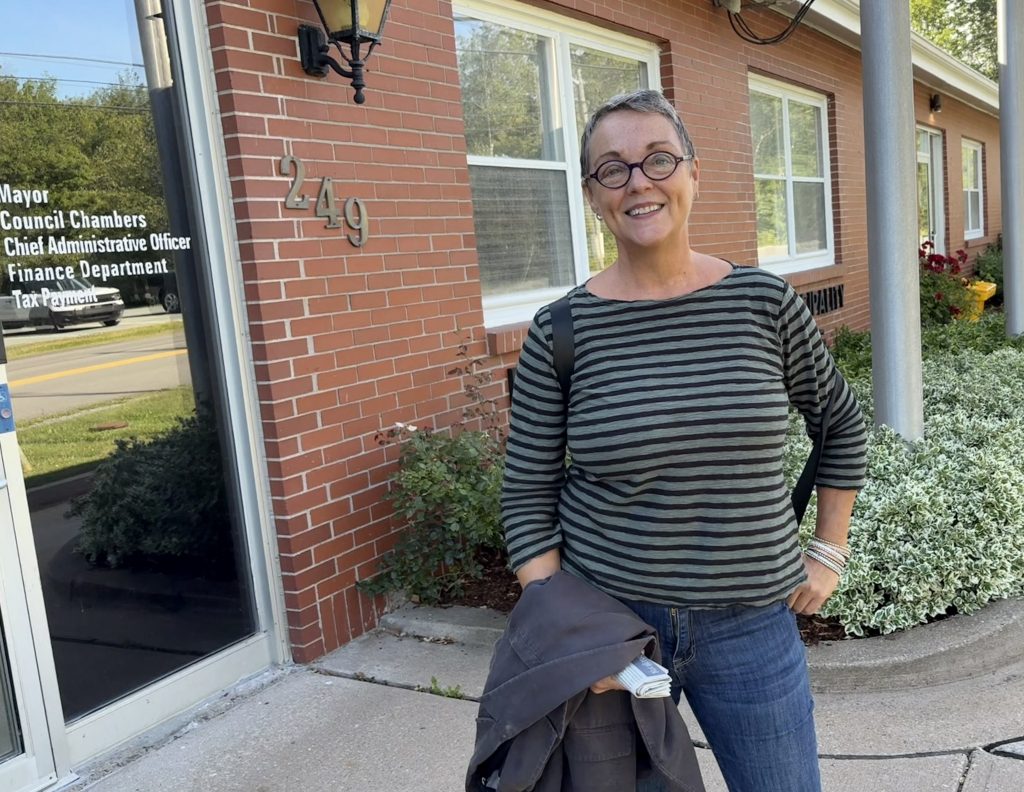
Laura Methot is president of the Greater Molega Lake Lot Owners Association. (Rick Conrad)

Region of Queens councillors dumped proposed changes to garbage collection on Tuesday after residents packed the public gallery to protest the proposals.

More than 40 property owners from the region’s cottage country showed up at council’s regular meeting on Tuesday, concerned that the municipality was trying to download responsibility for illegal dumping onto volunteer-run residents’ groups.

More than 5,700 properties in Queens County are connected to roads that aren’t maintained by the municipality or the province. Most of these roads are in the areas of Molega, Ponhook and Annis lakes. Private lot owner groups collect fees from residents to maintain those roads.

People who live on public roads in Queens County usually get regular roadside garbage collection. Those on private roads, however, have to take their waste to a central location, known as grey box sites. From there, the municipality picks it up.

But under proposed changes discussed at Tuesday’s council meeting, responsibility for the maintenance and cleanup of those grey box sites would shift from the municipality to non-profit property owner groups.

Laura Methot, president of the Greater Molega Lake Lot Owners Association, which represents more than 1,200 property owners, told councillors on Tuesday that the proposed changes won’t address the longstanding problems of people dumping their trash illegally at the grey box sites.

“It is absolutely absurd to think that private road associations, managed by volunteer boards, would be able to solve the illegal dumping problem and unsightly premises that the region has not been able to tackle for years,” Laura Methot, president of the Greater Molega Lake Lot Owners Association, told councillors.

“Worse still, this bylaw update, if passed, would result in diverting resources, both time and money, away from our primary mandate, which is keeping our roads safe and passable in good condition.”

The Molega Lake area alone covers more than 1,200 hectares and 52 kilometres of roadway. It’s the largest recreational development in Atlantic Canada, though many people live in the area year-round.

Residents say they contribute disproportionately to the region’s tax base, while getting far fewer services than most other areas.

“The proposed amendments entrench this imbalance rather than resolving it,” Methot said.

Former regional councillor David Brown, who lives in Labelle, said that nobody would volunteer for lot owner groups if they were also now expected to clean up the grey box sites.

He said that at the lot owners annual general meeting in June, Mayor Scott Christian promised more collaboration and consultation.

“That didn’t happen,” Brown told councillors.

“
What we find is this is not a discussion, it’s not presented to us as options, but it’s a downloading of responsibility. It’s over 40 private law owners associations, and they’re volunteer associations.

“This bylaw, if passed, will be the end of all residential landowners associations. Nobody’s going to go out there and volunteer for a board and pick up garbage. It’s not going to happen. So as those lawowners associations disband because they can’t get volunteers, the roads won’t be maintained, Property values are going to go down.”

About 40 property owners showed up at Tuesday’s regional council meeting to protest proposed changes to garbage collection. (Rick Conrad)

After hearing from residents, councillors voted unanimously against the proposed amendments. And they voted instead to have councillors and staff consult with the lot owners groups about potential changes in garbage collection.

Christian said after the meeting that council heard the community loud and clear.

“There was a real, strong reaction from the community. Emails came flying in. Telephone messages came flying in to all members of council,” Christian said after the meeting. 

“We’re trying to get to a place, though, where we’re as transparent and open in the way that we do business as possible. … So I think we got it right and I think that it’s a tricky issue, though. It continues to be this persistent issue, but I’m hopeful that we can find good, creative solutions through broad-based engagement with everybody who’s impacted out there. 
Sit down, do some creative brainstorming, and figure out maybe we can pilot this solution, pilot that solution, see what works, you know, and then go from there.”

Methot of the Molega Lake lot owners group said after the meeting that she believes Christian and the rest of council are committed to working with residents. 

“I am very pleased with how it turned out, and particularly with the confirmation and recommitment of the mayor and council to working collaboratively with our association and with the broader community. It was a very positive outcome for us.”

Christian said the engagement sessions are already in the works. He said he hopes that the community consultations will result in a solution to the garbage problem that residents can live with.

Email: rickconradqccr@gmail.com

Listen to the audio version of this story below