Region of Queens greenlights bylaw changes to allow Stedmans building plan
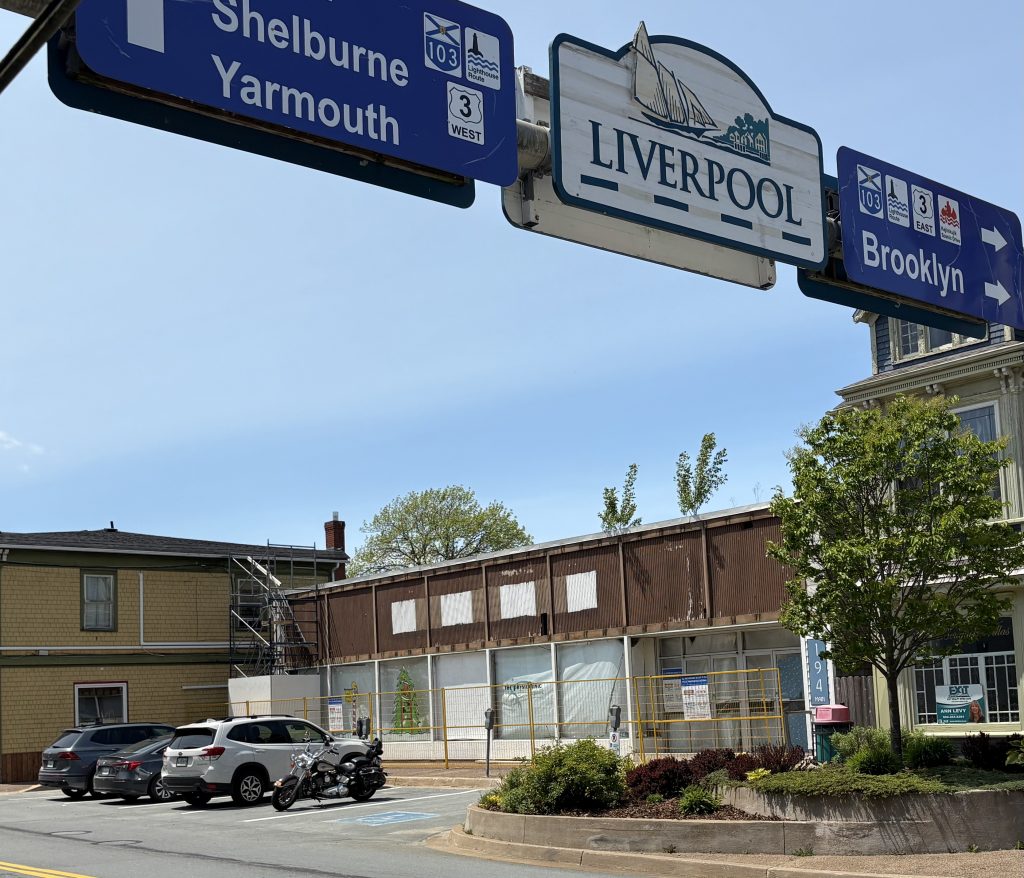
Region of Queens councillors changed the region’s land use bylaw on Tuesday to greenlight a plan to turn 194 Main St. in Liverpool into apartments. (Rick Conrad / File)

The Region of Queens has cleared the way for a developer to turn the old Stedmans building in downtown Liverpool into apartments.

Councillors voted unanimously on Tuesday evening to change the region’s land use bylaw to remove the requirement for more than half of a property’s ground floor to be commercial space.

Developer Eric Fry originally wanted to build 16 apartments, with indoor parking and storage at 194 Main St. 

When councillors rejected that plan in July, he returned with a new proposal that would include two small commercial units on the ground floor, in addition to 14 apartments.

The region’s planning advisory committee initially wanted to amend the bylaw to include a prohibition against a building owner using commercial space as an office. 

But after a public hearing on the proposed bylaw changes on Nov. 12, the municipality’s lawyer told them they didn’t have the authority to dictate who uses a property.

On Tuesday evening, councillors voted for no restrictions on how the commercial areas can be used.

Under the new bylaw, ground-floor dwellings need to be at the back of the building behind the commercial space.

That commercial space must be a minimum of 12 feet deep and 300 square feet.

District 3 Coun. Courtney Wentzell, whose area includes downtown Liverpool, said he had mixed feelings about the changes.

“I have talked to some residents and some business owners and I do understand the aspect of maintaining commercial space,” he told his fellow councillors.

“And I know with the new businesses coming into town, many new businesses, there’s been a concerted effort to maintain Main Street as a commercial zone. I get that, … but I also look at that Stedman’s building with the rats playing outside and the trees growing through the roof, and I got to say that the commitment of somebody that actually wants to put money into that building and what’s the alternative, that we let it rot and let it fall down, or we tear it down?”

Denaige McDonnell, who lives on Main Street, spoke against the changes at the public hearing.

She told QCCR on Tuesday evening that council’s decision was shortsighted, especially without a comprehensive plan for the downtown.

“When we’re talking about bylaws that affect an entire region, I think that it’s flawed thinking to make a decision when it’s based on a single building,” she said.

“It seems that things really are being dealt with, I guess, maybe on a transactional basis and not having a holistic view of the overall system quite so much. … And so I would like to see a little bit more strategy around how we get those buildings up to a standard where they can be used. I think that what we’re doing here is sort of like, well, any use is better than commercial use, but we’re not going to the systemic root of the problem.”

Mayor Scott Christian said he understands those concerns and agrees that a strategic plan for the downtown is needed. But he said the region can’t wait for that process to happen.

“I’m really pleased to see that amendment to our land use bylaw because we weren’t fostering an environment that was business friendly,” he said in an interview.

“So I’m excited to see how the business community responds to a new bylaw infrastructure. And I agree that only changing the bylaw is not a magic bullet to revitalize downtown. We need a good strategy. But I think that providing for more flexibility in our bylaw in a way that’s quite innovative, you don’t see a lot of downtowns and small towns that have this level of flexibility. And so I’m hoping that it sets us apart and creates an environment where we can then pursue a robust strategy to revitalize downtown.

The new land use bylaw hasn’t gone into effect yet.

People have 14 days to appeal council’s decision to the Nova Scotia Regulatory and Appeals Board.

Email: rickconradqccr@gmail.com

Listen to the audio version of this story below

Legal concerns delay decision on Stedman’s building in downtown Liverpool

Eric Fry speaks during a public hearing Wednesday on proposed changes to the Region of Queens land use bylaw. (Region of Queens YouTube)

It will take a little longer to find out if the old Stedman’s building on Main Street in Liverpool will have a new life as an apartment complex.

The Region of Queens held a public hearing on Wednesday on proposed changes to the municipality’s land use bylaw that would allow for more residential space on the ground floor of buildings in the downtown commercial district.

At their meeting afterward, councillors voted to seek legal advice on whether they have the authority to make one of those changes.

Developer Eric Fry wants to turn 194 Main St. into 18 residential units, four of which would be “hotel suites”, and two main-level commercial units of 300 square feet each.

Fry bought the 30,000-square-foot building earlier this year and has been trying to get municipal approval for his apartment proposal since February. His original plan was for 16 residential units, indoor parking, storage and no commercial space. Councillors refused to change the bylaw to allow that to proceed.

After Fry listed his property for sale, the region’s planning advisory committee agreed to consider a revised a proposal and return it council.

Municipal rules require that at least half of a building’s ground floor must be commercial space.

On Wednesday, Fry spoke briefly in support of the bylaw changes. Four Liverpool residents spoke against them.

Tara Druzina said she wasn’t sure whether councillors had the authority under the Municipal Government Act to dictate who uses space in a building. A proposed change would forbid the owner or property manager from using one of the commercial spaces as an office.

“Municipalities regulate land-use types and their characteristics, but discriminating against and between identical uses based on ownership arrangements may exceed municipal jurisdiction,” she told councillors.

Denaige McDonnell said she was concerned that councillors were missing the mark in trying to change the bylaw.

“A common argument for expanding residential use is that there isn’t enough demand for commercial space, but deeper issues are at play here,” she said.

“
Many of our commercial buildings simply do not meet current building code, accessibility, or safety standards that are required for occupancy or for commercial use. And really what that’s telling us is that it’s not a demand problem, but it’s a readiness problem.”

McDonnell said the region is trying to change its bylaw to appease one property owner without having a comprehensive commercial plan.

“Structural changes like this need to be informed by clear, data-driven, county-wide strategy, not as reactions to individual development proposals.

“This proposed bylaw change may offer a short-term perception of flexibility and reward a single proponent, but it comes at a long-term strategic cost. Our commercial spaces are a very valuable part of our community. 
They are our most valuable assets for the future, and they deserve to be protected, planned and leveraged as part of a larger vision for economic sustainability.”

Susan McGibbon said she was worried the process is moving too quickly without a proper assessment of business in downtown Liverpool. 

“I’m not saying that is your fault, council. This goes way back. 
There’s been no development of an economic plan for the downtown for a very long time. So there’s no research, there’s no data, and there’s been little to no expertise in the understanding of commercial and retail in the downtown.”

Paul Deveau pointed out that during public consultations in the spring, residents and business owners said that there needed to be a downtown plan that protects commercial space while adding more housing.

“But here we are a few months later, and you’re again trying to amend a bylaw without a comprehensive plan.” 

Later in the meeting, councillors decided that they couldn’t make a decision on the proposed changes until they got legal advice.

Mayor Scott Christian asked whether staff sought advice on the wording around what landlords can do with the commercial space. 

Staff conceded they had not.

Council asked staff to have that information ready for their next meeting on Nov. 25.

Until then, the land use bylaw remains unchanged. Any substantive changes would likely restart the process and require council to have another public hearing.

Once councillors voted for a legal opinion, Christian called a break and met with Fry in his office for about 15 minutes.

Afterward, Fry told QCCR that he appreciated residents’ comments and their passion for the downtown. He said he understands that council has to make sure they have authority to make the changes.

“It’s unfortunate that this wasn’t flushed out as maybe as thoughtfully as it should have been. So, I understand there is a process to remedy, so we’ll have to wait until we hear what those next steps are.” 

Email: rickconradqccr@gmail.com

Listen to the audio version of this story below

Queens councillors vote for ‘comprehensive review’ of land use bylaw

Region of Queens Deputy Mayor Maddie Charlton wants a ‘comprehensive review’ of the municipal planning strategy and land use bylaw. (Rick Conrad)

Region of Queens councillors are considering an overhaul of the rules that govern what people and businesses do with their properties.

Regional council voted unanimously on Tuesday evening in favour of Deputy Mayor Maddie Charlton’s motion for a “comprehensive review” of the municipal planning strategy and land use bylaw “with particular focus on commercial uses and allowances within residential zones, regulation and permitting of short-term rentals, the keeping of livestock within residential and rural zones, light pollution mitigation and related dark sky considerations, coastal protection measures and climate resilient land use provisions, and minimum property standards.”

She said she wants staff to prepare a report in time for the Dec. 9 council meeting “outlining proposed consultation timelines, engagement methods and anticipated resource requirements to support this review process.”

The municipality adopted a new planning strategy and bylaw in 2022 after three and a half years of review and community consultation. Charlton was a member of council for that process.

“We have had some things pop up that are proving to be challenging,” Charlton said, “other things that I think maybe we didn’t think of during that timeframe. … I think we do need to address the issues in our land use bylaw.”

Charlton didn’t offer specifics, but councillors have wrestled since the spring with a request to turn the old Stedman’s building at 194 Main St. into apartments. 

Developer Eric Fry originally wanted the building to be only residential, despite municipal rules that require at least half of a downtown building’s ground floor be for commercial use.

The region is in the process of changing the land use bylaw to allow Fry to include a much smaller commercial footprint.

Charlton, who chairs the municipality’s planning advisory committee, told councillors that some people want more flexibility to open businesses in their houses.

Currently, the land use bylaw essentially prohibits retail and other commercial operations in residential zones, though there are some exceptions for artists and other small home-based businesses.

“I think some of our measures are a bit too strict and they’re restricting economic development in Queens,” Charlton said. 

Mayor Scott Christian said it’s standard practice to review a new bylaw after two years. Plus, he said, residents have raised concerns with parts of the bylaw that he says are “clunky”.

“In this term of council we’re really focusing on making sure we’re striking that balance to foster a business friendly environment, to addressing affordability issues. And I think some provisions within the municipal planning strategy and land use bylaw don’t resonate entirely with the strategic vision and direction that this council wants to take the organization.”

He said council wants professional advice from staff on a “laundry list of items”.

“(The bylaw) doesn’t do enough to give us a strong sense and deliberate approach to managing short-term rentals. It doesn’t strike the right balance in its approach to homesteading. It’s too blunt in its restrictions of the type of commercial activity that can happen in general residential areas.”

In 2022, many residents cried foul over proposed changes to homesteading rules. People who kept chickens or small numbers of other animals on their properties were worried that the bylaw would interfere with their ability to produce food for themselves and others. 

Those concerns overshadowed many of the other significant changes in the comprehensive bylaw overhaul.

Email: rickconradqccr@gmail.com

Listen to the audio version of this story below

Queens councillors OK revised Stedmans building apartment plan

Region of Queens councillors on Tuesday voted on a revised plan to develop 194 Main St. in Liverpool. (Rick Conrad)

Region of Queens council have changed course to allow a developer to build apartments on Main Street in Liverpool after all.

At their regular meeting on Tuesday morning, councillors voted unanimously to start the process to amend the municipality’s land use bylaw. 

A public hearing will be held on Nov. 12 at 9 a.m. in council chambers about changing the bylaw to allow more ground floor space to be used for residential uses in the downtown commercial zone. 

Currently, no more than half of a building’s ground floor can be used for apartments.

RELATED: READ MORE ABOUT 194 MAIN ST.

Developer Eric Fry approached the region in February to change that rule to allow him to turn all of 194 Main St., commonly known as the old Stedman’s building, into apartments. His original plan was for 16 units, with indoor parking and storage.

In July, councillors rejected changing the bylaw. Fry immediately listed the property for sale. 

He returned to the region’s planning advisory committee in August with a new plan that would include two commercial units on the ground floor of the 30,000-square-foot building, in addition to 14 apartments. 

His latest proposal is for 18 residential units, four of which would be “hotel suites”, and two Main Street-level commercial units of 300 square feet each. One of those would be a laundromat. 

“So given the significant size of the building at 194 Main St., 50 per cent of the ground floor area of the building creates some challenges for the owners of the building,” Director of Land Use Mike MacLeod told councillors. 

MacLeod reminded councillors that if the bylaw is changed, it would apply to all property owners in the downtown commercial zone.

“Any proposed amendments would apply not only to the applicant’s property, but would apply to all other owners of property of commercial buildings who want to convert more than 50 per cent of the ground floor area to residential uses.”

Planning advisory committee members originally discussed recommending a minimum depth of 6 metres for commercial space on the ground floor, but settled on 3.66 metres or 12 feet and a minimum floor area of 27.88 square metres or 300 square feet.

The other changes proposed would require that commercial uses extend along the full width of the building facade from its main entrance.

Deputy Mayor Maddie Charlton, who is a member of the committee, said PAC members believe the bylaw needs to be more flexible for property owners in the commercial zone.

“There are buildings of significant sizes that make it really challenging to allow for more residential while protecting the commercial area. And so what this does is it protects the Main Street and surrounding streets in those commercial zones or commercial core zones anywhere.

“We do recognize that there are folks beyond this proposal that have an appetite to decrease the size of commercial space. They could put in more residential space, which we feel like is a win-win.”

Under the proposed amendments, the commercial units could not be used as office space by the building owner or manager.

Mayor Scott Christian said after the meeting that the changes would be good for downtown Liverpool.

“We’re hoping to see that generate more investment, because right now we all know that there’s a lot of vacancy and underutilized spaces in the downtown core and there’s also a lot of space that could be repurposed for residential units, which we know there’s a huge demand for. So we’re hoping that we’ve struck a good balance there.”

Christian said the municipality looked at rules in other areas for guidance on the changes. He pointed to Halifax, which encourages businesses to set up as boutique shops in some buildings.

“Like a fishmonger or a small deli or an ice cream shop or a candy shop or small sort of micro retail models,” he said in an interview. “If property owners take advantage of the opportunity to create really small spaces, that micro retail model,  which I think could be attractive to our residents and our visitors.”

Christian said he understands if some people might believe the process has been tailored to suit one developer. But he says it’s an issue the community had to tackle.

“That was certainly the impetus or the catalyst to have the conversation, but I’m quite excited about where we’re going to land. I think that if the amendment goes through, I think it’s a step in the right direction, in getting more flexible in the way that folks can use those buildings in the downtown core to make it more vibrant, breathe more life, bring more people into the downtown core.”

In a survey conducted by Halifax consultants UPLAND Planning in July, 18 of 30 respondents said they were fully or somewhat supportive of changing the bylaw. 

But 90 per cent of the business owners who responded were against a bylaw change. They said they were concerned about eroding the commercial area.

Email: rickconradqccr@gmail.com

Listen to the audio version of this story below

Stedmans building owner to sell property after council nixes Main Street apartment plan

Workers were cleaning up in front of 194 Main St. on Wednesday morning. The construction barricades have been removed and work has stopped. (Rick Conrad)

UPDATED Wed., July 9 at 1:55 p.m.

A rundown building in downtown Liverpool will go back on the market after regional council denied a developer’s request to turn it into apartments.

Councillors voted Tuesday not to change the municipal land use bylaw to allow Eric Fry to build up to 16 apartments at 194 Main St., known locally as the old Stedmans building.

Fry, president of SDL Investments Limited, told QCCR in an emailed statement on Wednesday evening that he won’t pursue the project any further.

“Unfortunately, we will be ceasing any further work on this project and putting the building up for sale immediately,” Fry said.

“While I understand that Liverpool does not wish to abandon its commercial presence on Main Street, we firmly believe that this decision is very short-sighted and does absolutely nothing to move the town forward, encourage new residents to move here or assist in revitalizing the downtown.”

He could not be reached for a followup interview about his statement.

The municipal planning strategy allows residential development downtown only in buildings with a primary commercial use. The bylaw requires that residential buildings in the downtown core have at least 50 per cent commercial space on the ground floor. 

Fry’s proposal was to transform the whole building into living space.

Deputy Mayor Maddie Charlton told QCCR on Tuesday morning after the council meeting that even though councillors voted 5-2 against a bylaw change, she hopes Fry continues with some apartments in the space. She made the comments before Fry’s evening statement.

“I think our community and our council members have made it very clear that they want there to be a downtown core commercial presence. And that is our Main Street,” Charlton said in an interview. She chaired Tuesday’s meeting because Mayor Scott Christian was on vacation.

“And there is allowance now for residential units to go in there to still allow for some housing. 
So there is flexibility there. I do certainly hope that the developer will continue with this project in the revised way that it reads in our bylaws now, but certainly if he chooses not to, that’s certainly up to him.”

Fry bought the building in January for $235,000. In February, he applied to the region for a bylaw amendment to allow a residential-only development with indoor parking.

Councillors considered three options: to allow residential development as a main use in downtown, to allow it by development agreement with council’s approval or to keep the bylaw unchanged.

Before Fry acquired the property, it sat vacant for a few years and was heavily damaged by extreme weather. Before that, it housed a dollar store and office space on the ground floor.

Workers have been cleaning up the building’s interior and fixing damage since early spring.

“We are extremely shocked and disappointed in council’s decision this morning to deny our application to amend the Land Use Bylaw and Municipal Planning Strategy language,” Fry said in the statement.

“Having owned properties in Queens for more than 10 years, our understanding was that Liverpool needs more housing.  Our initial residential building, The Falls in Milton, has been fully occupied since it opened last fall and there is a list of residents wanting to move in when a unit becomes available. This led us to approach RQM about an additional project that would create 16 additional units in the heart of Liverpool. Not to mention, convert an otherwise dilapidated structure into a signature building to anchor the town’s Main Street.

“Liverpool needs residential housing and not additional commercial space clearly demonstrated by the number of For Rent signs in the downtown core.”

The region hired consultants UPLAND Planning from Halifax to hold two public engagement sessions and an online survey on the potential bylaw change.

Thirty people responded to the survey, and only seven people attended the information sessions at Queens Place Emera Centre.

Eighteen of the 30 survey respondents said they were supportive of removing the commercial requirement from the bylaw.

But local business owners told the consultants they were worried about how it could potentially erode the downtown commercial zone. 

The region’s planning advisory committee met on Monday to discuss the consultants’ report.

They recommended sticking with the status quo and keeping the bylaw unchanged.

District 5 Coun. Jack Fancy voted against the motion to maintain the status quo.

He said the building needs a lot of work and he’s worried Fry might sell it. 

“So in order to make it so it’s profitable, it has to be a lot of money coming back,” he told his fellow councillors. 

“
That’s the whole idea. You don’t put money into something if you’re not going to get your money back out of it.”

Fry also owns The Falls in Milton, a three-storey apartment complex on the Mersey River, geared toward people 55 and over.

His plan for 194 Main St. was to have apartments on two levels, with a parking entrance at the back of the building on Water Street.

“I’m not an expert,” Fry said in his statement to QCCR, “but from my experience, I don’t think this type of thinking is going to move the needle in a town with so much promise and potential.”

Here is what councillors voted on and how they voted:

MOTION: That Council of the Region of Queens Municipality maintain status quo and deny the application to amend the Municipal Planning Strategy and Land Use Bylaw to allow new multiple unit residential dwellings as a permitted main use in the Downtown Commercial (CD) Zone.

FOR: Maddie Charlton, Courtney Wentzell, Stewart Jenkins, Vicki Amirault, Wanda Carver

AGAINST: Jack Fancy, Roberta Roy

ABSENT: Mayor Scott Christian

Email: rickconradqccr@gmail.com

Opinions mixed on changing bylaw to allow more apartments in downtown Liverpool

Ryan MacLean with UPLAND Planning and Design Studio takes people through the options regarding a proposed change to how residential developments are handled in downtown Liverpool. (Rick Conrad/File)

It was a small group, but an opinionated one.

Some Queens County business owners and residents who responded to a survey don’t want a bylaw change that could dramatically alter Liverpool’s Main Street commercial landscape.

Developer Eric Fry of SDL Investments Limited wants the Region of Queens to amend its land use bylaw to allow him to build a 16-unit apartment building in the old Stedmans space at 194 Main St.

The bylaw allows residential development downtown only in buildings with a primary commercial use.

Fry doesn’t plan any commercial presence in the building. So he applied to the region in February to change the bylaw.

The region held public engagement sessions on June 17 and 19 for business owners and residents. It also created an online feedback form that was available from June 12 to 24.

Consultants UPLAND Planning of Halifax conducted the sessions and survey. 

​​The public had three options to consider: to allow residential developments in the commercial district as a main use by right, to allow them by development agreement which would require council approval, or to stay with the status quo and reject any amendments to the bylaw.

In their report for this week’s regular council meeting, UPLAND said seven people who weren’t members of the region’s planning advisory committee, the media or council attended the engagement sessions at Queens Place Emera Centre.

Thirty people replied to the online survey. Nineteen of those said they live in Liverpool, while 17 said they live in another part of Queens County.

Eighteen of the 30 respondents said they were either fully or somewhat supportive of changing the bylaw to remove the commercial requirement.

Ten were either fully or somewhat against it.

But 90 per cent of the business owners who responded were against a bylaw change. They said they were concerned about eroding the commercial area.

Half of the business owners said they would support standalone residential use by development agreement. And 40 per cent said they wanted no change to the current bylaw.

Many people were concerned that there seems to be no vision or strategic plan for Main Street or downtown Liverpool. They want to see a plan driven by the community, not by developers.

Some were also frustrated by the lack of communication from the region about the proposal, the engagement sessions or the survey. 

And the consultants found that there was a divide between those who want to see more housing downtown and those who want to preserve Main Street as a commercial zone. 

Councillors are due to discuss the report at Tuesday morning’s council meeting, which begins at 9.

Email: rickconradqccr@gmail.com

Small turnout, strong opinions at first session on downtown Liverpool development

Ryan MacLean with UPLAND Planning and Design Studio explains the options regarding a proposed change to how residential developments are handled in downtown Liverpool. (Rick Conrad)

It was a small turnout for the first public engagement session about a proposed change to downtown development in Liverpool.

Developer Eric Fry wants to turn the old Stedmans building at 194 Main St. in Liverpool into 16 apartments. 

The Region of Queens land use bylaw allows residential development downtown only in buildings with a primary commercial use.

Three options are on the table for the public to consider: to allow residential developments in the commercial district as a main use by right, to allow them by development agreement which would require council approval, or to stay with the status quo and reject any amendments to the bylaw.

The first drop-in session on Tuesday evening was geared toward the business community. The second session is focused on hearing from residents. That is scheduled for Thursday from 5 to 8 p.m. in the community room at Queens Place Emera Centre. There is also an online survey available.

The region hired UPLAND Planning and Design Studio from Halifax to lead the public engagement. Two representatives from that company were at Tuesday’s session, along with Mike MacLeod, the region’s director of land use.

Ryan MacLean, an engagement manager with UPLAND, said they’ve already heard a variety of opinions.

“People have expressed great support for any opportunity to increase residential development, expressing their concerns around the housing crisis, but then we’ve also heard concern around the potential for if you permit more residential uses, then it could erode the commercial character of the downtown.”

Beach Meadows resident Mary White is a member of the region’s planning advisory committee, which recommended having the public sessions.

She doesn’t want the bylaw to change. And she said she’d like to see the region do more to support local businesses.

“I think that we need to maintain the commercial spaces on Main Street and I think that we need to decide as a community what we want the future of our community to be. And if that’s to have a main core then we need to support that. And as a municipality, I would hope they would get together and decide some intitiatives to help the (businesspeople) that are there that have been struggling and hanging on for so long.”

Rigel Jones, executive director of the South Queens Chamber of Commerce, said she was staying open-minded about any changes to downtown development.

“I know the feedback we’ve gotten from members in the chamber is they’re struggling with foot traffic and that having more residents on main street could change that.”

Liverpool resident Paul Deveau said he’s against the bylaw change, though he’s in favour of more residential development on Main Street.

“I firmly believe that, yes, we should allow some apartments to be built down there under the current use. All across Canada municipality have come up with urban plans for their main streets. … It’s a work-live-play. So they should have apartments on top of these businesses but still have the businesses stay. The moment you start allowing them to be converted into residential that’s the moment that all the street is going to be turned into residential because that’s where they’re going to make the most money.”

He said he’s happy the municipality is “finally” having some public engagement, but said two sessions aren’t enough for such a significant discussion.

The consultants will prepare a report for council by the end of June. The region’s planning advisory committee will then review the report and make recommendations to council.

If there are proposed amendments to the land use bylaw, councillors would vote on those. If they’re approved initially, then there would be a two-week notice period for a public hearing to be held before the final vote.

Email: rickconradqccr@gmail.com

Listen to the audio version of this story below

New apartments planned for downtown Liverpool in old Stedmans building

Eric and Dawn Fry are hoping to build 16 apartments in the old Stedmans building on Main Street in Liverpool. (Rick Conrad)

A developer is hoping to turn an old storefront on Liverpool’s Main Street into apartments.

Eric and Dawn Fry of Fall River bought 194 Main St. in January and hope to turn it into 16 one-bedroom and two-bedroom rental units.

Eric Fry told QCCR that they applied a few weeks ago to the Region of Queens to allow for apartments on the ground floor. The region’s land use bylaws permit residential units on Main Street only in buildings with a commercial storefront.

“We would rather see it as 100 per cent residential because there’s more of a need in that area for residential than for additional commercial space because there’s a fair amount of vacant commercial space on Main Street.”

The property is known locally as the old Stedmans building. Before it was bought by the Frys, it sat vacant for a few years and was heavily damaged by extreme weather. And before that, it housed a dollar store and office space on the ground floor.

Fry said Tuesday that they’re also planning indoor parking, which would be accessed on the Water Street side at the back of the building.

“We’re hoping that there won’t be any or too much opposition to what we’re trying to do because we know that there’s a need for housing there and I think this would lend itself nicely. … So it could be a pretty desirable development when it’s completed.”

Tenants recently moved into the couple’s other development, The Falls in Milton, located on the Mersey River. That building is full and targeted to people 55 and over.

This new development would be marketed to a more mixed demographic. Fry says he hopes to attract health care or other professionals. And two or three units could qualify as affordable housing.

According to Viewpoint, the 30,000-square-foot building sold for $235,000 after almost a year on the market. Fry said it’s too early to estimate the budget for the project or what the rents will be. 

“The two criteria that I typically use are location and potential. And I think that’s got both in spades. It’s very central and a lot of potential. It took a little creativity with our design team and our construction manager to work through a feasible plan, in order to make it all accessible. We’ll be adding windows and skylights for the upper units. We think it’s really going to begin to transform Main Street, so we’re excited about it.”

They’re working with a partner on the project and have named their company SDL Developments, as an homage to the building’s former life as a Stedmans department store.

While they wait to see how their application goes with the municipality, Fry said workers have been cleaning up debris inside the building. 

He said he and his wife wanted to invest in the community after they bought a cottage in Port Mouton in 2015 and fell in love with the area.

“We’re not trying to disrupt anything or upset the apple cart. My wife and I have lots of great relationships in Liverpool and we’ve gotten to know a lot of folks in the municipality and we love it. What we’ve done with The Falls in Milton would be frankly representative of the type of approach we would take, very open and communicative with the public and a quality product that people can be proud to call home.”

Fry said that if their application with the municipality succeeds, they hope to begin construction by the end of June. 

Email: rickconradqccr@gmail.com

Listen to the audio version of the story below