Frustrated White Point Estates residents want Queens to crack down on Airbnbs
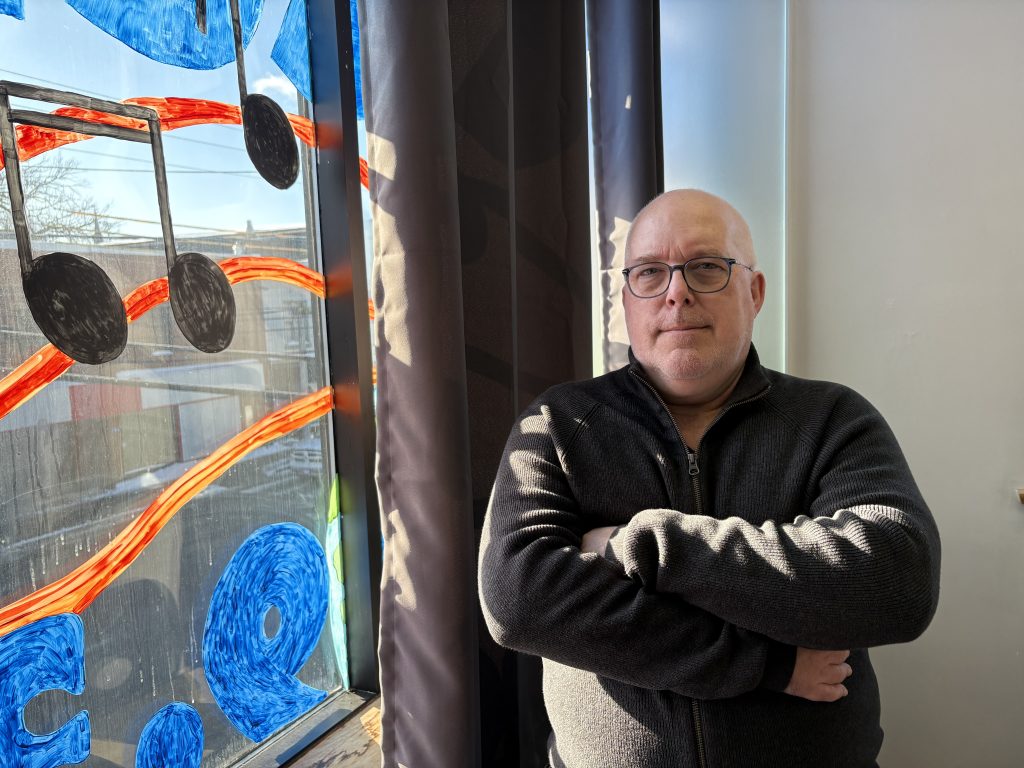
John Rogers says the proliferation of short-term rentals is violating his rights as a property owner. (Rick Conrad)

Imagine feeling like your neighbourhood has been turned into a party zone.

That’s what John Rogers says it’s like to live in White Point Estates, near Liverpool.

And he blames the Region of Queens for letting it happen.

He says the municipality’s zoning rules are essentially overriding property covenants that forbid short-term rentals like Airbnbs from operating in his subdivision.

“These houses are purpose-built for partying basically,” Rogers recently told QCCR in an interview.

“In the summertime, it’s like living in a campground. … It’s just people coming in and out every weekend.

“It’s frustrating. It’s disappointing. We’re being denied the right to enjoy our own property because council believes it’s better to give the rights to people who don’t live here and let them make money on their property.”

The Nova Scotia government requires short-term rentals to be registered with the province. To get that registration, property owners have to prove that land use bylaws in their municipality allow them to operate their house as an Airbnb.

In Queens, White Point Estates is in the “resort” zone, which allows short-term rentals. 

“My neighbour’s 50 feet from me, and it’s an Airbnb, I can hear them all day, all night,” Rogers says.

“One group of renters lit a house on fire so we had fire trucks and all that wailing through the night. We’ve had fireworks when they’re not allowed to have fireworks. We’ve had full-out weddings in places, so the streets have been blocked with cars, traffic, you can’t get by. 

“We have a lot of nosy renters who feel like they could just walk on other people’s property, so I’ve had people on my property filming my house. I’ve had people come into my driveway and do exercises because my driveway’s paved so they feel like, ‘Oh we can go in there and do jumping jacks and pushups.’

“So it’s a lot of nuisance and just the fact that 30 per cent of your neighbours change every weekend, … and you get new neighbours the following week and you don’t know who they are.” 

When somebody buys a property in White Point Estates, they must agree to a list of 14 restrictive covenants on what they can do with the land. The first rule states that only one single-family dwelling is allowed. That structure must be used only for residential purposes, and property owners cannot do anything that creates a nuisance for their neighbours.

Click on the image to read the covenants in White Point Estates

Rogers says he and his wife bought the land and built their house five years ago partly because of those rules.

But he says that because municipal bylaws allow short-term rentals in White Point Estates, about a third of the subdivision’s property owners are ignoring those covenants and using their houses as Airbnbs. He said the problem has only gotten worse in the past five years.

He says it’s too expensive to take all those property owners — he estimates there are about 15 or 16 rentals in White Point Estates — to court.

He says some of the properties sleep up to 10 people and aren’t even owned by residents, but by companies based in Ontario or other parts of Nova Scotia.

“The only remedy is to change the bylaw in the zone to reflect the covenants, which is to not allow short-term rentals to operate within that zone. And it’s a small zone, so we’re contained to three streets. We’re not asking them to change the rules of the county. We’re just asking them to abide by the rules in our zone, which is our subdivision.”

Rogers and some of his neighbours met with Mayor Scott Christian and District 1 Coun. Roberta Roy in July.

Christian told QCCR he understands residents’ frustration, but he said there can’t be a quick fix.

“I don’t think it would be appropriate for us to make a hasty decision about short-term rentals as it pertains to the resort zone and not take a bigger-picture look at how we’re handling short-term rentals across Queens County.”

Municipal councillors voted in December to review the region’s land use bylaw and municipal planning strategy. One of the things they want to look at is regulation of short-term rentals.

That process could take a year or more.

“I can understand and appreciate their frustrations,” Christian says, “but I do think that the way that council is going about it, the handling of it is appropriate that we do our homework and look at it with a big-picture mindset so that we land on an equitable and appropriate approach for all of Queens County.”

Councillors voted to change the land use rules in November to allow a developer to turn the old Stedman’s building on Main Street in Liverpool into apartments.

Christian said that change affected only the downtown commercial zone. Outlawing short-term rentals in White Point Estates would have bigger implications.

“Short-term rental properties are prevalent throughout all of Queens County. Not just in south Queens and not just in the White Point Estates. So this is a really complex one.”

In the meantime, residents like John Rogers will continue to press regional council to make a change so that they can enjoy their homes again.

“You know, this isn’t about me. I’m not on some glorious campaign. I’m challenging council to do the right thing. And I don’t believe council should be bestowing rights on people who don’t live in the county and trash on the rights of the people who do.

“Defend the rights of the people who live here and pay taxes here and vote here. That would be the right thing to do.”

Email: rickconradqccr@gmail.com

Queens councillors reject proposal for four Airbnbs on Port Medway property

Region of Queens councillors rejected a property owner’s application to build four short-term rentals on this property on Fostertown Road in Port Medway. (Rick Conrad)

Region of Queens councillors made probably one of their easiest decisions at their regular meeting on Tuesday.

They rejected a bid to build an Airbnb that almost nobody wanted in their community.

Hans-Martin Klein, the owner of a vacant three-acre piece of land on Fostertown Road in Port Medway, wanted to build a single-family house for himself and four more single units to operate as seasonal rentals.

  • Listen to the audio version of this story:


Residents signed a petition against it, the region’s planning advisory committee recommended that council deny it and even the region’s planning staff said it should be rejected.

Under the municipality’s land use bylaw, fixed-roof overnight accommodations are not allowed in that part of the small village. It would require a change to the region’s land use bylaw to rezone the area.

Shelly Stevens is a Port Medway resident, who lives next door to the property.

“This area is made up of full-time residents who value safety, privacy and a quiet rural environment. Approving this rezoning would fundamentally alter the character of our community and reduce its liveability.”

Stevens told councillors that the road to the property is narrow, so it couldn’t accommodate increased traffic safely. She said the property owner’s proposal was also light on specifics.

“There’s no information on building size or sizes or layouts. There doesn’t appear to be any plan for garbage or recycling, or parking solutions, and no information on how many people the structures would accommodate.”

In addition to the petition, councillors said they also received a number of emails from residents opposed to it.

Deputy Mayor Maddie Charlton, who is a member of the planning advisory committee, said she was against the proposed development, especially since the region is planning a review of its land use bylaw and regulations around AirBnBs.

“There have been a lot of concerns raised about short-term rentals and how it affects our housing stock … this has been really problematic in Queens County. 
And so, we’re going to be looking at best practices to regulate those, where we want to encourage those, where we may not. And so that will have a really comprehensive review. So it didn’t make sense to entertain something like this.”

District 4 Coun. Vicki Amirault’s area includes Port Medway. She said the development would not fit with the location and characteristics of the small fishing village.

“As we have seen, many things such as the width of the road, the stone walls, the ditches, the flooding. There’s just so many points that stick out to deny this proposal.”

Councillors voted in December to hire an outside consultant to overhaul parts of its land use rules. One of those areas was the regulation of short-term rentals.

The consultant hasn’t been chosen yet, but the last time the region reviewed its land use bylaw and planning rules about eight years ago, it was expected to take about 18 months.

Email: rickconradqccr@gmail.com

Queens to impose surcharge on short-term rentals

The Region of Queens is moving ahead with plans to impose a levy on all short-term rentals. (Photo by InstagramFotoGrafin via Pixabay)

The Region of Queens is going to introduce its own extra charge on people who stay at hotels or other short-term rentals like Airbnbs in the area.

The accommodation levy would be up to an extra three per cent per night on top of what the property already charges.

Under provincial law, municipalities can use that revenue only to promote tourism in their area.

If the region required the maximum three per cent, it would generate about $240,000 a year, Richard Lane, a project officer with the Region of Queens, told councillors at their regular meeting on Tuesday.

“Now there are some accommodation providers who are as busy as they want to be, so they’re not particularly interested in additional promotion work. There are some accommodation providers whose business relies on construction workers and such like, and they’re not interested in additional promotion,” Lane said.

“So, on the one hand, you could say the furtherance or the promotion of tourism would be something that accommodation providers are interested in, but that’s certainly not a universal view.”

The municipality sent a survey to 128 registered accommodation providers in Queens last April. 

It also allowed members of the public to have their say.

The survey got 97 responses, 54 of which were from owners of accommodations.

About 67 per cent of owners were strongly opposed to a levy, though the other 33 per cent said it would either have a positive or no effect on their business.

Deputy Mayor Maddie Charlton said she supports the marketing levy. She said some people may have been confused about what the extra charge was all about.

When people don’t understand what the funds could be used for, then when you hear the word ‘tax’ again, it’s a negative context. And so I think that people didn’t understand the full picture,” she said.

“And we are one of the few who don’t have (a levy). And I think in speaking with people about this, lots of residents who go to Halifax or Cape Breton, for example, they didn’t know they even pay this. It’s on every invoice where you stay. (Halifax and Cape Breton) have had these for a long, long time.”

Charlton said that while some property owners may not need any extra business, many small businesses in Queens County would benefit from more promotion of the area.

And I really, really want to see more events happen throughout Queens County, specifically at Queens Place. And I think that this is a way to give our residents excitement and more events at no cost to them.

Mayor Scott Christian said he’s opposed to the levy, especially after speaking with some local hotel and property owners.

It feels premature to me when we don’t have our economic development strategy in place. We don’t exactly know how we’re going to market the Queens County. And I’ve just heard strongly from some of those operators about some of the impact that an accommodation levy would have upon them.”

Many other Nova Scotia municipalities already have some kind of levy on hotel rooms.

Lane told councillors that the Town of Bridgewater is the only municipality on the South Shore with a charge that also covers short-term rentals. There are 30 registered properties there, compared with the current count of 165 in Queens County, Lane said.

Bridgewater relies on operators to self-report and remit the proceeds to the town monthly. Owners can be fined if they send inaccurate reports.

The Town of Yarmouth, and the municipalities of the districts of Argyle and Yarmouth contract with a third-party service from the Ontario Restaurant Hotel and Motel Association to collect the fee on their behalf. That organization already works with 35 municipalities in Ontario, collecting more than $30 million annually. 

Lane said that the Association of Municipal Administrators of Nova Scotia is working on potentially coming up with a service that would collect the fee on behalf of all 49 municipalities in the province.

“If it is the will of council to have an accommodation levy in Queens County, … the likelihood is that by the time that bylaw is ready to be implemented, there may well be an automated system that we can adopt.”

Email: rickconradqccr@gmail.com

Listen to the audio version of this story below

Queens councillors vote for ‘comprehensive review’ of land use bylaw

Region of Queens Deputy Mayor Maddie Charlton wants a ‘comprehensive review’ of the municipal planning strategy and land use bylaw. (Rick Conrad)

Region of Queens councillors are considering an overhaul of the rules that govern what people and businesses do with their properties.

Regional council voted unanimously on Tuesday evening in favour of Deputy Mayor Maddie Charlton’s motion for a “comprehensive review” of the municipal planning strategy and land use bylaw “with particular focus on commercial uses and allowances within residential zones, regulation and permitting of short-term rentals, the keeping of livestock within residential and rural zones, light pollution mitigation and related dark sky considerations, coastal protection measures and climate resilient land use provisions, and minimum property standards.”

She said she wants staff to prepare a report in time for the Dec. 9 council meeting “outlining proposed consultation timelines, engagement methods and anticipated resource requirements to support this review process.”

The municipality adopted a new planning strategy and bylaw in 2022 after three and a half years of review and community consultation. Charlton was a member of council for that process.

“We have had some things pop up that are proving to be challenging,” Charlton said, “other things that I think maybe we didn’t think of during that timeframe. … I think we do need to address the issues in our land use bylaw.”

Charlton didn’t offer specifics, but councillors have wrestled since the spring with a request to turn the old Stedman’s building at 194 Main St. into apartments. 

Developer Eric Fry originally wanted the building to be only residential, despite municipal rules that require at least half of a downtown building’s ground floor be for commercial use.

The region is in the process of changing the land use bylaw to allow Fry to include a much smaller commercial footprint.

Charlton, who chairs the municipality’s planning advisory committee, told councillors that some people want more flexibility to open businesses in their houses.

Currently, the land use bylaw essentially prohibits retail and other commercial operations in residential zones, though there are some exceptions for artists and other small home-based businesses.

“I think some of our measures are a bit too strict and they’re restricting economic development in Queens,” Charlton said. 

Mayor Scott Christian said it’s standard practice to review a new bylaw after two years. Plus, he said, residents have raised concerns with parts of the bylaw that he says are “clunky”.

“In this term of council we’re really focusing on making sure we’re striking that balance to foster a business friendly environment, to addressing affordability issues. And I think some provisions within the municipal planning strategy and land use bylaw don’t resonate entirely with the strategic vision and direction that this council wants to take the organization.”

He said council wants professional advice from staff on a “laundry list of items”.

“(The bylaw) doesn’t do enough to give us a strong sense and deliberate approach to managing short-term rentals. It doesn’t strike the right balance in its approach to homesteading. It’s too blunt in its restrictions of the type of commercial activity that can happen in general residential areas.”

In 2022, many residents cried foul over proposed changes to homesteading rules. People who kept chickens or small numbers of other animals on their properties were worried that the bylaw would interfere with their ability to produce food for themselves and others. 

Those concerns overshadowed many of the other significant changes in the comprehensive bylaw overhaul.

Email: rickconradqccr@gmail.com

Listen to the audio version of this story below

Fire equipment funding, short-term rentals on Region of Queens agenda for Tuesday

A brick building with Region of Queens Municipality administration building on the outside.

Region of Queens Municipality administration building. (Rick Conrad photo)

By Rick Conrad

Fire trucks and Airbnbs are on the agenda as Region of Queens council meets Tuesday evening in Milton.

Council has four meetings a year in a community facility in a different part of Queens County. Tuesday’s meeting begins at 6 p.m. at the Milton Community Hall, 168 Tupper St., Milton.

Councillors will discuss a policy to help the county’s five fire departments with vehicle purchases according to a set schedule.

The current schedule expired last year. And council will be discussing a new timetable that will expire in 2035. 

The Mill Village fire department has asked the region for $275,000 in loan payments over 10 years toward a new $711,810 fire truck.

Under the proposed new funding arrangment,  the maximum amounts available to fire departments for the next two fiscal years for new equipment would remain at $275,000 for pumpers, tankers and aerial trucks and $100,000 for rescue and utility vehicles.

From 2026/27 to 2034/35, those amounts would increase to $425,000 for new trucks and $200,000 for rescue vehicles.

The amounts would be reviewed with fire chiefs every two years.

Also on council’s agenda Tuesday evening, owners of short-term rentals in Queens County may get a chance to have their say on a tourism accommodation levy.

The Nova Scotia government made it possible in 2022 for municipalities to tax all tourist lodging up to a maximum of three per cent.

Since last April, all short-term rentals must sign up with a provincial registry. They must also follow municipal land-use bylaws.

According to a staff report to council, a three per cent levy could raise about $240,000 per year. The extra revenue would go toward boosting local tourism efforts.

But first, staff is suggesting that the region consult the owners of such properties.

Email: rickconradqccr@gmail.com