Council Transfers Land to Private Non-profit

Council Matters

COUNCIL TRANSFERS LAND TO PRIVATE NON-PROFIT

AFTER THE VOTE: WHAT LAND CONSERVATION LOOKS LIKE IN QUEENS

By Denaige McDonnell

Council has approved the transfer of municipal land at Path Lake to the Nature Conservancy of Canada, placing the property under permanent conservation stewardship for a nominal price of $1. This transfer continues a long-standing pattern in Queens, where multiple ecologically significant properties have moved into conservation ownership over the past two decades. Protected sites include Port Joli, Stuart Lake, Long Lake Bog, Shingle Mill Bog, and Toby Island nature reserves, each recognized for sensitive habitats or rare species.

From an ecological perspective, these are precisely the kinds of landscapes conservation organizations exist to protect. The value of these sites is real, documented, and in some cases nationally recognized. The question, now that the Path Lake decision is made, is not whether conservation is worthwhile — but how conservation functions in practice, and what the cumulative effect of these decisions means for local governance and long-term strategy.

Conservation and Stewardship Are Not the Same Thing

A common assumption is that land transferred to a conservation organization is actively managed on an ongoing basis. In practice, stewardship varies. Some sites have formal management plans and regular monitoring; others rely primarily on legal protection through ownership, with limited on-site presence.

Doug van Hemessen, Stewardship Manager for the Nature Conservancy of Canada in Nova Scotia, confirmed that several conservation properties in Queens do not currently have a designated on-site steward. Instead, NCC relies on a volunteer-based Property Steward Program, in which trained volunteers visit assigned sites at least annually and report observations to NCC staff, who retain overall responsibility.

In context, NCC conservation lands account for approximately 6,234 acres, or just over one per cent, of the Region of Queens Municipality’s roughly 590,000 acres.

This light-touch approach to land management can be appropriate for sensitive habitats such as bogs and wetlands. At the same time, periodic monitoring shapes how conservation is experienced locally and brings practical governance considerations into focus: how issues are identified between visits, who responds to access-related impacts, and how ecological conditions are tracked over time.

As the footprint of protected land in Queens continues to grow, these considerations become central to understanding how conservation functions in practice and how responsibilities are shared.

What Changes When Land Leaves Municipal Ownership

For residents, the Path Lake transfer may look like little has changed. The land remains accessible. The landscape remains intact. Recreation continues. From a governance perspective, however, the change is significant.

Once land leaves municipal ownership, control leaves with it. Elected officials no longer have authority over how the land is managed or adapted over time. Accountability shifts from a democratic body to an external organization, even when public access is preserved.

That tradeoff is often acceptable when the goal is permanent protection. But it also reduces municipal flexibility by permanently removing land from the public asset base. Land set aside for conservation can no longer support future community, cultural, or region-led development initiatives.

The impact of that loss is magnified by the absence of a clear long-term growth strategy. Without a shared vision for how Queens wants to grow or what it hopes to attract, land decisions are made one parcel at a time rather than as part of an integrated plan.

The Strategic Question Queens Has Yet to Answer

Taken on their own, each conservation transfer in Queens is easy to support. Taken together, they raise a larger question: how do these decisions fit within a coherent long-term strategy for municipal land?

There is no publicly articulated inventory of municipal lands and their intended purpose, nor a clear framework showing how conservation transfers are weighed alongside housing needs, recreation planning, climate adaptation, or economic development. Council does not routinely assess how much land has been permanently removed from future municipal use or what that loss of flexibility means over the long term.

Without that strategic context, land decisions risk being shaped by opportunity and goodwill rather than by a deliberate vision for how the region wants to grow and what assets it needs to retain to get there.

A Legacy Worth Managing Intentionally

The Path Lake transfer is now complete. The land is protected, and that outcome will be welcomed by many. The work ahead is not to revisit the decision, but to deepen the conversation. As Queens continues to partner with conservation organizations, clearer communication about stewardship, cumulative impacts, and long-term intent would strengthen public trust and understanding.

Conservation is a legacy decision. Its value is highest when it is guided by intention, transparency, and a clear vision for the future.
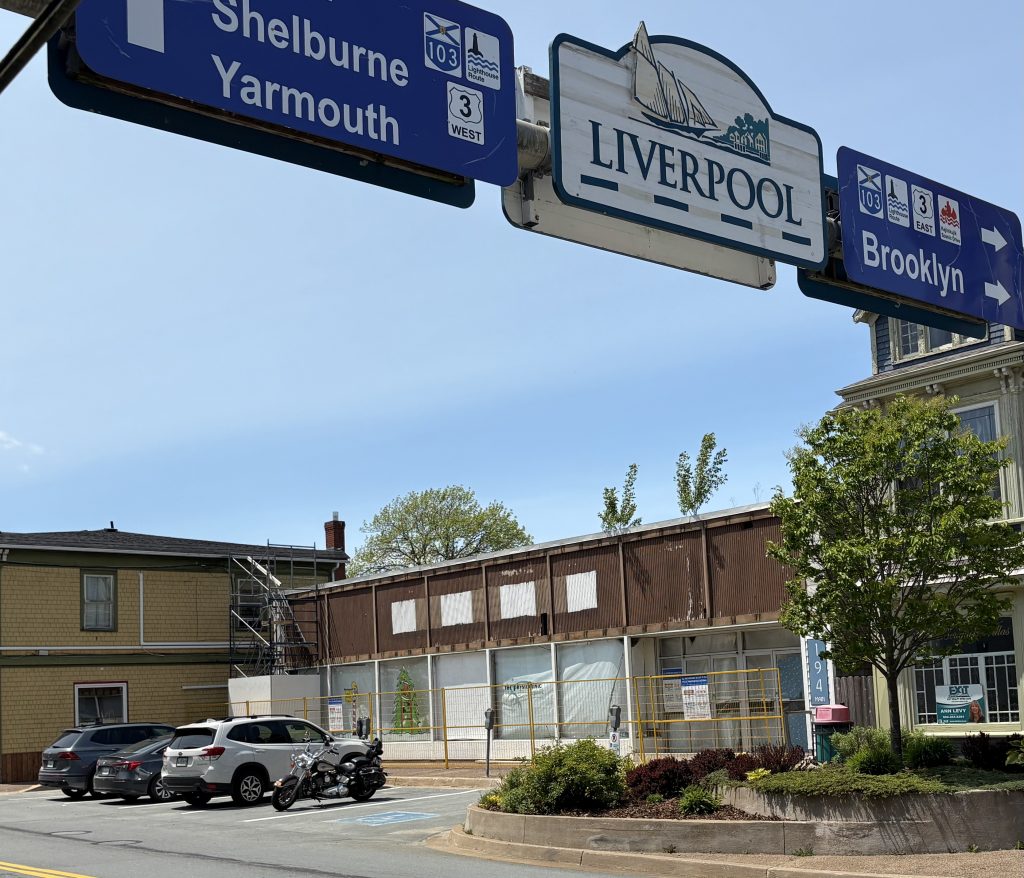
Region of Queens greenlights bylaw changes to allow Stedmans building plan

Region of Queens councillors changed the region’s land use bylaw on Tuesday to greenlight a plan to turn 194 Main St. in Liverpool into apartments. (Rick Conrad / File)

The Region of Queens has cleared the way for a developer to turn the old Stedmans building in downtown Liverpool into apartments.

Councillors voted unanimously on Tuesday evening to change the region’s land use bylaw to remove the requirement for more than half of a property’s ground floor to be commercial space.

Developer Eric Fry originally wanted to build 16 apartments, with indoor parking and storage at 194 Main St. 

When councillors rejected that plan in July, he returned with a new proposal that would include two small commercial units on the ground floor, in addition to 14 apartments.

The region’s planning advisory committee initially wanted to amend the bylaw to include a prohibition against a building owner using commercial space as an office. 

But after a public hearing on the proposed bylaw changes on Nov. 12, the municipality’s lawyer told them they didn’t have the authority to dictate who uses a property.

On Tuesday evening, councillors voted for no restrictions on how the commercial areas can be used.

Under the new bylaw, ground-floor dwellings need to be at the back of the building behind the commercial space.

That commercial space must be a minimum of 12 feet deep and 300 square feet.

District 3 Coun. Courtney Wentzell, whose area includes downtown Liverpool, said he had mixed feelings about the changes.

“I have talked to some residents and some business owners and I do understand the aspect of maintaining commercial space,” he told his fellow councillors.

“And I know with the new businesses coming into town, many new businesses, there’s been a concerted effort to maintain Main Street as a commercial zone. I get that, … but I also look at that Stedman’s building with the rats playing outside and the trees growing through the roof, and I got to say that the commitment of somebody that actually wants to put money into that building and what’s the alternative, that we let it rot and let it fall down, or we tear it down?”

Denaige McDonnell, who lives on Main Street, spoke against the changes at the public hearing.

She told QCCR on Tuesday evening that council’s decision was shortsighted, especially without a comprehensive plan for the downtown.

“When we’re talking about bylaws that affect an entire region, I think that it’s flawed thinking to make a decision when it’s based on a single building,” she said.

“It seems that things really are being dealt with, I guess, maybe on a transactional basis and not having a holistic view of the overall system quite so much. … And so I would like to see a little bit more strategy around how we get those buildings up to a standard where they can be used. I think that what we’re doing here is sort of like, well, any use is better than commercial use, but we’re not going to the systemic root of the problem.”

Mayor Scott Christian said he understands those concerns and agrees that a strategic plan for the downtown is needed. But he said the region can’t wait for that process to happen.

“I’m really pleased to see that amendment to our land use bylaw because we weren’t fostering an environment that was business friendly,” he said in an interview.

“So I’m excited to see how the business community responds to a new bylaw infrastructure. And I agree that only changing the bylaw is not a magic bullet to revitalize downtown. We need a good strategy. But I think that providing for more flexibility in our bylaw in a way that’s quite innovative, you don’t see a lot of downtowns and small towns that have this level of flexibility. And so I’m hoping that it sets us apart and creates an environment where we can then pursue a robust strategy to revitalize downtown.

The new land use bylaw hasn’t gone into effect yet.

People have 14 days to appeal council’s decision to the Nova Scotia Regulatory and Appeals Board.

Email: rickconradqccr@gmail.com

Listen to the audio version of this story below

Legal concerns delay decision on Stedman’s building in downtown Liverpool

Eric Fry speaks during a public hearing Wednesday on proposed changes to the Region of Queens land use bylaw. (Region of Queens YouTube)

It will take a little longer to find out if the old Stedman’s building on Main Street in Liverpool will have a new life as an apartment complex.

The Region of Queens held a public hearing on Wednesday on proposed changes to the municipality’s land use bylaw that would allow for more residential space on the ground floor of buildings in the downtown commercial district.

At their meeting afterward, councillors voted to seek legal advice on whether they have the authority to make one of those changes.

Developer Eric Fry wants to turn 194 Main St. into 18 residential units, four of which would be “hotel suites”, and two main-level commercial units of 300 square feet each.

Fry bought the 30,000-square-foot building earlier this year and has been trying to get municipal approval for his apartment proposal since February. His original plan was for 16 residential units, indoor parking, storage and no commercial space. Councillors refused to change the bylaw to allow that to proceed.

After Fry listed his property for sale, the region’s planning advisory committee agreed to consider a revised a proposal and return it council.

Municipal rules require that at least half of a building’s ground floor must be commercial space.

On Wednesday, Fry spoke briefly in support of the bylaw changes. Four Liverpool residents spoke against them.

Tara Druzina said she wasn’t sure whether councillors had the authority under the Municipal Government Act to dictate who uses space in a building. A proposed change would forbid the owner or property manager from using one of the commercial spaces as an office.

“Municipalities regulate land-use types and their characteristics, but discriminating against and between identical uses based on ownership arrangements may exceed municipal jurisdiction,” she told councillors.

Denaige McDonnell said she was concerned that councillors were missing the mark in trying to change the bylaw.

“A common argument for expanding residential use is that there isn’t enough demand for commercial space, but deeper issues are at play here,” she said.

“
Many of our commercial buildings simply do not meet current building code, accessibility, or safety standards that are required for occupancy or for commercial use. And really what that’s telling us is that it’s not a demand problem, but it’s a readiness problem.”

McDonnell said the region is trying to change its bylaw to appease one property owner without having a comprehensive commercial plan.

“Structural changes like this need to be informed by clear, data-driven, county-wide strategy, not as reactions to individual development proposals.

“This proposed bylaw change may offer a short-term perception of flexibility and reward a single proponent, but it comes at a long-term strategic cost. Our commercial spaces are a very valuable part of our community. 
They are our most valuable assets for the future, and they deserve to be protected, planned and leveraged as part of a larger vision for economic sustainability.”

Susan McGibbon said she was worried the process is moving too quickly without a proper assessment of business in downtown Liverpool. 

“I’m not saying that is your fault, council. This goes way back. 
There’s been no development of an economic plan for the downtown for a very long time. So there’s no research, there’s no data, and there’s been little to no expertise in the understanding of commercial and retail in the downtown.”

Paul Deveau pointed out that during public consultations in the spring, residents and business owners said that there needed to be a downtown plan that protects commercial space while adding more housing.

“But here we are a few months later, and you’re again trying to amend a bylaw without a comprehensive plan.” 

Later in the meeting, councillors decided that they couldn’t make a decision on the proposed changes until they got legal advice.

Mayor Scott Christian asked whether staff sought advice on the wording around what landlords can do with the commercial space. 

Staff conceded they had not.

Council asked staff to have that information ready for their next meeting on Nov. 25.

Until then, the land use bylaw remains unchanged. Any substantive changes would likely restart the process and require council to have another public hearing.

Once councillors voted for a legal opinion, Christian called a break and met with Fry in his office for about 15 minutes.

Afterward, Fry told QCCR that he appreciated residents’ comments and their passion for the downtown. He said he understands that council has to make sure they have authority to make the changes.

“It’s unfortunate that this wasn’t flushed out as maybe as thoughtfully as it should have been. So, I understand there is a process to remedy, so we’ll have to wait until we hear what those next steps are.” 

Email: rickconradqccr@gmail.com

Listen to the audio version of this story below