Queens approves $54-million infrastructure budget

Region of Queens councillors passed their capital budget last week. (Rick Conrad)

The Region of Queens got a head start on a big part of its budget last week by approving its five-year, $54.3-million capital plan.

It includes more than $27 million in projects for this fiscal year alone.

Councillors wanted to approve their capital budget earlier this year so that municipal staff could work on issuing tenders before the spring.

“The purpose of bringing the capital investment plan to council at this point is so that we’ve got as much runway as possible before the fiscal year starts on April 1st,” said CAO Willa Thorpe, “so that staff have the opportunity to go to tender on projects with the runway of between January and April.”

The extension of water and sewer to the Mount Pleasant area of Liverpool accounts for almost $10 million of the 2026/27 spending.

Another $1.4 million is being set aside to upgrade and extend two kilometres of the main water transmission line from the South Queens Water Treatment Facility to Union

Street in Liverpool, and to upgrade the water main from Roy Turner Road to Mersey Avenue.

Some councillors want staff to fast track the replacement of existing water infrastructure before adding new areas.

So they voted to hire a consultant to analyze the costs and timeline of the main water line project.

Adam Grant, the region’s director of infrastructure, said it would probably take from six to nine months to get a report back.

District 6 Coun. Stewart Jenkins had many questions for staff about the capital plan.

He wanted to know why projects take so long to get done. 

“Would it not be better to stop anything new and just get these projects done so we can have a fixed cost on it? … Why are we adding more projects on when we can’t get ones finished?”

Grant said staff try to strike a balance between ongoing projects and new ones added to the list.

“There are a lot of projects on there. I think each year … we try to trim them off and council would like to add some… . So we try to balance it out what we can complete. What’s pertinent, and what’s unnecessary, trying to prioritize in that fashion.”

Mayor Scott Christian said it’s council, not staff, that adds work to the list. He said Thorpe, Grant and Finance Director Joanne Veinotte have told him they’re trying to improve the process.

“There is a concerted effort to be more realistic, what we’re budgeting for the projects that we actually expect to be done, and improvements with respect to the way that we’re making decisions about what we’re doing in-house, and what we’re shopping out and subcontracting out. So it would be my expectation that moving forward, we are going to improve that in terms of achieving the work in the year that we’re funding it.”

Some of the projects that have been held over, like the wall at the Old Burial Ground or the new Gorham Street planter between Home Hardware and Celeste’s Hair Salon on Main Street, caught Jenkins’s attention.

“How do we justify a planter at in excess of $97,000 for plants?” he asked Grant.

Grant said it’s actually a vital retaining structure in the walkway from Main Street to the waterfront.

“So it’s a couple hundred metres long. 
It’s brick, it’s 12 feet to 16 feet high in spots, it does have plants into it. But it’s a lot more than just a planter with some shrubbery. It’s being improved, I guess, for accessibility, as well as retention purposes, to protect the pedestrians.”

Jenkins also had some work of his own to add to the list. Councillors approved his motion to add $200,000 to the capital budget this year to work on dry hydrants around Queens County.

They are vital for many of the region’s fire departments to be able to access water sources.

Jenkins said that before his concerns were addressed, he was ready to vote against the budget. But he said he would vote for it even though he still had some reservations.

Councillors voted unanimously to pass the region’s 2026-31 capital investment plan.

Next up will be the region’s operating budget. Councillors are set to begin debating that on Feb. 24. Residents can have their say by filling out a survey on the region’s website.

Some of the 2026/27 spending highlights in the Region of Queens capital investment plan:

  • Accessible washrooms, universal playpark at Queens Place: $425,810 (federal gas tax funding)
  • Gorham Street planter rehabilitation: $97,630 (municipal reserves)
  • Thomas H. Raddall Library renovations: $111,490 (federal gas tax)
  • Old Burial Ground wall rehabilitation: $173,440 (municipal reserves)
  • Queens Place LED light refit: $78,000 (municipal reserves)
  • Queens Place roof remediation: $70,000 (municipal reserves)
  • Sidewalk Millard to Harley Umphrey Section 1: $519,192 (municipal surplus)
  • Astor Theatre improvements Year 1: $1,090,499 (municipal surplus)

Email: rickconradqccr@gmail.com

Listen to the audio version of this story below
Liverpool man fights for region to honour decades-old agreement

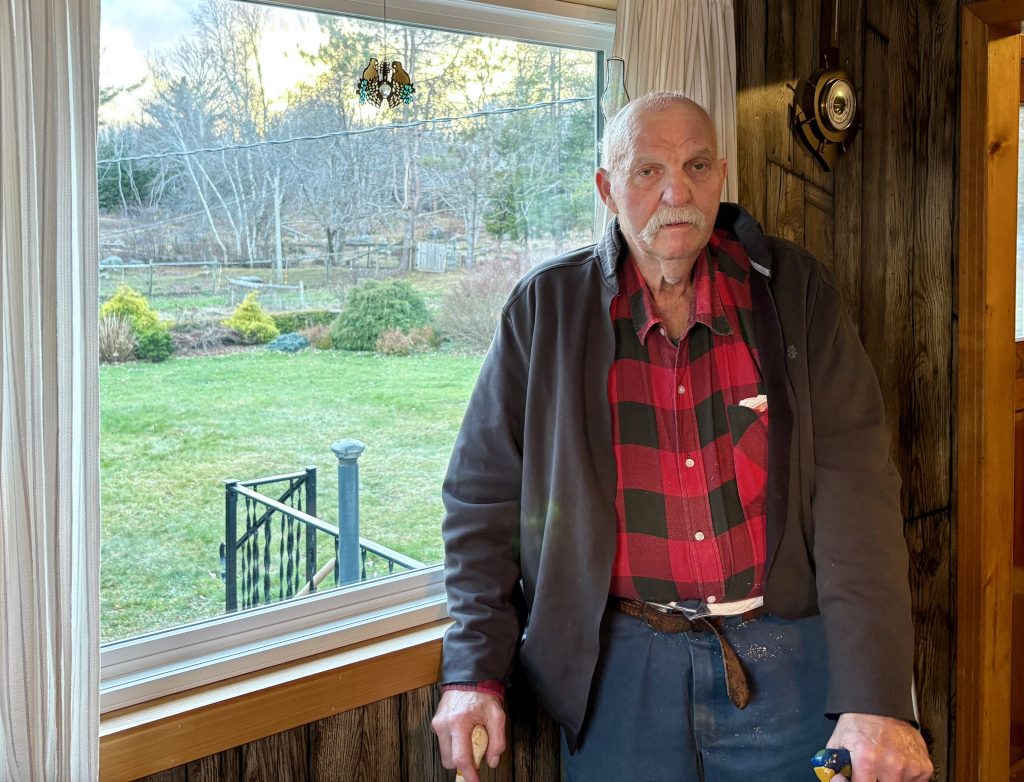
Arthur Roy says he wants the Region of Queens to honour an agreement his father signed in 1947. (Rick Conrad)

A Liverpool man says he wants the Region of Queens to honour an agreement the municipality made with his father 78 years ago.

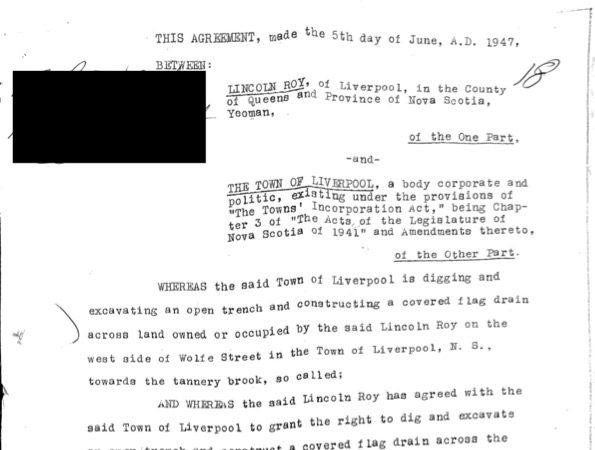
Arthur Roy’s father Lincoln signed a deal with the old Town of Liverpool for $1 in 1947 “to dig and excavate an open trench and construct a covered flag drain 115 feet in length” over his land off Wolfe Street. The town wanted to use it as a stormwater drain.

The agreement allowed the municipality to access the land to build the drain and “do other necessary work for the purposes of renewing, repairing, improving or altering the said open trench and said covered flag drain … provided that the area … is left in a good and safe condition.”

Click the image to read the original 1947 agreement (Courtesy Arthur Roy)

Roy, who now owns the land, says the problem is that the town never finished the work properly in the first place. And he’s been fighting to get the municipality to come back and make it right.

And now the trench has got silt into it and it’s grew up with grass and it’s just a mess,” he said in an interview.

“Either the easement agreement is good or not, right? If it’s good, come and do what it says on the easement agreement. If it’s no good, come and fill it in. They had all these years, 70-some years, running that water down there and not done anything.

Councillors discussed the issue at a recent closed-door, in-camera meeting.

Mayor Scott Christian told QCCR that the region is willing to replace a crumbling four-foot culvert on Roy’s property.

We’re going to put a modern culvert in. It’s changed in terms of the standard and the approach to dealing with trenches and ditching. I think in ’47, they wouldn’t have had the same materials available to them, so we’re going to put in a culvert using today’s technologies and today’s approach to handling that, putting in an appropriate culvert given our requirement for access back there. ”

The drainage ditch cuts through Roy’s land. He says he can’t easily access his 10 acres of land, which he uses as pasture for his sheep. He’s had to build a small walkway over the ditch to get there.

And you can’t take a vehicle over it, so here I have a piece of land that’s cut into where I live … and I can’t access it. I have wood over there cut in the pasture. I can’t get anything to go over because it’s not safe to go over.”

Christian says the drain on Roy’s land is part of a network of stormwater drains and trenches.

“The trench that goes on his land is a small part of a huge network of stormwater trenches that exist. … We need to make sure that culvert is safe. It’s currently unsafe and we need to make sure that that’s a safe passageway across that trench.”

In 2021, Roy contacted his local councillor at the time and former mayor Darlene Norman. 

In a letter to Roy, then-CAO Chris McNeill said the municipality would replace the culvert but that Roy would be responsible for its maintenance because the region had no record of installing the culvert in the first place.

“But if they had 115 feet of flagstone, you wouldn’t need a culvert, you could get across that land 115 feet.”

The region’s CAO Willa Thorpe contacted Roy last week after councillors discussed it. She told him the region’s plan to replace the culvert. 

Roy hasn’t seen anything in writing yet. And he’s waiting to meet with his lawyer this week before deciding what to do.

“I don’t want a culvert,” he says. “(The agreement) doesn’t call for a culvert. All I want them (to do) is to follow the easement agreement.”

Email: rickconradqccr@gmail.com

Listen to the audio version of this story below
Region of Queens wants residents to help set council pay

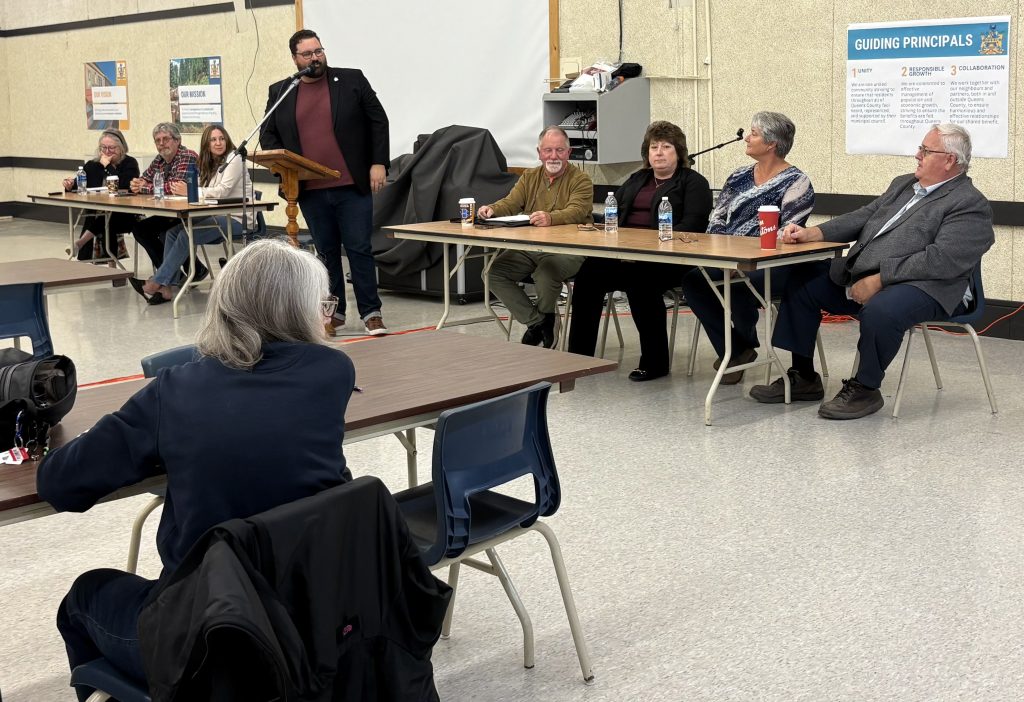
Region of Queens Mayor Scott Christian and his fellow councillors at a town hall session at the Liverpool Fire Hall in October. (Rick Conrad)

The Region of Queens is giving residents a say in how the mayor and councillors are compensated.

Regional council voted this week to create a citizen advisory committee on council remuneration.

Chief Administrative Officer Willa Thorpe told councillors that involving residents in the process helps avoid any potential conflicts of interest.

“The committee’s work could be completed prior to council adopting the 2026-2027 operating budget, so any potential compensation adjustments would be considered during budget deliberations.”

The region is looking for three to five people to sit on the committee, preferably with experience in finance, policy, governance, legislation or related areas.

The mayor’s current annual salary is $48,533, while councillors make $24,267. The deputy mayor makes $25,667. The mayor and councillors do not participate in a benefits or pension plan.

Pay for council and the mayor is adjusted after every election. Any raises are calculated by using an amount equal to the cumulative percentage of the average salary increase of all region employees over the past four years or by the cumulative consumer price index over the same period, whichever is less. 

The region has had the same policy since 2018.

This fall, regional staff contacted municipalities around the province about how they review councillor compensation.

Nine municipalities responded. Two-thirds of those included some kind of pension or health benefits.

The Municipality of the District of Lunenburg adjusts council pay annually based on the provincial consumer price index. It also includes a health and dental benefits plan, with elected officials paying 25 per cent of the premium. Since June 1, 2021, they are also enrolled in the province’s public service pension plan, which MODL belongs to as an employer.

MODL’s mayor is paid $59,377 a year, while councillors make $29,562. The deputy mayor gets $40,208.

In the Halifax region, which is Nova Scotia’s largest municipality, the mayor makes almost $205,000, with councillors at $99,402. They can also participate in a benefits and pension plan.

The citizen advisory committee in Queens would meet three times, twice in January and once in February, before delivering its report by Feb. 28.

Councillors would appoint committee members at their first meeting in January. Holly McConnell, the region’s director of people and culture, would help the committee with their work.

When asked whether three meetings is enough time for the committee to review compensation for mayor and councillors, Mayor Scott Christian told QCCR that they’ll have help.

“I guess that we will see,” he said.

“My expectation is that staff will carry most of the heavy lifting and the load in terms of actually doing the writing and development of the work. But I think it’s really important to have the citizen panel so there are opportunities from an objectivity and an impartiality standpoint and to get different perspectives around the table.”

Meetings of the committee will be open to the public. And it will be dissolved once it finishes its review. 

The region is accepting applications until Jan. 2 at 4:30 p.m. Applicants should email a brief summary of their experience and a brief statement on why they want to participate to the municipal clerk at clerk@regionofqueens.com

Email: rickconradqccr@gmail.com

Listen to the audio version of this story below
Queens water rate ask still ‘unreasonable, unjust and unprecedented’ despite reworked numbers

The Region of Queens is asking for a lower immediate rise in water rates. (Daan Mooij via Unsplash)

The Region of Queens is no longer asking for an immediate 106 per cent increase in water rates.

But customers will still have to pay about 115 per cent more over three years if the municipality’s application to the Nova Scotia Regulatory and Appeals Board is successful.

In documents filed with the board on Nov. 7, the region is now asking for a 43 per cent increase in the first year for the 1,200 water utility customers in Liverpool and Brooklyn. The region has diverted about $1.6 million in budget reserves to blunt the first-year increase and spread it over a longer period.

“The utility did not get in its present state overnight and it cannot be restored to its proper efficient and effective state overnight, but the process has started, and it needs a sustainable rate structure to accomplish this,” Willa Thorpe, the region’s chief administrative officer, wrote in the revised rate hike request. 

“If the current underfunding is not addressed now it just pushes the problem forward and adds unnecessary debt payments for future customers.”

Before the region filed its revised rate hike request, the Queens Community Health Board filed a comprehensive objection to the planned increases, calling them “unreasonable, unjust and unprecedented”. 

The board is the only registered intervenor in the hearing, though it has letters of support from the Queens County Food Bank, Liverpool Curling Club, Queens Transit and the Queens Care Society.

Board chair Tara Druzina told QCCR this week that many people can’t afford to pay up to an extra $461 a year for water services.

“I think the perspective of the community health board is the shock of the increase that is coming forward,” she said.

“The municipality does need to run a balanced utility and we’re aware of that. It’s just that the 115ish per cent over three years, while there’s such a large percentage of water loss, is this concerning part we have, particularly for our vulnerable residents.”

The board will hold a public hearing on the region’s water rate request on Wed., Nov. 19 at 10:30 a.m. in council chambers at the region’s offices on White Point Road.

Druzina said it’s important for residents to have their say at the hearing.

“The board members, like at a council meeting, need to know the perspective of the community impacted.”

Anybody can speak at the hearing, but you must notify the board by Fri., Nov. 14, by email at board@novascotia.ca, by phone at 902-424-1333 or 1-844-809-0010. You can also send written comments to the board by email or by sending a letter to the Clerk of the Board at P.O. Box 1692, Unit “M”, Halifax, NS B3J 3S3 by Nov. 14.

The region says it needs to raise rates by more than 100 per cent to deal with an $800,000 deficit.

The utility has operated at a loss for five consecutive years, since 2020. It’s also been struggling to keep a lid on significant leaks in the system, losing up to 69 per cent of its water each year through faulty water mains and other unrepaired damage. In a 2024 study commissioned by the region, consultants said that leakage rate placed it in the “worst” category compared to other utilities.

“The people of Queens County face a choice made by others: pay dramatically more for a service that wastes two-thirds of its water or fight for regulatory protection,” the health board wrote in its submission.

“The (regulatory) board has both the authority and the obligation to protect ratepayers from this injustice while ensuring utility viability. We recognize the challenges faced by small rural utilities. However, four years of declining performance despite board direction and significant spending demonstrates problems beyond normal operational difficulties. We are not asking the board to let the utility fail. We are asking the board to protect the people of Queens County from bearing the full cost of that failure.”

The community health board points to the utility buying used water meters from Halifax that were already past their prime, staffing shortages, improper oversight and the ongoing system leaks.

The health board wants the provincial regulator to approve a 15 to 20 per cent increase and impose mandatory targets to reduce system leaks: 10 per cent reductions a year by 2028, with a long-term reduction goal to the industry standard of 30 per cent.

In a letter to the regulatory board after the region’s revised rate request, Druzina says the lower proposed hike in the first year is better, but “without binding performance accountability measures, however, it does not address the operational failures that created this crisis or prevent recurrence.”

And she says the region’s recently approved $200 utility assistance rebate for those on low incomes is “insufficient and unsustainable”.

In a county with a 31.5 per cent child poverty rate and where more than 30 per cent of residents are over 65, Druzina says even with the rebate, people will struggle to cope with a 43 per cent immediate increase.

Recent decisions by the regulatory board have approved water rate increases of up to 17.8 per cent in Sherbrooke on Nova Scotia’s Eastern Shore and 7.2 per cent over two years for Halifax.

The Queens proposal “represents the largest rate increase request in documented Nova Scotia regulatory history”, Druzina writes.

In addition to an interim hike of no more than 15 to 20 per cent, the health board wants future increases tied to reducing the water wasted through leaks in the system. It also wants the provincial regulator to order an independent system audit and quarterly public reporting, and to require a performance-based rate plan with accountability measures.

Email: rickconradqccr@gmail.com

Listen to the audio version of this story below

Region of Queens hires deputy CAO

The Region of Queens administration building. (Rick Conrad)

The Region of Queens has hired a deputy chief administrative officer.

Patrick Hirtle will start the job on Oct. 20. He’s currently the manager of community attraction and communications with the Town of Bridgewater.

“I’m thrilled that Patrick will be joining our team as deputy CAO. Patrick brings a unique perspective to this role – he has more than 10 years’ experience in municipal government, and has been a councillor in Town of Bridgewater several years ago,” Willa Thorpe, the region’s CAO, said in a news release.

“When we interviewed Patrick, we were very impressed with his extensive experience in municipal and private sector communications, strong skills and training in emergency management, and strength and proficiency leading a cohesive staff team.”

The deputy CAO new position was created this past year. Hirtle will assist Thorpe with projects and administration and he’ll oversee staff in administration, community economic development, communications, information technology, protective services, and policy and bylaw development.

According to his LinkedIn profile, Hirtle has worked for Bridgewater for almost 11 years. He is also the former communications co-ordinator at Covey Island Boatworks. He served one term as a Bridgewater town councillor. Before that, he worked as a journalist for Lighthouse Publishing, which used to print the Bridgewater Bulletin and Lunenburg Progress Enterprise.

He was born in Bridgewater and raised in Mahone Bay, according to the region’s news release.

“I’m both honoured and excited to have been selected as the Region of Queens’ new deputy CAO,” Hirtle said in the release.

“There are a lot of great things happening here in Queens, and I can’t wait to get to work with the team.”

The annual salary range for the deputy CAO position is $113,339 to $149,885.

Email: rickconradqccr@gmail.com

CAO: Queens trying to keep people on the job after recycling depot closes

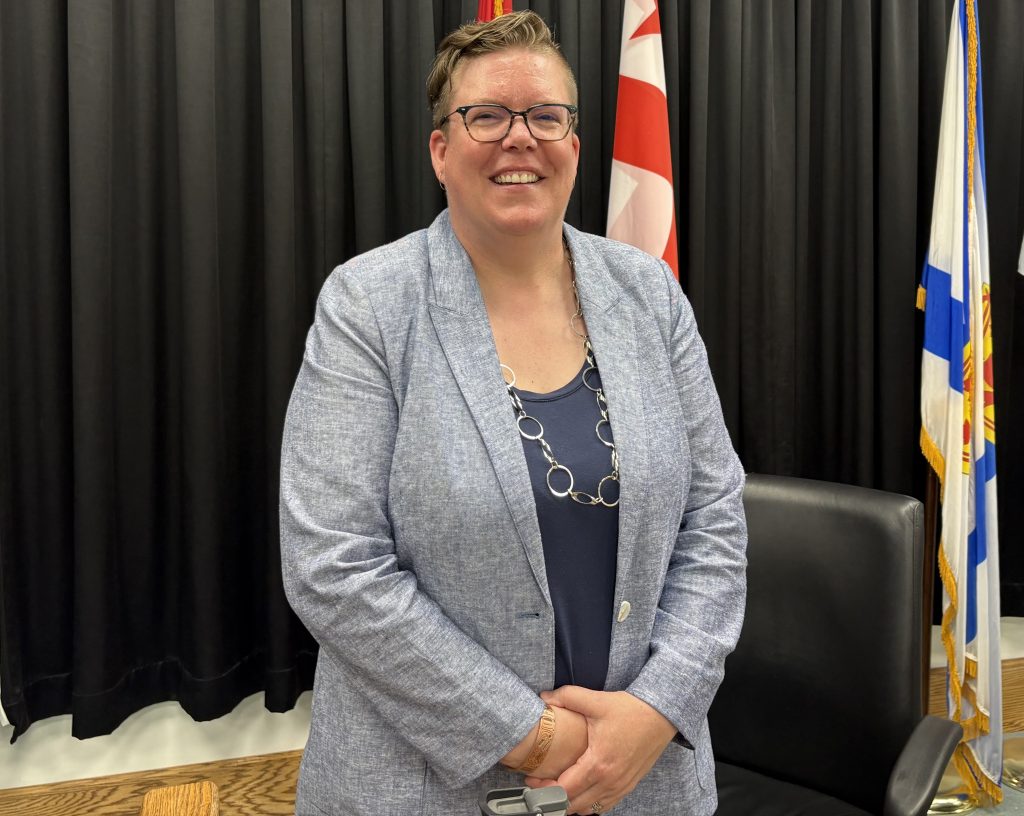
Willa Thorpe is the chief administrative officer of the Region of Queens Municipality. (Rick Conrad)

Employees facing layoff when the Region of Queens closes its recycling depot may still have a job with the municipality.

The region announced this week that it would close its materials recovery facility on Dec. 1 in response to new regulations from the Nova Scotia government.

The province is shifting the responsibility for sorting plastics and other packaging to the companies that produce it. That means municipalities won’t need their own sorting facilities anymore.

In Queens, that will affect eight unionized employees.

Willa Thorpe, the region’s chief administrative officer, told QCCR on Thursday that the municipality will try to find other jobs for those workers.

So if there’s an opportunity through current vacancies here in the organization where we have the opportunity to train folks and have them shift to a different position, we’ll do that.

“So if there’s an opportunity through current vacancies here in the organization where we have the opportunity to train folks and have them shift to a different position, we’ll do that.”

She said they’re also going to hook workers up with provincial and federal supports from Nova Scotia Works and Service Canada.

Unionized employees at the Region of Queens Waste Management Facility are represented by Local 1928 of the International Brotherhood of Electrical Workers.

The local signed a new contract with the region after a week-long strike in January.

Thorpe said the agreement requires five days’ notice of any ceasing of operation or service that will affect jobs. She said managers wanted to give the affected employees more notice, so they met with workers and their local union representative as soon as council decided to close the facility.

We think it’s important that our employees know exactly what’s going on, that their livelihood may be impacted, and so rather than follow the (basic language) of the collective agreement, we think we hold ourselves to a higher standard. So we actually met with staff a few hours after meeting with council, so the same day as opposed to waiting, so that those employees can be confident they know exactly what’s going on.”

Some workers will continue to be employed until at least Dec. 1, depending on how long it takes to wind down the facility, Thorpe said.

She said the collective agreement does not provide for severance pay. But she said “the region is actually actively working on providing some severance to those employees.”

She didn’t have details yet on what that package might be.

Jim Sponagle, the business manager for IBEW, told QCCR earlier this week that relations between the union and the region have not improved since the strike.

Thorpe, who started as CAO in June, said that’s incorrect.

“I would disagree with that statement based on the conversations I’ve heard since the labour action, the relations have improved.” 

Nothing will change for residents in how garbage and recyclables are collected, and the municipality’s solid waste facility will remain open. 

A company called Circular Materials will be taking over the sorting of recyclables from the region. That’s an organization formed by large corporations like MacDonald’s, Nestle Canada and Pepsico.

Thorpe said municipalities are still working out details of the agreement with Circular Materials, so she’s not sure yet how much money the region might save.

“What the specific impacts are to municipalities we’re still determining where the dust will settle. But the idea is that the producer would bear the lion’s share of the cost.”

Thorpe said officials with the region plan to meet with affected employees again next week.

Email: rickconradqccr@gmail.com

Listen to the audio version of this story below
Layoffs loom as Region of Queens to close recycling depot

The Region of Queens is closing its recycling facility, which will result in job losses. (Nick Fewings via Unsplash)

UPDATED AT 3 p.m. Wednesday

Employees at the Region of Queens materials recovery facility will be laid off when the depot closes on Dec. 1.

The region said in a news release late Tuesday afternoon that the layoffs and closure are because of provincial changes to how recyclables are handled. The region’s solid waste facility employs 13 people, but the release did not say how many employees are affected.

Mayor Scott Christian told QCCR on Wednesday that eight employees work at the recycling facility. But he said the municipality will try to move them or retrain them for other available positions with the region.

“The first step is to try to retain staff if that’s possible to keep people in the organization and if they can’t be kept then to lay them off. And then whatever is contained legally in the bargaining agreement, we’d go from there,” he said.

“It sucks, it sucks. It’s challenging times, life is tricky to afford and there’s not a lot of good paying jobs in the community. It’s certainly not a decision that we made lightly.”

Christian said waste collection won’t change in the municipality. Collection dates or methods won’t be affected. The solid waste management facility will remain open. This change affects only who sorts the recyclable material.

In August 2023, the Nova Scotia government amended the Environmental Act to make recycling packaging and paper the responsibility of the producer, otherwise known as extended producer responsibility.

“No impact to the resident experience, it’s just that now with the extended producer responsibility … the producers of the packaging waste are responsible for figuring out what’s happening to that waste,” Christian said.

“It’s now the responsibility of the Jeff Bezos and the Walmarts of the world to deal with their own packaging.”

Circular Materials is a company formed by corporations that produce packaging waste, such as Loblaw, Coca-Cola, McDonald’s and others.

Christian said that company also offered to collect the recyclables, but the region opted out of that.

Jim Sponagle, business manager for Local 1928 of the International Brotherhood of Electrical Workers, told QCCR on Tuesday that he found out about the job losses from a member of the local who works at the facility.

“The Region of Queens at no point contacted the union to advise the union what their intention was. Very disappointing,” he said in an interview.

“(We’ve) completely been blindsided by it. No discussion with the union, no conversation, we were completely in the dark.”

He said relations between the region and the union have not improved since a week-long strike in January, when almost 40 engineering and public works employees walked off the job for higher wages and improved overtime benefits.

Sponagle said Tuesday that some workplace issues are still outstanding from before the strike. He said he’d be contacting the union’s legal adviser to see how it can respond to the layoffs.

“I’m sympathetic to the members who will be losing their jobs. It’s disappointing for sure. We went through tough negotiation and we landed on a strike and I hope that wasn’t a determining factor as to why they chose to contract that work out that’s been done there for years. I can only sympathize with the members affected by the decision of the region.”

CAO Willa Thorpe said in the release that the municipality is “working directly with impacted employees at the MRF site to help them transition at this difficult time.”

Email: rickconradqccr@gmail.com

Listen to the audio version of this story below

Region of Queens hires Willa Thorpe as new CAO

Willa Thorpe is the new chief administrative officer for the Region of Queens. (Region of Queens Municipality)

UPDATED Mon., May 12

The Region of Queens has hired a new chief administrative officer.

Willa Thorpe will take over as the municipality’s top staffer on June 16, after regional councillors unanimously approved her appointment on Tuesday.

Thorpe is from British Columbia, where she is the director of parks, recreation and culture for the City of Port Alberni.

She has 10 years of experience in local government, though she has 20 years working in senior leadership roles. This will be her first job running a municipality.

Mayor Scott Christian said he’s excited to welcome Thorpe to the region and to the community.

“She demonstrated throughout the recruitment process that she’s incredibly skilled when it comes to directing organizations and the people within organizations and in meaningful ways and getting the best out of them,” he told QCCR Tuesday evening, after councillors approved her appointment.

“
And we know that that’s really what we need. We need a leader who’s going to be able to get the best out of the team and get this organization moving in a new direction, in a better direction. We know that there’s modernization that needs to occur. 
We know that there’s going to be changes, significant changes to the way that we do business, to the way that residents interact with the organization and the way that they receive services. And so that’s the first thing is her her skill set, her credentials, that she brings to the table.

“And then the other thing that really set her apart was her value that she placed on being of and in community.”

Christian said residents and regional councillors emphasized the importance of having a CAO that lives in Queens County and is involved in the community.

“We heard loud and clear from our residents,” he said.

“There was a lot of feedback on previous CAOs that weren’t very involved in the community. Some didn’t live in the community and there were a lot of expectations to say, ‘Hey, our next CAO should really be someone who lives in the community, is involved in the community, is engaged, active, visible in the community.'”

Christian said that during the hiring process, Thorpe “really shone” by demontrating her involvement in her community in Port Alberni through coaching and volunteering.

“And so she just demonstrated how she shows up in community and what that looks like. 
And how important it would be to her if she is the next CAO for our municipality to be really, really involved in Queens.”

Thorpe has a PhD in industrial/organizational psychology, as well as a masters in leadership. She also has a kinesiology and health studies degree, and she’s a certified coach.

Thorpe told QCCR she’s “very excited” to start the job and move to the region, especially since it has so many waterfront areas.

I’m really trying to replicate the lifestyle that I’ve got on the West Coast and so when I was looking at Queens noticed that there’s lots of local community pride, which is very exciting and everyone I talked to in the community just seems so ecstatic to be in Nova Scotia, from Nova Scotia and being from the Queens area. And I also love the inclusiveness of Nova Scotia as well so seems like just a great fit.”

Thorpe is originally from Ontario, but has worked and lived in various places in Canada. This will be her first time living on the East Coast.

Her wife Carrie and their rescue dog Hershey will also be making the move with her. They plan to head out in early June in their camper van to drive the TransCanada Highway from B.C. to Nova Scotia.

I’ve done portions of it, but I’ve never done the whole thing in one shot, so excited for the beginning of June to be doing the entire trek from West to East.”

She said she’s impressed with what she’s seen so far.

It seems like there’s a great investment in community. It seems very exciting and something that I want to be part of, so I thought as my first opportunity to be a chief administrative officer, I thought it really ticked all the boxes and it seems like there’s a lot of really good stuff going on in the region.”

Thorpe said that she and her wife have already been house shopping in the area.

“Hoping to set down roots as soon as we can.”

The region has been searching for a new CAO since they fired Cody Joudry in December 2024. 

Dan McDougall has been filling in on an interim basis since January.

Thorpe will be the region’s sixth permanent CAO since amalgamation 29 years ago.

Christian said Thorpe will be making in the range of $170,000 a year.

According to the federal job bank, wages for CAO positions in the southern region of Nova Scotia ranged from a low of $50.35 an hour to a high of $111.30 an hour.

Cathie O’Toole, the CAO for Halifax, makes an annual salary of about $292,000, according to Halifax’s Sunshine List salary disclosure. The Town of Kentville is searching for a new CAO and promising a salary range of $150,000 to $180,000.

Email: rickconradqccr@gmail.com

Listen to the audio version of this story below