Region of Queens wants residents to help set council pay
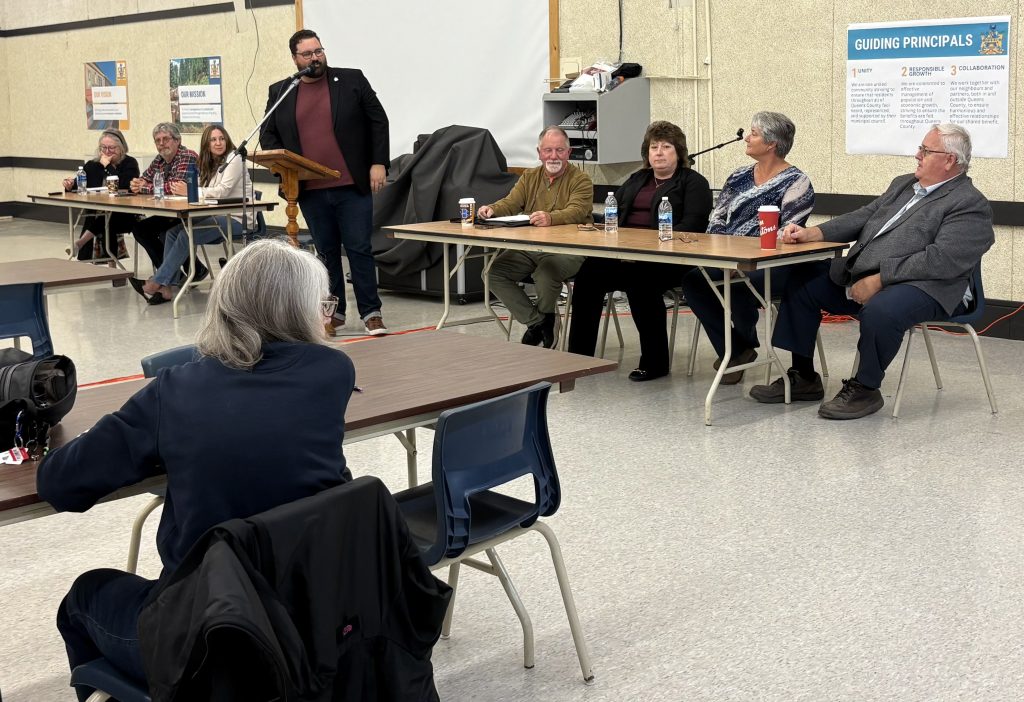
Region of Queens Mayor Scott Christian and his fellow councillors at a town hall session at the Liverpool Fire Hall in October. (Rick Conrad)

The Region of Queens is giving residents a say in how the mayor and councillors are compensated.

Regional council voted this week to create a citizen advisory committee on council remuneration.

Chief Administrative Officer Willa Thorpe told councillors that involving residents in the process helps avoid any potential conflicts of interest.

“The committee’s work could be completed prior to council adopting the 2026-2027 operating budget, so any potential compensation adjustments would be considered during budget deliberations.”

The region is looking for three to five people to sit on the committee, preferably with experience in finance, policy, governance, legislation or related areas.

The mayor’s current annual salary is $48,533, while councillors make $24,267. The deputy mayor makes $25,667. The mayor and councillors do not participate in a benefits or pension plan.

Pay for council and the mayor is adjusted after every election. Any raises are calculated by using an amount equal to the cumulative percentage of the average salary increase of all region employees over the past four years or by the cumulative consumer price index over the same period, whichever is less. 

The region has had the same policy since 2018.

This fall, regional staff contacted municipalities around the province about how they review councillor compensation.

Nine municipalities responded. Two-thirds of those included some kind of pension or health benefits.

The Municipality of the District of Lunenburg adjusts council pay annually based on the provincial consumer price index. It also includes a health and dental benefits plan, with elected officials paying 25 per cent of the premium. Since June 1, 2021, they are also enrolled in the province’s public service pension plan, which MODL belongs to as an employer.

MODL’s mayor is paid $59,377 a year, while councillors make $29,562. The deputy mayor gets $40,208.

In the Halifax region, which is Nova Scotia’s largest municipality, the mayor makes almost $205,000, with councillors at $99,402. They can also participate in a benefits and pension plan.

The citizen advisory committee in Queens would meet three times, twice in January and once in February, before delivering its report by Feb. 28.

Councillors would appoint committee members at their first meeting in January. Holly McConnell, the region’s director of people and culture, would help the committee with their work.

When asked whether three meetings is enough time for the committee to review compensation for mayor and councillors, Mayor Scott Christian told QCCR that they’ll have help.

“I guess that we will see,” he said.

“My expectation is that staff will carry most of the heavy lifting and the load in terms of actually doing the writing and development of the work. But I think it’s really important to have the citizen panel so there are opportunities from an objectivity and an impartiality standpoint and to get different perspectives around the table.”

Meetings of the committee will be open to the public. And it will be dissolved once it finishes its review. 

The region is accepting applications until Jan. 2 at 4:30 p.m. Applicants should email a brief summary of their experience and a brief statement on why they want to participate to the municipal clerk at clerk@regionofqueens.com

Email: rickconradqccr@gmail.com

Listen to the audio version of this story below
Nova Scotia offers financial help for Long Lake wildfire evacuees

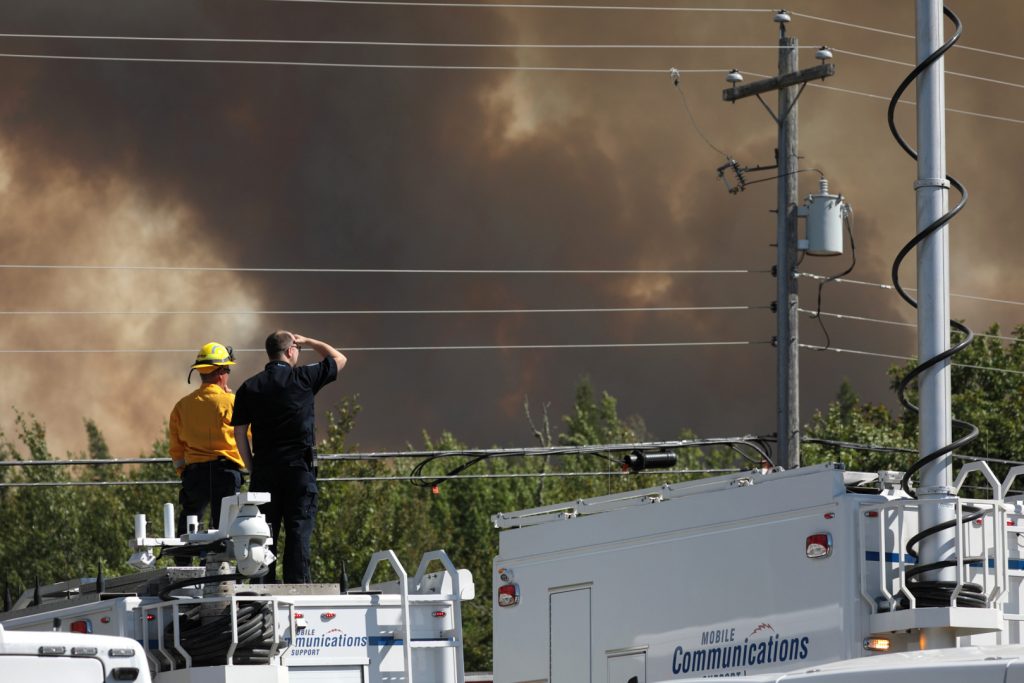
Department of Emergency Management staff stand on top of their communications truck to view the wildfires in Annapolis County on Sun., Aug. 24. (Province of Nova Scotia)

The Nova Scotia government has announced emergency financial support for people who have been evacuated by the wildfires in Annapolis County.

The maximum amount people are eligible for is $3,000 per adult 18 and older, and $1,750 per minor.

The support is available for people who have been forced to leave their primary residence, based on the number of days they’re gone:

  • four to seven days – $500 per adult (18 and older), $200 per minor
  • eight to 14 days – an additional $500 per adult (18 and older), an additional $200 per minor
  • 15 or more days – an additional $250 per week per adult (18 and older), an additional $200 per minor.

People evacuated from secondary homes like cottages or cabins do not qualify.

The funding will be available until the evacuation order is lifted or until the end of the wildfire season on Oct. 15, whichever comes first.

The help was announced on the same day the province confirmed that some homes have been damaged in the Long Lake wildfires. The blaze has grown to an estimated 7,780 hectares. 

Premier Tim Houston told reporters at a briefing on Monday afternoon that on Sunday, five new fires broke out around the province. He said one of those fires in Cumberland County is still listed as out of control. 

The Long Lake fire in Annapolis County took a real turn over the weekend and it’s had devastating impacts,” Houston said.

“It’s now over 7,500 (hectares) in size, maybe closer to 8,000. Over 230 homes have been evacuated and there has been some loss of homes. This is a crushing feeling. We really can’t imagine what it must like, what it must feel like and also with the added anxiety of not knowing what’s happening to your home, it’s an awful time.”

In total, 330 properties have been affected by the evacuation order. The funding is in addition to other help through the County of Annapolis, the Canadian Red Cross, the Salvation Army and the Nova Scotia Guard.

Mainland Nova Scotia finally saw some rain on Monday afternoon, but officials told reporters that much more rain is needed to make a dent in the Long Lake wildfires.

Jim Rudderham, the director of fleet and forest protection with the Department of Natural Resources, said the fire grew so large and hot on Sunday that crews had to be pulled out.

At peak burn time, … any amount of resources couldn’t have touched that fire yesterday,” he told reporters. “We certainly tried as much as we could, but at a certain point it’s not safe for anyone to be in there and we had to leave. … If you were to put water on it, there was no effect. It was just too powerful, too strong. Couldn’t get near enough to it regardless, but even if you had the biggest water bombers in the world yesterday when it was at its biggest point, dropping water on that fire, you couldn’t touch it. It just wouldn’t affect putting that fire out.”

The premier said the province hasn’t considered asking for federal help yet. He said they’re getting good support from fire departments from other communities and provinces. Firefighters from around Queens County have been helping out almost since the wildfire began.

Houston said the province will wait until after the fires are under control to consider any further compensation for residents whose houses are damaged or destroyed. 

The Nova Scotia government is posting the latest information on the Long Lake wildfire on its various social media channels and at novascotia.ca/alerts.

Email: rickconradqccr@gmail.com

Listen to the audio version of this story below


Region of Queens lifts boil water advisory

Glass of water being filled at a tap

Photo Ed Halverson

The Region of Queens has lifted the boil water advisory for users of the water utility.

The boil-water advisory has been in place around the Liverpool area since the treatment station was struck by lightning Aug 9.

The municipality is now exploring how to compensate the affected users for the inconvenience.

A resident asked if the Region would be issuing a refund to help people offset the increased power costs of boiling water as well as account for money spent on bottled water during the public comment period of the September 12 council meeting,

Initially, Mayor Darlene Norman said the Region of Queens wouldn’t be providing a refund because the utility is its own legal entity and rates are set by the Nova Scotia Utility and Review Board. However, that stance seems to have softened at the Sep 26 council meeting.

Norman says the Region can’t simply give money back to users, they need permission from the Nova Scotia Utility and Review Board, the body responsible for regulating the water utility.

“Of course, there’s not going to be a perfect solution to any of this,” said Norman. “However, council decided that we are going to have staff request from the UARB a 70 percent reduction on the consumption rate.”

Norman says if the ask is approved then the reduction will be applied to the next bill.

“May not really indicate how much water people consumed during this period because this period crossed over two bills,” said Norman. “There’s, I believe, 23 days on the last bill that was just issued and the upcoming bill which goes out in late December, payable January, would have like, another 20 odd days on it.”

Throughout the boil-water advisory Cowie well was available to supply fresh, potable water to residents.

The boil water order was lifted just after 11:00am Thursday Oct 5 once the municipality confirmed that water quality production issues have been resolved, and the Water Utility is again meeting regulatory requirements.

To hear the broadcast of this story click play below.

E-mail: edhalversonnews@gmail.com