Nova Scotia offers financial help for Long Lake wildfire evacuees
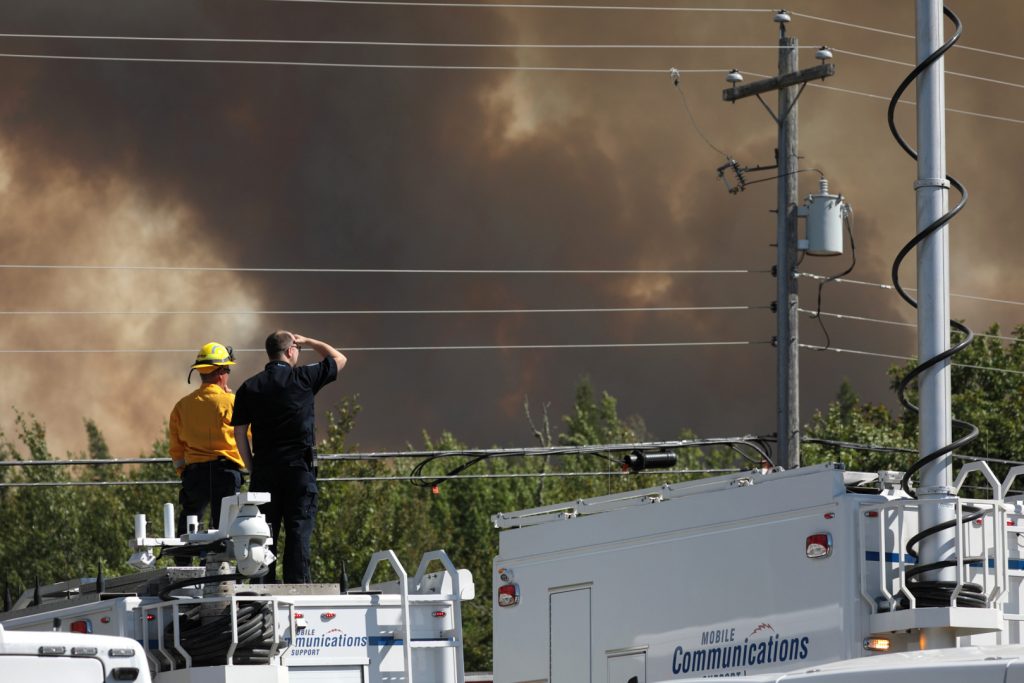
Department of Emergency Management staff stand on top of their communications truck to view the wildfires in Annapolis County on Sun., Aug. 24. (Province of Nova Scotia)
The Nova Scotia government has announced emergency financial support for people who have been evacuated by the wildfires in Annapolis County.
The maximum amount people are eligible for is $3,000 per adult 18 and older, and $1,750 per minor.
The support is available for people who have been forced to leave their primary residence, based on the number of days they’re gone:
- four to seven days – $500 per adult (18 and older), $200 per minor
- eight to 14 days – an additional $500 per adult (18 and older), an additional $200 per minor
- 15 or more days – an additional $250 per week per adult (18 and older), an additional $200 per minor.
People evacuated from secondary homes like cottages or cabins do not qualify.
The funding will be available until the evacuation order is lifted or until the end of the wildfire season on Oct. 15, whichever comes first.
The help was announced on the same day the province confirmed that some homes have been damaged in the Long Lake wildfires. The blaze has grown to an estimated 7,780 hectares.
Premier Tim Houston told reporters at a briefing on Monday afternoon that on Sunday, five new fires broke out around the province. He said one of those fires in Cumberland County is still listed as out of control.
“The Long Lake fire in Annapolis County took a real turn over the weekend and it’s had devastating impacts,” Houston said.
“It’s now over 7,500 (hectares) in size, maybe closer to 8,000. Over 230 homes have been evacuated and there has been some loss of homes. This is a crushing feeling. We really can’t imagine what it must like, what it must feel like and also with the added anxiety of not knowing what’s happening to your home, it’s an awful time.”
In total, 330 properties have been affected by the evacuation order. The funding is in addition to other help through the County of Annapolis, the Canadian Red Cross, the Salvation Army and the Nova Scotia Guard.
Mainland Nova Scotia finally saw some rain on Monday afternoon, but officials told reporters that much more rain is needed to make a dent in the Long Lake wildfires.
Jim Rudderham, the director of fleet and forest protection with the Department of Natural Resources, said the fire grew so large and hot on Sunday that crews had to be pulled out.
“At peak burn time, … any amount of resources couldn’t have touched that fire yesterday,” he told reporters. “We certainly tried as much as we could, but at a certain point it’s not safe for anyone to be in there and we had to leave. … If you were to put water on it, there was no effect. It was just too powerful, too strong. Couldn’t get near enough to it regardless, but even if you had the biggest water bombers in the world yesterday when it was at its biggest point, dropping water on that fire, you couldn’t touch it. It just wouldn’t affect putting that fire out.”
The premier said the province hasn’t considered asking for federal help yet. He said they’re getting good support from fire departments from other communities and provinces. Firefighters from around Queens County have been helping out almost since the wildfire began.
Houston said the province will wait until after the fires are under control to consider any further compensation for residents whose houses are damaged or destroyed.
The Nova Scotia government is posting the latest information on the Long Lake wildfire on its various social media channels and at novascotia.ca/alerts.
Email: rickconradqccr@gmail.com
Listen to the audio version of this story below

