Week of fish farm hearings wraps up as fishermen, Region of Queens experts testify

The Nova Scotia Aquaculture Review Board finished in-person hearings Friday into Kelly Cove Salmon’s application to expand its operation in Queens County. (Rick Conrad)

There could be a decision on a proposed fish farm expansion in Liverpool Bay by the end of the year.

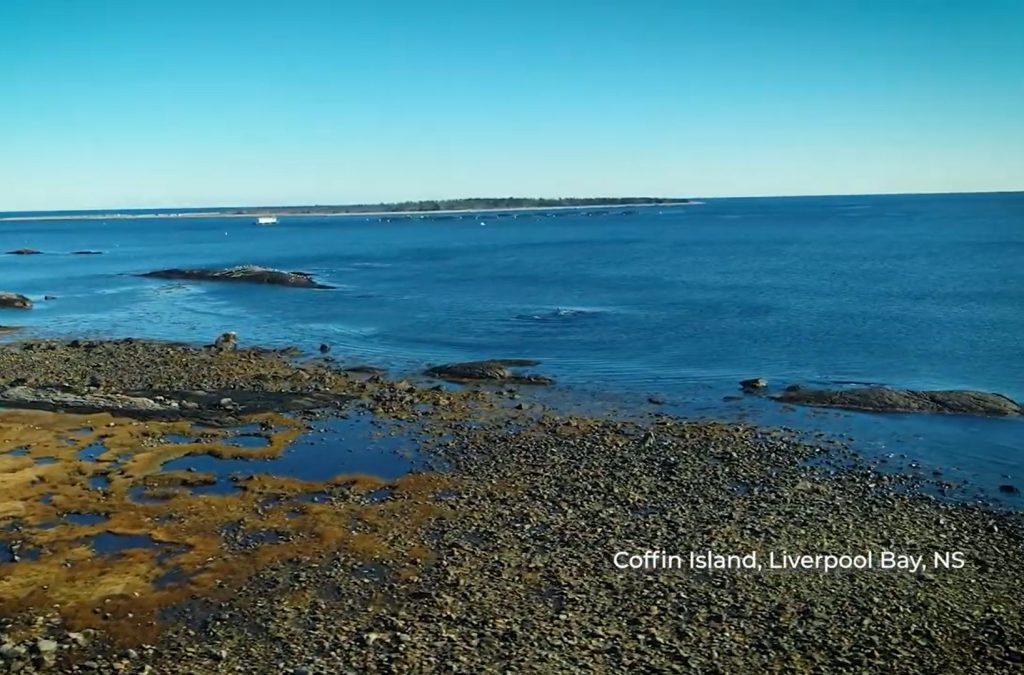
The Nova Scotia Aquaculture Review Board wrapped up a week of hearings Friday afternoon in Bridgewater into Kelly Cove Salmon’s application to add to its Atlantic salmon operation near Coffin Island, off Beach Meadows Beach.

Kelly Cove, which is owned by Cooke Aquaculture, originally wanted to expand the Coffin Island site and add two new farms in Brooklyn and Mersey Point. But it decided to pursue only the expansion for now.

That will add another six pens for a 20-cage farm, with up to 660,000 fish.

Lawyers for four intervenors were at the hearings this week: Protect Liverpool Bay, the Region of Queens, 22 Lobster Fishermen of Liverpool Bay, and Kwilmu’kw Maw-Klusuaqn, which includes the Wasoqopa’q First Nation.

Experts from the Region of Queens and the lobster fishermen were cross-examined on Friday morning, with a panel of three fishermen testifying in the afternoon.

The intervenors have various concerns with the expansion. 

Community group Protect Liverpool Bay says it will harm an ecologically sensitive area and risk the lucrative lobster industry. 

The Kwilmu’kw Maw-Klusuaqn objection concerns the Department of Fisheries and Aquaculture not properly consulting local Mi’kmaq communities on areas affecting their treaty rights.

The Region of Queens is concerned about how the operation could affect fish habitats and local tourism.

And the lobster fishermen are worried about how an expanded fish farm would affect sensitive lobster fishing grounds and populations.

Peter Stewart, a retired lobster fisherman near Moose Harbour, and two other fishermen were cross-examined on Friday by Kelly Cove’s lawyer.

The fishermen were asked how much of the lobster grounds usually fished would be affected by the Coffin Island expansion. She also challenged Stewart on underwater video taken by one of the company’s experts that appeared to show lobster living unharmed under the current fish farm.

Stewart told QCCR after the hearing that Kelly Cove’s scientific studies aren’t telling the whole story about the lobster grounds and aquaculture’s impact on juvenile and baby lobsters.

“I have concerns about the whole process,” Stewart said. “I think they try to do science-based studies and they’ve missed a mark there where there’s a lot of science that’s lacking of what’s going on in these bays. … So the board’s not getting the full story as far as us speaking. Hopefully through the submissions that we’ve put in and the ones that we’re going to put in, they’ll understand exactly how we feel and our thoughts on the matter.”

Much of the evidence for the hearing was collected based on Kelly Cove’s much larger original application. The board didn’t allow the parties to amend their evidence to account for only the Coffin Island expansion.

The fishermen’s lawyer Jamie Simpson of Juniper Law said it’s challenging to argue the case given that restriction.

“I mean, we thought that the process should have been restarted, given the significant change in scope of the application. … But anyway, the board didn’t allow that, so we just have to work with that challenge.”

James Gunvaldsen Klaassen is with Ecojustice, which is representing Protect Liverpool Bay at the hearings. He said his clients were pleased they finally got a chance to air their concerns about Kelly Cove’s plans.

“It’s obviously a huge concern of our clients that, you know, the issues with aquaculture and the impacts on Liverpool Bay are well understood by the board, and we feel we did a good job in explaining things as best we could, given the structure of this hearing. and I have every confidence that the board will make a good decision.”

The last session of the hearings will be virtual on Oct. 31 as the intervenors will get a chance to cross-examine Kelly Cove’s experts conclusions on lobster habitat in the area. After all the groups file their final written submissions with the three-member panel, the board has 30 days to release its decision.

Email: rickconradqccr@gmail.com

Listen to the audio version of this story below

Fish farm hearings open with questions of sustainability, community support

Lawyers listen to Stacy Bruce, clerk with the Nova Scotia Aquaculture Review Board, on Tuesday in Bridgewater as hearings began into Kelly Cove Salmon’s application to expand its operation in Queens County. (Rick Conrad)

Hearings opened Tuesday into a proposed bigger fish farm in Liverpool Bay, with community members and others getting a chance to say what they think of the idea.

A three-member panel of the Nova Scotia Aquaculture Review Board is hearing an application from Kelly Cove Salmon, which is owned by Cooke Aquaculture, to expand its operation near Coffin Island off Beach Meadows Beach.

Kelly Cove wants to add six more cages for a 20-pen farm, with an extra 260,000 Atlantic salmon. 

Lawyers are representing six groups at the tribunal, including Kelly Cove Salmon, the Nova Scotia Department of Fisheries and Aquaculture, community group Protect Liverpool Bay, the Region of Queens, 22 Lobster Fishermen of Liverpool Bay and the Wasoqopa’q First Nation.

Six members of the public were given time at the beginning of Tuesday’s hearing to make statements about Kelly Cove’s application.

Jeff Bishop, executive director of the Aquaculture Association of Nova Scotia, urged panel members to allow the expansion. He said ocean-based aquaculture takes up less than half of one per cent of the coastline, creating jobs and pumping millions into local economies.

He warned them not to listen to groups opposing the application.

“They will tell you they are grassroots, community groups that represent the voice of most Nova Scotians, while they talk about potential hazards and not evidence of any actual risks. In fact, by looking at the members of these networks and coalitions publicly available annual reports to Canada Revenue Agency, we know that they take in millions of dollars of unreceipted foreign revenue from outside of Canada every year, and hundreds of thousands of dollars or more annually from other charities. That hardly sounds like grassroots local support to me. … These groups do not speak for most Nova Scotians, but simply their echo chambers.”

Bishop did not name any organizations and provided few other details. Protect Liverpool Bay has been the most prominent to oppose Cooke’s operation off Coffin Island. It’s a volunteer-run organization that began in 2018 and relies on local donations. 

He added that the review board should not allow “the hollow cry of ‘not in my backyard’ to have its way” and to “support growth by approving Kelly Cove Salmon’s application”.

Bob Iuliucci of Bear Cove Resources in East Berlin, who worked as a researcher in applied ocean sciences and marine geology for 50 years, said he was worried about how climate change and the ever-strengthening tides in Liverpool Bay would affect the expanded farm, and the resulting damage it could do to the coastal environment.

“Expansion multiplies risk on every front — ecological, biological, economic loss to wild fisheries and tourism.”

Elizabeth Hartt of Bear Cove Resources said she was concerned that an expanded operation could risk development of other industries that could set up in the area, such as sustainable seaweed, oyster or mussel farms.

She said those types of aquaculture exist lower in the ocean and are not in fixed structures at the surface.

“You can sail over a lot of those things. They’re not fixed structures that in storms are going to be trashed and then thrown on shore. They’re not heavily loaded with fish that are going to land up on the shores of Liverpool.”

Instead of more fish farms, she said the province should be encouraging more exploration and ocean research in Liverpool Bay.

Liverpool resident Andrew Tyler said he and his family moved to the area two years ago because of the natural beauty and the beaches.

He said when they first moved to the area, he didn’t know what the cages were off Beach Meadows Beach. But he said in noticing the signs peppered around the community protesting open-pen fish farms, he realized most residents are against it.

“This is a hearing, and I hope you’re listening, that the Liverpool community, by and large, doesn’t want this expansion,” Tyler said.

“The jobs that fish farming bring are very few. The investment is very little, and it doesn’t add to the draw that bring people like me, who want to move their families to the area, who want to invest in the area, who want to put down roots in the area. So in my view, fish farming takes. 
It doesn’t give back.

“There’s a way to do it that doesn’t risk one of our greatest natural assets at Beach Meadows. This isn’t it.” 

Stewart Lamont, managing director of Tangier Lobster, said he’s concerned how an expanded operation would affect the area’s lobster fishermen and their contribution to Nova Scotia’s $1.5-billion lobster export industry.

He said that up to 1,000 metric tonnes of fecal and food waste is deposited every year on the ocean floor below fish farms operations in Nova Scotia. In an era of foreign markets sensitive to where their food comes from, Lamont said “if any jurisdiction in Europe saw a viral video of our Nova Scotia lobster grazing on bottom below or near an open net pen, our lobster sector would be finished overnight.”

He said climate change will also only add to the problems as waters warm and storms become more intense.

“The greatest piece missing in this business model is the lack of community support referred to already this morning,” he said. “Academics call it social license. What is taking place now is effectively the privatization of public waters, and that is by so many standards, clearly wrong and absolutely unwanted. 
… The more citizens learn about fish farms and open-net pen fish farming, the less they want any part of them.”

For the rest of the day, a nine-member witness panel from Kelly Cove answered questions from lawyers about the company’s extensive application to the board.

Lawyers cross-examined the panel on its consultations with the local Indigenous community, the company’s various studies of impacts on the ocean and surrounding environment and the effects on lobster populations. 

Michael Szemerda, Cooke’s global chief sustainability officer, admitted under cross-examination from Region of Queens lawyer Natasha Puka that the company has been operating outside its lease boundaries since it took over the farm.

He also confirmed that there have been only two “mortality events” at the Coffin Island site, with an unknown number of fish dying in 2018 from insufficient oxygen and 2019 from storm damage. In 2012, Cooke reported an infectious salmon anemia, which led to the destruction of two pens of fish, and a bacterial kidney disease among its salmon.

About 20 community members travelled to Bridgewater to take in the proceedings. 

Beach Meadows resident Tim Nickerson said that he wanted to make the trip, though he was upset the review board didn’t hold the hearings in Liverpool.

“I’m really disappointed with the idea that the hearing’s being held in Bridgewater,” he said in an interview. “We heard the chair say that they made a big effort to be in Liverpool, based on the dates, but I’m like change the dates. I just think that’s such a big issue, and should be really concerning about a public exercise not really being done in the area that has the greatest impact.”

He said he was also disappointed in comments made by Jeff Bishop from the aquaculture association.

“I just didn’t think his comments were very respectful. I think people can have contrary views. 
I don’t think we need rhetoric about foreign investment and that kind of just silliness. … I didn’t appreciate that.”

The three-member panel is made up of Roger Percy, Bruce Morrison and chaired by Damien Barry.

Proceedings continue Wednesday at 9 a.m. at the Days Inn in Bridgewater. It’s open to the public. People can also register to watch a livestream of the hearings.

Email: rickconradqccr@gmail.com
Hearings begin Tuesday in Cooke Aquaculture’s bid to expand Liverpool Bay fish farm

Signs from the group Protect Liverpool Bay. (Protect Liverpool Bay Facebook page)

Hearings into a fish farm expansion in Queens County get underway on Tuesday, with opponents saying they’re not confident that regulators will listen to their concerns.

Cooke Aquaculture subsidiary Kelly Cove Salmon has applied to Nova Scotia’s aquaculture review board to add six more cages to its operation near Coffin Island off Beach Meadows Beach. It had also applied to add two new farms near Brooklyn and Mersey Point. The review board is looking into only the application to expand the existing site.

Hearings begin at the Days Inn in Bridgewater on Tuesday at 9 a.m. and are set to run through to Friday.

RELATED: Read more of QCCR’s coverage of fish farms in Queens County

Protect Liverpool Bay has been fighting Cooke’s open-net pen fish farm near the beach since 2018. The group has protested the review board’s decision to hold the hearings outside Queens County.

Group spokesman Brian Muldoon told QCCR earlier this summer that he’s worried the hearing is just a formality.

“I believe they are not listening to the people or residents of Queens County. They’re moving forward with their agenda,” Muldoon said. 

“I have no confidence in the board listening to us.”

Still, Protect Liverpool Bay is encouraging its supporters to attend the hearings. It’s also offering to arrange ride shares for people who need transportation.

The group is one of the intervenors at the hearing. Environmental law charity Ecojustice is representing Protect Liverpool Bay on a pro bono basis. But the group says the fight will still likely cost about $25,000 in hiring expert witnesses, and other costs associated with the hearing. 

Other intervenors are a group of 22 lobster fishermen from Liverpool Bay and the Region of Queens Municipality. It’s unclear whether the Wasoqopa’q First Nation and the Brooklyn Marina are still involved.

Hearings had been originally scheduled for March 2024, but they were cancelled shortly after Premier Tim Houston told a business crowd in Liverpool last February that he personally opposed expanded fish farming in Liverpool Bay.

Chairwoman Jean McKenna and other members of the review board were also replaced.

The review board has consistently refused to answer questions from QCCR on any of its decisions or its makeup.

In the leadup to the originally scheduled hearings, more than 150 residents, businesses and community groups filed written submissions with the board. Most opposed the expansion and the new farms.

If Cooke is successful in its application to expand the Coffin Island site, it will have a total of 20 cages, holding up to 660,000 Atlantic salmon, covering an area of 40 hectares or 100 acres.

The hearings are open to the public. People can also watch a livestream of the sessions by registering on the review board’s website at arb.novascotia.ca.

Email: rickconradqccr@gmail.com

Listen to the audio version of this story below

Waiting game continues as aquaculture review board silent on fish farm hearings

A map showing where Kelly Cove Salmon proposes two new fish farm sites (in yellow) and where it plans to expand its existing operation (in green). (Nova Scotia Aquaculture Review Board)

It’s anyone’s guess as to when or if the Nova Scotia Aquaculture Review Board will hold hearings into a proposal to expand fish farming in Liverpool Bay.

The board posted a notice on its website on March 6, saying that hearing dates scheduled for April 2 to 5 were cancelled. They gave no reason, and no new dates are on the horizon.

Kelly Cove Salmon, owned by Cooke Aquaculture, applied in 2019 to expand its salmon farming operation off Coffin Island near Liverpool, and to add two new farms off Brooklyn and Mersey Point. If successful, that would increase Cooke’s operation to 60 pens from 14, and include trout as well as salmon. It could mean up to 1.8 million farmed salmon in the bay, compared to about 400,000 now.

Groups involved in the hearing are as much in the dark as everybody else.

Jamie Simpson with Juniper Law represents one of the five intervenors, 22 Lobster Fishermen of Liverpool Bay.

He said Monday that he received an email from the board telling him the April dates were cancelled. They also made no attempt to set new dates, he said. Since then, he hasn’t heard a thing.

“I would have thought that we would have heard some sort of a followup plan for the path forward here, but it’s just been silent so far.

“I mean I don’t know what to think. I’ve never seen it before basically. … It’s been radio silence since we got that letter.”

The hearings have been on hold since chairwoman Jean McKenna left the board on Feb. 20. Her departure surprised groups involved in the hearing, although the Nova Scotia government said her term had simply expired. 

The board cancelled March hearing dates and said that the April hearings would still go ahead.

The Tory government appointed board member and former Tory candidate Tim Cranston to take McKenna’s place as chairman. Cranston has been a member of the ARB since 2023. He ran unsuccessfully for the Conservatives in the last provincial election.

Premier Tim Houston came out against the proposed expansion in early February, but said that he supports aquaculture and respects the independence of the review board.

More than 150 residents, businesses and community groups filed written submissions with the board. Five groups were granted intervenor status at the hearings: Protect Liverpool Bay, the Region of Queens, the Brooklyn Marina, 22 Lobster Fishermen of Liverpool Bay, and Kwilmu’kw Maw-Klusuaqn, which is representing the Acadia First Nation.

Representatives with the review board have not commented on the cancellations or when there might be new hearings scheduled. They have said that any new information will be posted on their website.

Jamie Simpson said Monday that all he and his clients can do is wait.

“I don’t know what the forces are that are moving this, but all we can do is sit back, it’s highly unusual,” he said. 

“It seems like anything’s possible at this point. I assume that Kelly Cove Salmon wants to go ahead with their application. I haven’t heard anything to the contrary in that regard. So assuming that Kelly Cove doesn’t pull out, we’ll be going ahead at some point. And that’s about all I can say.”

A spokesman for Cooke Aquaculture could not be reached on Monday.

Email: rickconradqccr@gmail.com

Review board cancels April hearings into fish farm expansion

Debris from the fish farm near Coffin Island on Beach Meadows Beach in 2021. (Rick Conrad photo)

April hearings into a proposed fish farm expansion in Liverpool Bay have been cancelled.

The Nova Scotia Aquaculture Review Board posted on its website last Wednesday that “all sessions of the hearing have been adjourned until further notice. Timeframes for submissions to the Board remain unchanged and are closed.”

It’s the latest surprising turn of events for the review board. In early February, Premier Tim Houston announced at a business luncheon in Liverpool that he personally opposes the expansion in Liverpool Bay. He added that he respects the independence of the review board.

Kelly Cove Salmon, which is owned by Cooke Aquaculture, applied in 2019 to expand its existing operation off Coffin Island. It also wants to add two new site off Brooklyn and Mersey Point.

On Feb. 20, groups involved in the hearing got a “high priority” email telling them the hearings scheduled for March 4 to 8 were cancelled. They were also told that board chairwoman Jean McKenna was no longer with the board.

Lawyers were told that other dates that had been scheduled for early April were still a go.

A new chairman was appointed. Tim Cranston was appointed to the board in February 2023. He also ran for the Tories in the last provincial election in Halifax.

Houston told reporters that McKenna’s term had expired and that there was nothing inappropriate about Cranston’s appointment.

And then last week, the board posted on its site that the April dates were now cancelled.

The board has been mum about all the recent changes and hearing cancellations, saying only that when new information is available, it will be posted on its website.

There is no indication when or if they will be rescheduled.

Email: rickconradqccr@gmail.com

Fish farm letter writing workshop planned for Liverpool library as deadline looms

Debris from the fish farm near Coffin Island on Beach Meadows Beach in 2021. (Rick Conrad photo)

By Rick Conrad

If you’re concerned about a proposed fish farm expansion in Liverpool Bay, there’s a letter writing session planned for the Thomas H. Raddall Library on Saturday from 1 to 4.

Kelly Cove Salmon, which is owned by Cooke Aquaculture, has applied to add to its operations near Coffin Island and to add two new sites off Brooklyn and Mersey Point.

If successful, Kelly Cove’s operation would grow to 60 pens from its current 14. It would mean about 1.8 million salmon would be farmed in the bay, compared to the current estimated 400,000.

The Nova Scotia Aquaculture Review Board has public hearings scheduled for Liverpool beginning March 4. 

Members of the public can have their say on the application until Feb. 12 by sending their comments to the review board.

Residents contacted QCCR this week concerned that their letters were being rejected by the board. In an email to QCCR, the review board said individual comments from those who are listed as members of one of the five intervenors in the application will be rejected.

A notice posted at Queens Place Emera Centre.

For example, some supporters of Protect Liverpool Bay had their submissions rejected because the grassroots group listed their names as members when it applied for, and was granted, intervenor status. The others are the Region of Queens, the Brooklyn Marina, a group of 23 lobster fishermen, and Kwilmu’kw Maw-Klusuaqn, which is representing the Acadia First Nation.

The review board told QCCR that “in the interests of efficiency, if a single body can present those interests, those concerns can be dealt with by a single entity.”

The board encourages public participation and does want to hear from everyone,” Stacy Bruce, the board’s clerk said in the email.

“However, as (Protect Liverpool Bay) is a party to the hearing representing all its members, if a member’s name is on the list PLB provided, they may not submit written statements as they are already being represented by PLB as an intervenor and not as a member of the general public. Only members of the general public that are not party to the hearing are permitted to submit written or oral submissions.”

Opponents of the expansion got a big morale boost this week when Premier Tim Houston told a business luncheon in Liverpool that he personally opposes more fish farms in Liverpool Bay.

“I think some areas are great for aquaculture and I think that some others are maybe not the best place for it,” he told about 80 Liverpool businesspeople and others at a luncheon on Wednesday, sponsored by the South Queens Chamber of Commerce.

“On this specific question on Liverpool Bay, … I personally don’t think Liverpool Bay is a suitable place for it.

“That’s my personal opinion. I respect the process, the independent review board will do their process and will have hearings. They’ll do their thing. But my personal opinion is I don’t think Liverpool Bay is a suitable place for it.”

Email: rickconradqccr@gmail.com

Residents step up letter writing to oppose fish farm expansion in Liverpool Bay

Tim Nickerson, Lyn Oakley and Rosalee Smith at the Seaside Centre in Beach Meadows on Tuesday. (Rick Conrad photo)

By Rick Conrad

For Lyn Oakley, having more fish farms near her home boils down to one thing.

“My biggest concern is poop,” the Eagle Head resident says, referring to the fish waste produced at the facilities. “There is no way that the ocean with its tides is flushing that area. It’s not capable of doing that.”

Oakley was at the Seaside Centre in Beach Meadows on Tuesday with other residents working on their letters to the Nova Scotia Aquaculture Review Board to oppose a proposed fish farm expansion in Liverpool Bay.

The review board will hold a public hearing on an application by Kelly Cove Salmon to expand its current fish farming operation off Coffin Island, near Liverpool, from 14 pens to 20. It also wants to create new sites off Brooklyn and Mersey Point. The new locations would add another 40 pens to their operation.

The hearing begins March 4 at the Best Western Plus in Liverpool. 

If successful, Kelly Cove would farm up to an estimated 1.8 million salmon at the three sites. It currently raises about 400,000 at its location near Coffin Island.

The grassroots group Protect Liverpool Bay is one of five groups granted intervenor status at the hearing. The others are the Region of Queens, the Brooklyn Marina, a group of 23 lobster fishermen and Kwilmu’kw Maw-Klusuaqn, which is representing the Acadia First Nation.

As part of the review process, anyone can submit comments to the board by Feb. 12. But they must address at least one of eight factors the review board considers under the province’s aquaculture regulations.

That’s why some residents gathered on Tuesday to make sure their letters were in a format that would be accepted by the review board.

Oakley said the session was helpful to learn from other community members.

“These kinds of information sessions make sure that my objections are going to be accepted into the record and my voice will be heard.”

Rosalee Smith, who also lives in Eagle Head, said it’s important for the community to be heard.

“I think numbers speak. The people on the ground, the people who are gonna live next to this, the people who will have to look at this, the people who will be suffering because of this I think need to speak up and say, ‘No, we don’t want it.’”

Protect Liverpool Bay has been fighting the fish farm expansion since 2018. It was on hand to offer any other information to residents about the review hearing process. 

Beach Meadows resident Tim Nickerson said he’s working on his own letter, but also wanted to help others with theirs.

“I just think that the ask for the bay is just excessive. It’s just too much for that space to handle.”

Local residents say they are worried about the fish farm’s effects on the lobster fishery, the area’s beaches and other uses of the bay.

They’re also concerned that more fish in more enclosed spaces will mean more pollution, pesticides and antibiotics released into the ocean. They point to sea lice infestations, fish escapes, equipment debris and fish kills.

There are two more information sessions planned at the Seaside Centre, on Thursday from 6 to 8 p.m. and Saturday from noon to 4 p.m.

Email: rickconradqccr@gmail.com

Listen to an audio version of this story below