Top doctor again warns Nova Scotia to recommit to COVID precautions

Dr. Robert Strang provides COVID-19 update November 13, 2020

Dr. Robert Strang provides COVID-19 update November 13, 2020. Photo credit Nova Scotia Government

Nova Scotia’s chief medical officer of health wants people to stay ahead of the pandemic.

At the COVID-19 update Friday, Dr. Robert Strang said a recent outbreak of COVID-19 in the Halifax neighbourhood of Clayton Park has been largely contained because residents followed quarantine protocols.

“Even though it wasn’t perfect, in many of the situations the public health measures were being followed which limited the ability of the virus, even though it was in a family, for instance, to get beyond that,” said Strang. “So, I think it’s important to emphasize that these collective approaches that have kept us safe so far are what will continue to keep us safe.”

Strang said there is nothing to suggest the cluster of cases has led to spread in the broader community. The Nova Scotia Health Authority labs tested 1,260 people for COVID-19 on Thursday and identified two new cases, which are unrelated to the Clayton Park cluster.

Public health determined one case is related to travel outside the Atlantic bubble and that person is self-isolating. Staff is investigating the cause of the second case.

The total number of active cases in Nova Scotia sits at 19 as of Friday.

Strang emphasized the measures in place are working to protect Nova Scotians from the spread of COVID-19. He said wearing masks, washing hands, social distancing and self-isolating, when required, are the tools that will keep the pandemic from flaring up in Nova Scotia as it has done in many other provinces.

“Here in Nova Scotia, it’s not about flattening the curve but it’s actually being out in front of the curve so we don’t have to flatten it. It’s keeping our situation. It’s a preventative measure for us,” said Strang.

He said we have to start thinking now about whether we can maintain that position into the new year.

“In the next six to eight weeks to minimize our social contacts. Decrease the number of people that we are in contact with. Keep our social groups small. Keep our social activities limited and [participate] in safe ways. And when we’re in places where we need to use masks, wear your mask and wear it properly. If you’re not feeling well, just stay home,” said Strang.

The holiday season is quickly approaching and Strang said he will soon be releasing guidelines to malls and stores around how to safely cope with a larger number of shoppers.

He said those retail locations will need to have precautions in place but a safe shopping experience isn’t solely up to them.

“But ultimately this is the responsibility of Nova Scotians. If you’re going into a mall, what are you doing to make sure that you’re keeping physically distant? What are you doing to make sure that unless you have a valid reason to not wear a mask, you’re wearing a mask and wearing it properly?” said Strang. “I don’t want all the responsibility to land on the business operator or the mall operator. There’s equally opportunity for Nova Scotians to take responsibility for their own actions.”

Reported by Ed Halverson 
E-mail: edhalversonnews@gmail.com
Twitter: @edwardhalverson

Kinsmen celebrate 75 years of service

Liverpool Kinsmen members

Liverpool Kinsmen members. Photo credit: Liverpool Kinsmen

The Liverpool Kinsmen are marking a significant milestone.

Established in 1945, the service organization has been making a difference in the community for 75 years.

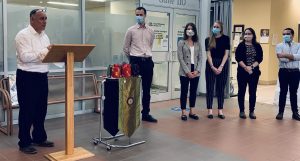
Members gathered for a photo Saturday but chapter president Brian Godfrey said by necessity, they’re keeping the recognition low-key.

“Normally we would have had all the different service groups in town, the mayor and other members from other clubs would’ve been here but because of COVID-19 we couldn’t do anything other than what we are right now, letting people know what we do,” said Godfrey.

And what they do is significant to Liverpool.

Godfrey said since 1975 the organization has raised $900,000 to reinvest back into Queens County. The Kinsman have donated money to Queens General Hospital, Queens Place, air cadets, minor hockey and the legion, to name a few.

They are also closely involved in the schools.

“We donate out to the North Queens High School, we donate a $2,000 bursary out there, also, the milk program, the breakfast program out there, same as the schools here in town, we have a $2,000 bursary every year for a high school student,” said Godfrey. “We support the breakfast programs at the Wickwire and we also support the lunch programs at the middle school here in town.”

It’s not just opening a chequebook. The service group also pitches in their time to help where they’re needed during many events throughout the community.

Godfrey, who’s been a Kinsmen member since 1980 said while giving to your community you also get back.

“So it’s a personal learning experience for you too. It can help you down the road too. Like myself, treasurer, well now I’m treasurer here at QCCR, I’ve been treasurer for many, many different organizations but I learned through Kinsmen,” said Godfrey.

Shortly after he joined, the Kinsmen launched their long-running fundraiser TV Bingo. The program went mostly uninterrupted for the past 40 years until the pandemic hit earlier this year.

Godfrey estimates the organization lost around $15,000 when they had to halt production between March and September.

While losing that income was a hit to their coffers, in terms of logistics, it may have been a blessing in disguise.

To meet COVID-19 guidelines the Kinsmen moved the shooting location of their TV bingo from Brooklyn to a newly built studio in the Investors Group building on Milton road in Liverpool.

“We got a brand new studio, all digital and a lot more space. We like it there, easier access for people coming and going, especially some of our older members,” said Godfrey. “They have a difficult time getting up stairs. They don’t have to worry about that. So we do have some of the older ones said, yes we can work now because we don’t have to climb those steps back in in Brooklyn where the old studio was.”

Godfrey said when the Kinsmen started back in 1945 they boasted 50 members. The group now consists of 10 full-timers and two prospects.

He said most of the members have been with the organization for a long time, and they hope to expand those numbers. With the youngest member in their late-20s, they’re always recruiting.

“We don’t want to get together too often so we have a meeting once a month. It’s usually a cooked meal at someone’s house or outdoors somewhere,” said Godfrey.

He says while the pandemic has curtailed a lot of the work they would normally do during the year they continue to find ways to assist the community.

Their next project will be helping to put Christmas dinner on the table for a couple hundred families working alongside other community groups on the Christmas cheer box program.

“Our motto is serving the community’s greatest needs,” said Godfrey. “Where we see a need out there, we help out.”

Reported by Ed Halverson 
E-mail: edhalversonnews@gmail.com
Twitter: @edwardhalverson

Legion donations drop drastically due to COVID-19

Royal Canadian Legion Branch 038 in Liverpool, NS

Royal Canadian Legion Branch 038 in Liverpool, NS. Photo credit: Ed Halverson

Contributions to the Royal Canadian Legion’s annual poppy fund are way down this year thanks to the coronavirus.

President of Legion Branch 038 in Liverpool Larry Weagle said volunteers would normally set up tables in grocery stores and the NSLC but due to the pandemic, the retailer’s corporate offices aren’t allowing them in.

“The volunteers used to love it, and no problem getting them but we’ve got no place to put them,” said Weagle. “Everybody wants to do it but we’ve got no place to put them.”

Including the major grocery chains and NSLC, there are 39 retailers throughout Liverpool who have put out poppy trays to accept donations.

Weagle said in any other year, legion volunteers stationed at tables would also sell commemorative pins and other items adorned with poppies to increase the amount going to the poppy fund, but people can now only buy those items at the legion.

The Liverpool legion would traditionally raise close to $20,000 for the poppy fund and Weagle expects this year they’ll be lucky to bring in half that amount.

He’s disappointed because that’s money the legion uses to help veterans and their families in a variety of ways.

“We had two veterans that needed portable oxygen things, we had another guy that’s in a nursing home and he’d like to have a lift chair. So we got him that. We had another guy, never had a radio, so just little things like that. You know it adds up. Somebody needs a barrel of oil that can’t afford it, we get them that too. As long as he’s a veteran or a veteran’s family,” said Weagle.

The drop in donations is all the more reason for people to be aware of how to keep the money they’re giving going to local veterans according to Weagle. He says a donation to the poppy fund at the legion is the best way to ensure all the money stays in the community.

“You pay $55 for a wreath, we make three dollars, locally. We only get three dollars. If you make a donation, we get it all,” said Weagle.

Virtual poppies are becoming a popular way to show support for the legion but Weagle said the local branch sees none of that money as it all goes directly to the main headquarters in Ottawa.

The legion isn’t just struggling with poppy fund donations. They’re also having a hard time raising enough money to run their day-to-day operations.

Once they would host banquets of up to 140 people but that revenue is gone thanks to the coronavirus.

Weagle said they keep the lights on through a combination of hall rentals and events but COVID-19 has put a stop to a lot of it.

“No dances, no variety shows, no karaoke. It hurts,” said Weagle.

Legion Branch 038 President Larry Weagle

Legion Branch 038 President Larry Weagle. Photo credit: Ed Halverson

Weagle would like to see more people come in to take advantage of the take-out lunches they offer. But he understands some folks have an outdated idea about what the legion is.

“Look, you’ve got no way to make no money. People think the legion is a drinking establishment, that’s gone,” said Weagle. “Mostly now, people come here, we sell more pop and water than we do alcohol.”

He says donations to the legion come back to the community in many ways.

“People don’t realize what the legion does for our community. Our doors are always open for anybody. The community groups, they work with us. The funds that we give out, like, we give out the Salvation Army Christmas boxes and bursaries for high school kids, the food bank,” said Weagle.

A bright spot this season was an unexpected donation from Freeman Lumber for $1,000.

“It really surprised me,” said Weagle. “Because this is the first time any corporation that size gave a donation this big.”

Weagle assured Freeman Lumber the money would go directly to the poppy fund to help local veterans and their families.

He reminds anyone wishing to donate should specify whether they wish to direct their donation to the poppy fund or the legion itself. Information on how to donate is located at the Royal Canadian Legion Branch 038 Facebook page.

Reported by Ed Halverson 
E-mail: edhalversonnews@gmail.com
Twitter: @edwardhalverson

Nova Scotia tightening restrictions as COVID-19 cases climb

Dr. Robert Strang provides COVID-19 update November 9, 2020

Dr. Robert Strang provides COVID-19 update November 9, 2020. Photo credit: Nova Scotia government

Nova Scotia is cracking down on people coming from outside the Atlantic bubble.

From now on, everyone in the home where they are self-isolating will have to self-isolate as well. Nova Scotia’s chief medical officer of health Dr. Robert Strang said nobody in that home can leave the property for 14 days and they cannot have visitors.

“If they choose to do that, it means kids can’t go to school, people cannot go to work, you can’t go shopping, you can’t go to the grocery store.,” said Strang. “That sounds harsh, but it’s necessary.”

Strang explained if you welcome someone who is self-isolating into your home on the 13th day of their quarantine, their self-isolation would end the next day, but you still have to self-isolate for 14 days.

Strangs said it may sound harsh, but with the second wave of COVID-19 in full force around the country it’s necessary to prevent the spread of the virus by travellers to our province and our fate is in our hands.

“BC, Alberta, Saskatchewan, Manitoba, Ontario, Quebec, [are] all reporting record numbers of cases. We have to do everything we can do to stop ourselves getting into similar situations. We will get overwhelmed and our healthcare system will get overwhelmed. We will put all of us in substantive risk,” said Strang.

COVID-19 protocols will remain the same for rotational or specialized workers, people who have exceptions to attend a funeral or be with an immediate family member who is nearing end of life, and those that are exempt from self-isolation such as military, police, first responders, truckers, flight crews, and others.

Strang is advising Nova Scotians to avoid non-essential travel into and out of Atlantic Canada. That includes planning to stay within the Atlantic bubble over the Christmas holidays.

“Now is not the time to be thinking, I’m going to get my family, we’re all going to go visit our cousins or aunt and uncle in Toronto for Christmas. Stay put. Celebrate with your family and friends that are already here in the bubble and then maybe you’ll wait until COVID is gone before you think about those non-essential travel with friends and relatives in other parts of the country or in other parts of the globe,” said Strang.

The chief medical officer of health said he is already having discussions with his team about possibly tightening up restrictions that had been eased off after the first wave of COVID had passed.

Strang said Nova Scotians must recommit to the efforts that were made to minimize the impact of COVID-19, that includes tighten up our bubbles and paying closer attention to social distancing requirements.

“Now is the time for all of us to start too reduce our social activities and start to restrict social activities to people that are in our household or close social bubble,” said Strang.

He says people should stick to one social bubble of no more than 10 people.

Since the last briefing on November 3 the province has announced 15 new cases of COVID-19 which brings the total number of active cases in Nova Scotia to 16.

As the number of cases across the country skyrocket and Nova Scotian COVID cases on the rise, Dr. Strang warns it’s up to all of us to take action.

“We are at a tipping point tight now, here in Nova Scotia. I’ve had a very anxious weekend,” said Strang. “We are at a critical tipping point that we all need to pay attention to. If you didn’t pay attention after our briefing last week, you need to sit up and pay attention now. We all need to make changes if we are going to change our trajectory.”

Reported by Ed Halverson 
E-mail: edhalversonnews@gmail.com
Twitter: @edwardhalverson

Upgrades coming to Milton community kitchen

Milton Community Centre kitchen.

Milton Community Centre kitchen. Photo credit: Milton Community Association

The Milton Community Centre kitchen is getting a facelift.

They’ve just received $20,000 from the province’s Community Facilities Improvement Program to bring the space up to date.

The renovations will include moving a handwashing sink from the back of the kitchen to the door as you come in, new electrical and plumbing, new floors, removing an island and refinishing the existing cupboard doors.

Milton Community Association president Billy Joudrey said the centre is a hub of community activity dating back to its construction in the 1950s.

“The hall was actually built for cadets and scouts, cubs, brownies, girl guides and stuff to use, free. They help us with suppers and they have free use of the hall,” said Joudrey.

In addition to those groups, the centre also hosts bingo games, trivia nights, dances, wedding receptions and many more events throughout the year.

Joudrey said it would’ve been tough to do the renovations considering the pandemic.

“We’re hoping to get some more things coming in because the bills are adding up and the money’s not coming in,” said Joudrey. “I know all community halls are really suffering.”

It’s not all doom and gloom according to Joudrey, as they have seen an uptick in bookings as some pandemic restrictions have been eased. He said they have every weekend booked from now until the end of December.

“We’re going to be doing another supper, we’ll be doing Christmas supper, we’re going to have our tree lighting and we have a Christmas craft show coming up the first Sunday in December.”

One of the conditions of the provincial grant is that all the renovation work must be completed by December 31 and Joudrey is confident they’ll be able to host functions and work around the mess.

“We probably may end up having to shut the kitchen down for a few smaller events, maybe a bingo,” said Joudrey. “We may just have to do some minor stuff instead of our fries but they’ll understand, especially when they see the kitchen is going to be renovated, updated and more efficient.”

Joudrey said they have their contractors lined up and expects the renovations to begin very soon.

Reported by Ed Halverson 
E-mail: edhalversonnews@gmail.com
Twitter: @edwardhalverson

PCs set mental health as priority in newly released plan

PC Leader Tim Houston addresses crowd at Shipyards Landing, Bridgewater in July 2020

PC Leader Tim Houston addresses crowd at Shipyards Landing, Bridgewater in July 2020. Photo credit: Ed Halverson

Nova Scotia Progressive Conservatives are setting mental health as one of the party’s top priorities.

In what could be seen as a precursor to an election campaign, PC Leader Tim Houston released the comprehensive plan in Halifax last week.

“We want to put this forward because it’s really important to me that Nova Scotians know what I as a leader stand for, what our party stands for and really has a sense of what we will do, what our vision is for this province,” said Houston.

The centerpiece of the plan is to pull mental health out of the health portfolio and make a new department with a dedicated minister to be accountable.

Houston says the province already spends over $344 million on mental health services each year, which separated out would make it the seventh largest department by budget behind Community Services, Education, Health, Justice, Labour and Advanced Education and Transportation and Infrastructure Renewal.

“The bill’s already on the table,” said Houston. “What we’re doing is saying, look, we’re willing to pick up the bill, acknowledge the bill and deal with it. Because the cost to our society of people not getting health care, not getting addictions and mental health support when they need it, the cost is tremendous.”

Houston says statistics show 500,000 Canadians will miss work this year because of a mental health ailment.

The PC plan would invest in universal mental health care by creating new billing codes for mental health to allow private mental health professionals to bill the province for their services.

Houston says that allows every Nova Scotian to access mental health services when they are needed.

“If you have money in your pocket, you can get private care or if you work for an employer that has coverage you can get private care, but for everyone else you can’t. That’s called a two-tier system where those who have money can get treatment and those who don’t, can’t, and this country, this province, we’re not on with two-tiered systems. Health care access, addictions and mental health access, it has to be universal. Everyone should be able to access it,” said Houston.

Any Nova Scotia who currently has mental health coverage through an existing plan would be expected to use that first and provisions would be made to ensure employers couldn’t cut mental health care coverage from their health plans.

As the third pillar of the plan, Houston hopes more mental health professionals will be attracted to the province once they see the supports are in place.

Houston says bringing those professionals to Nova Scotia will reduce wait times for help, which can currently be up to a year.

“There’s nothing worse right now than someone in a crisis who goes to the emergency room and spends hours and hours and hours, waiting and waiting, only to probably be told to call another line on Monday morning. That’s very, very cruel,” said Houston. “Well, I guess something worse than that is the person that doesn’t go to the emergency room because they’re worried about the stigma.”

Houston admits most people would generally equate the PC Party with fiscal restraint and not progressive social policy, but said they would be missing part of the party’s core ideals.

“We have always been a socially progressive party. Yes, fiscally responsible but government that’s accountable, government that listens, and you see that in what we do when we’re in government,” said Houston. “We have a human rights commission in this province because of a PC government. A lot of people don’t know, Nova Scotia only the ninth jurisdiction in the world to legalize same-sex marriage – under a PC government because one of our core values is to be socially progressive.”

Houston says opposition parties don’t generally provide detailed policy plans but he would be happy to see the sitting liberal government take theirs and run with it, because the mental health of Nova Scotians is too important to wait.

Reported by Ed Halverson 
E-mail: edhalversonnews@gmail.com
Twitter: @edwardhalverson

Swearing in of Queens council marks significant change

Group photo of newly sworn-in Region of Queens council

Back Row – Councillor Ralph Gidney, District 2; Councillor Carl J. Hawkes, District 7; Councillor David Brown, District 6; Deputy Mayor Kevin Muise, District 1; Councillor Jack Fancy, District 5. Front Row – Councillor Maddie Charlton, District 3; Mayor Darlene Norman; Councillor Vicki Amirault, District 4. Photo courtesy Region of Queens

The Region of Queens experienced a lot of “firsts” when council was sworn in last week.

In the region’s 24-year history, Mayor Darlene Norman is the first woman to ever hold the top post in the municipality.

At 29 years old, District 3 Councillor Maddie Charlton became the youngest person ever elected to council.

Norman and Charlton join District 4 Councillor Vicki Amirault, to account for the largest number of women on Queens council.

Mayor Norman sees this as people’s attitude’s becoming more progressive.

“People in Queens are not looking at gender,” said Norman. “They’re seeing people for who they are. They’re looking at their personalities and their strengths and it’s not who’s got the skirt and who’s got the pants.”

Norman says she’s never allowed herself to be pigeon-holed because of her gender.

“I grew up with three brothers and no sisters so I climbed the biggest trees and hunted and did what my brothers did. I never really felt that I was second shoe because I was a woman. But yet I realize that the world sees it that way, often,” said Norman.

Charlton says she was aware she was the youngest person campaigning to be on council but was pleasantly surprised by the reaction from people on the doorsteps.

“I was overwhelmed by the support I got from people,” said Charlton. “They were so excited that someone younger was running. People would often talk about how they wished people would. But given the current way council is run, it’s really hard for someone to be able to go to those council meetings in the daytime and work.”

Fortunately for Charlton, she is self-employed, operating her own hair salon out of her home. She says her clients have been very understanding about scheduling their appointments around council meetings.

Charlton said a few people did challenge her ability to maintain her family life and keep up with her council responsibilities, but they were in the minority.

“And I know that, had roles been reversed and my husband had been out campaigning that he would not have been asked that,” said Charlton.

She doesn’t take it personally and believes the question is all part of a learning curve for everyone in the municipality.

Charlton is hoping residents will be more involved in the work council is doing. To that end, she would like to change council meeting times to allow more people to engage with council.

“People just feel like they don’t know what’s going on. I would like to see more evening council meetings,” said Charlton. “At one point that’s how it always was, there weren’t daytime council meetings, they only happened in the evening.”

Charlton says live-streaming council meetings has been a great way for the public to be aware of what is going on and she would like to see that continue.

Mayor Norman feels the make up of this council is a good mix of older and younger people, each bringing their own perspectives to the discussions.

She says council will need to prioritize updating the their land use zoning and planning but aside from that, she will look to councillors to bring what they’re hearing from the community to the floor to determine the course they will take over the next four years.

“That’s really the role of the mayor, is to unite a group of people, bring them together to a common decision and accept that decision,” said Norman. “If I don’t agree with something but the majority of council agrees with it, even as the mayor, I will accept that decision and go forward with that decision, because that’s what a true council does.”

Reported by Ed Halverson 
E-mail: edhalversonnews@gmail.com
Twitter: @edwardhalverson

Strang says next few weeks will be critical to Christmas visits

Premier Stephen McNeil and Dr. Robert Strang provide a COVID-19 update

Premier Stephen McNeil and Dr. Robert Strang provide a COVID-19 update. Photo credit: Nova Scotia government

The province’s top doctor is reminding Nova Scotians if they want to enjoy the Christmas season with friends and family they need to keep their guard up.

At a COVID-19 briefing Tuesday, chief medical officer of health Dr. Robert Strang said the number of COVID-19 cases has been creeping up over the past week in Nova Scotia and other provinces are experiencing record-high infections.

“Right now we need to focus on the next two months,” said Strang. “The things we do now will have a direct impact on what we’ll be able to do safely as we enter the holiday season. The next few weeks are critically important.”

Strang understands as Nova Scotians approach the ninth month of dealing with COVID-19 people are getting tired. He said everyone needs to continue to think of protecting others by following the established safety protocols including: frequent hand washing, social distancing and wearing masks.

“So if you can wear a mask, wear one. Do not look for loopholes and don’t make false claims. You’re putting yourself and everyone else at risk with this kind of self-centered behavior,” said Strang.

Strang says our province needs to continue doing the things we’ve been doing which have kept the worst of the pandemic at bay.

Nova Scotia has had 12 new cases of COVID-19 since last week’s update. The province announced one new case Tuesday in the Northern Zone, bringing the total number of active COVID-19 cases in Nova Scotia to 16.

Strang made his plea for continued vigilance just hours after the province announced they will allocate $5.5 million of federal funding from the Safe Return to Class Fund to gradually open school gyms to community groups for physical activity and sports.

That funding will allow schools to pay for the extra cleaning necessary to open gyms and washrooms to the public outside of school hours.

Premier Stephen McNeil joined Dr. Strang in calling on Nova Scotians to stay alert to the dangers of COVID-19.

“We are heading into the flu season. Winter is coming which will force us indoors. I know we’re tired. We’re coming into the ninth month of dealing with COVID. I understand you’re fed up, but we can’t let our guard down,” said McNeil.

The premier said by working together, Nova Scotians have managed to keep the coronavirus mostly contained. To keep each other safe, everyone must continue to follow the safety protocols.

“And if we don’t just look around the country or look across the border. The evidence is clear,” said McNeil. “There’s a reason cases are on the rise. COVID likes when you don’t wear a mask. COVID likes when you gather in groups. COVID likes to be ignored because then it finds a way in. And once it’s in, it is hard to get out.”

Reported by Ed Halverson 
E-mail: edhalversonnews@gmail.com
Twitter: @edwardhalverson

Trick or treating during a pandemic needn’t be scary

Photo credit: Ed Halverson

Kids trick or treating during COVID-19 have more to think about than finding the house giving out the full-size chocolate bars.

Nova Scotia’s department of public health has released detailed guidelines to enjoy a safe Halloween.

Many of the rules are already familiar such as don’t go out if you are unwell, trick or treat with no more than 10 people from your close family or social group and maintain social distance between groups.

The province’s chief medical officer of health Dr. Robert Strang saidone of the most important things to remember is to keep hands clean and watch where they go.

“We’re recommending instead of putting your hand on a doorknob or a doorbell, a light rap with your knuckles on the door. Both for kids getting treats and people giving out treats, we don’t want multiple hands going in a common bowl, so if you’re using a common bowl, use a pair of tongs or put out individual servings,” said Strang. “It’s important that we don’t have lots of hands going in the same place.”

Strang also says people should avoid trick or treating indoors but to wear a non-medical mask if you do.

The province’s chief medical officer of health is reminding kids to bring hand sanitizer to use often while they are out and to wash hands well before eating any candy.

COVID-19 isn’t the only concern people need to be aware of, and RCMP also released their Halloween safety guidelines.

They suggest a costume that is visible in the dark and to ensure any masks don’t obstruct a child’s vision.

Children trick or treating without an adult should have a set route planned and go with a buddy.

RCMP are advising drivers try to avoid residential areas, but if they must, they should plan a little more time for their route and drive slowly.

Dr. Strang reminds any adults planning to participate in Halloween parties that the regular gathering limits are still in place.

No more than 10 people can gather in a home, 50 people can physically distance at community events if they can maintain two metres distance and up to 200 can congregate at recognized businesses if social distancing rules can be met.

“A reminder that non-medical masks are required in indoor public places and Halloween masks don’t count unless it is a noon-medical mask that is covering your nose and mouth. And even if you’ve got great plans, if you’re feeling unwell stay the blazes home,” said Strang.

The full list of COVID-19 Halloween safety guidelines is available at this link.

Reported by Ed Halverson 
E-mail: edhalversonnews@gmail.com
Twitter: @edwardhalverson

COVID-19 test booking moves online

Premier Stephen McNeil and Dr. Robert Strang COVID-19 briefing October 28, 2020.

Premier Stephen McNeil and Dr. Robert Strang COVID-19 briefing October 28, 2020. Photo credit: Nova Scotia Government

Nova Scotians can now book their COVID-19 tests online.

Premier Stephen McNeil and Nova Scotia’s chief medical officer of health Dr. Robert Strang, made the announcement at Wednesday’s COVID-19 update.

Previously, after completing an online assessment, anyone needing a test would have to call and leave a message with a scheduler then wait for a call back to book an appointment.

Dr. Strang said the new system streamlines that process.

“Moving it to online as part of this bigger project, like everything else, it just makes it faster. You can go in there, you don’t have to wait to get a call back. You don’t have to wait online for somebody. You can just make your own appointment. It’s much faster and efficient,” said Strang.

Anyone getting tested in the Central Zone or at the IWK Health Centre will have access to online booking immediately. People living in the Northern, Western which includes Queens County) and Eastern Zones can expect to have access to the new system by the second week of November.

In the two weeks since the last COVID-19 update on October 14, the province has had 10 new positive cases of the coronavirus. Nine of those were related to travel outside the Atlantic provinces and one was a close contact with one of the travellers.

Currently there are five active cases of COVID-19 in Nova Scotia and to date, the province has had 1,102 positive cases and 65 deaths.

Following up on Tuesday’s announcement from the province that international students will be permitted to return to post-secondary and language schools, Dr. Strang said the schools must make those students aware of the travel and quarantine restrictions before they set foot on a plane for Canada.

“Once they get here they are required to self-isolate for 14 days and the institutions must have a detailed protocol in place to support those students all the way from getting them from the airport to either a hotel or another living arrangement and then to monitor and support them in that 14 day quarantine,” said Strang.

Unlike when university students arrived in the fall, the international students will not need to undergo a mandatory three COVID-19 tests during their two-week isolation.

Dr. Strang said because the number of international students is much smaller and they will be arriving over a longer period of time the risk is far less than the thousands of students arriving at one time in September.

“We didn’t feel that it was necessary to supplement quarantining with testing,” said Strang. “The most important thing and what minimizes the risk of any transmission, is adherence to the quarantine.”

Dr. Strang said public health officials, working alongside the Department of Education and Early Childhood Development will allow private school from grades kindergarten to 12 to bring in international students under the same guidelines.

However, he did not say when or if international students would be permitted to return to public schools this year.

Reported by Ed Halverson 
E-mail: edhalversonnews@gmail.com
Twitter: @edwardhalverson

Fire department hosting Halloween fun

North Queens Fire Department

Trucks outside North Queens station. Photo Credit: North Queens Fire Department

The North Queens Fire Department is opening their doors to offer kids and parents a safe way to trick or treat this year.

The North Queens Fire Association will be setting up tables for parents, kids and neighbours struggling to find a balance between following COVID-19 safety protocols and carrying on childhood traditions.

People can book a table to hand out treats to kids either by showing up Halloween night or making arrangements ahead of time by contacting the North Queens fire association through their Facebook page.

North Queens fire Chief Chris Wolfe says there will be no charge to anyone. The department just wants to provide a safe, central location for the community.

“Instead of the kids going all through the community and travelling here, there and everywhere, everybody can come there and have their own table and all the kids can just come to the hall, walk around in a circle, get their treats and be on their way,” said Wolfe.

He notes many families choose to go door to door in the subdivision across from the fire hall and hopes folks from outside the Caledonia core will take them up on their offer.

The department will start by making about 20 tables available to anyone who would like to hand out treats, but that number could increase depending on the interest from the community.

To keep traditions going for the kids, Wolfe said the community needs to find ways of adapting to the pandemic.

“Unfortunate part is, like I tell the firemen, COVID’s here and it’s not leaving so we’ve got to find new ways to do stuff,” said Wolfe.

This isn’t the first time the fire department has hosted a Halloween event, but given the state of the pandemic Wolfe said they felt it was necessary to revive the event.

“It just seems more fitting to do it this year and hopefully get a bigger turnout. Of course, they’re saying less travel is better, said Wolfe.

Anyone entering the hall will have to use hand sanitizer, wear a mask and follow social distancing requirements but Wolfe said that shouldn’t take away any of the fun of Halloween.

He says the hall will have some decorations and many fire department members will be in costume as well.

“We’re a tight-knit community and we’ve got to stick together and help one another out when we can,” said Wolfe.

He says the trucks will roll out of the bays and the fire association be ready to host all manner of ghosts and goblins between 6:00pm and 10:00pm Halloween night.

Reported by Ed Halverson 
E-mail: edhalversonnews@gmail.com
Twitter: @edwardhalverson

South Shore Drive-in wraps up season this weekend

South Shore Drive-in screen.

South Shore Drive-in screen. Photo credit: Catherine Croft

The South Shore Drive-in wraps up its inaugural season with a fright.

A double bill of family favourite and vintage horror films will round out an eventful first year this Halloween weekend.

According to co-founder Catherine Croft, the response to the drive-in has been inspiring.

“Going through the park at night, listening to the grandparents sharing this with the grandkids and their stories and the laughter and the fun, that’s why we do it,” said Croft.

She says she and her team of dedicated volunteers saw a need during the COVID-19 pandemic to get people out of their homes and interacting with one another. After working to put on the movies week after week, they are delighted to see their efforts have paid off.

“It was a way for us to connect as families and safely. I couldn’t have competed with the theatres, nor do I want to. That’s not what our intention was,” said Croft. “It was giving a product to what we needed now.”

Croft said finally getting the drive-in up and running in a permanent home at the Hank Snow museum this September is the culmination of years of work by many people.

In particular, Croft said Charlotte White has been pursuing the idea for over a decade and worked tirelessly to help raise almost $12,000 for equipment and operating costs.

Croft said deciding which films to show each week is a challenge as team members have their preferences. She said she would often leave it up to the public to decide by polling them on social media.

But what she has learned is that people coming to the drive-in want to revel in the nostalgia of the experience.

“So we’re looking at the 90s. Great movies like Back to the Future, of course Jurassic Park, the Ghostbusters, these were iconic movies that seem to bring us back to a time and that’s what we focused on, was bringing that old feel back to the theatre,” said Croft.

Croft is pleased the partnership with the Hank Snow Society has been beneficial. The profits are split 50/50 and the groups are already planning upgrades for next year.

Croft said they’re looking at installing new power hook ups and a more permanent building for their projector as well as closing in the concession stand to protect their volunteers from the elements.

“This has been more than what any of us had ever expected it to be,” said Croft. “We’re just absolutely excited to bring on 2021.”

Croft said they have some special excitement and treats planned for their closing Halloween night, and she expects that depending on weather, the South Shore Drive-In will reopen during the May long weekend next year.

Reported by Ed Halverson 
E-mail: edhalversonnews@gmail.com
Twitter: @edwardhalverson

Legion gets support from Queens-Shelburne MLA

Legion poppies

Legion poppies. Photo credit: Ed Halverson

The MLA for Queens-Shelburne is asking the province to provide financial support to legions.

Kim Masland was moved to make the motion after a presentation Wednesday by legion members to the legislature’s standing committee on veteran’s affairs.

Chairman of the poppy and remembrance committee for the legion’s Nova Scotia/Nunavut command Don McCumber was there to explain how money raised through poppy donations helps not just veterans but communities.

“It’s the service that’s provided to our youth through bursaries. It provides funding to our local cadet organization,” said McCumber. “It’s providing service to our seniors and it would be a big loss to a community to have a legion close its doors.”

McCumber said the poppy fund is a public trust that can only be used to support veterans, RCMP and community members in need.

Masland said she became concerned when she asked how the legions fund their day-to-day operations.

McCumber explained the money used to keep the lights on comes from social events they usually hold throughout the year. Because of COVID-19 precautions they’ve been unable to host any events.

Masland asked the committee to write a letter of support to Premier Stephen McNeil, in his role as minister responsible for military.

“Asking him to extend a one-time grant to the legions throughout the province to continue to support the work they do and to make sure that they’re able to keep their doors open,” said Masland.

The Queens-Shelburne MLA said the legions are crucial to so many members of the community, seniors and veterans.

“That’s their place that they go and meet and chat and we have to do what we can to make sure those doors stay open,” said Masland. “We saw it in Caledonia, the doors closed, and once the doors close, they don’t reopen.”

The COVID-19 pandemic is also forcing the legion to change how it collects donations for the poppy fund this year.

McCumber says in 2018-19 the legion raised $771,000 across Nova Scotia through poppy donations, of which, $736,000 was put back into local communities. He is concerned the legion may see a steep decline in donations because of COVID-19 restrictions.

The legion will not have veterans and volunteers collecting donations for poppies in person at the usual malls and shopping areas.

Donation boxes will instead be in place at NSLC outlets across Nova Scotia and at some retailers.

McCumber is optimistic people will still keep the legion in mind around Remembrance Day.

“We’re hoping, even though we’re having some tough times here with COVID and policies, that the community members themselves will realize the situation that we’re in and take the initiative to find a way to make a donation to that poppy fund,” said McCumber.

He encourages people and businesses to reach out to their local legion branch when making a donation for a poppy or buying a wreath to be laid during Remembrance Day services to ensure the money raised will continue to support efforts in their home community.

Donations can also be made directly to the legion by e-mail: merseybranch038@eastlink.ca.

Reported by Ed Halverson 
E-mail: edhalversonnews@gmail.com
Twitter: @edwardhalverson

New program aims to hook student doctors on the South Shore

Third year medical students honing their skills on the South Shore

Longitudinal Integrated Clerkship students. Photo credit: NOW Lunenburg County

South Shore doctors are lining up to prepare the next generation of physicians.

The South Shore Longitudinal Integrated Clerkship program recently launched in Liverpool, Bridgewater and Lunenburg will see third year medical students from Dalhousie University spend the year in those communities.

The aim of the clerkship is to entice future doctors to spend time in rural settings by offering them more hands-on experience than they are likely to get in urban centers where they have to compete for clinical time with fourth year med students and residents.

Site director Greg Thibodeau says the program wouldn’t have happened without local doctors stepping forward to teach.

“We started with maybe 25 interested physicians two years ago and we’re well over 55 now, and that’s across disciplines,” said Thibodeau. “Even since the program launched three weeks ago, there’s still physicians who’ve said, I’d like to teach now.”

Those physicians, practicing different specialties across the three hospitals in the South Shore, have each committed to provide a set number of hours every week to instructing the students.

Thibodeau says that broad range of training will be beneficial to the students no matter where they focus their practice in the future.

“Physicians that are in the rural setting have a tendency of being very adept, flexible, they do more with less, and they’re versatile because they’re able to expand their skill sets over multiple settings and in multiple situations,” said Thidodeau.

He says it’s not just students who benefit from this arrangement. By adding teaching to their responsibilities physician instructors benefit as well.

“It makes us more pensive and reflective and deliberate as we engage in our practice because we want to teach the best of the best approaches to those that come after us,” said Thibodeau.

A total of five students were selected for the clerkship. Two are based in Liverpool, two in Bridgewater and one in Lunenburg. One of the requirements of the program is for the students to live in the communities.

“Because if they’re taking call or if they’re delivering a baby or if they’re working a night shift we want them to be accessible in the community,” said Thibodeau. “Part of the program is that they are indoctrinated, or at least part of the communities on other levels.”

Thibodeau welcomes LIC students for orientation.

Thibodeau welcomes LIC students for orientation. Photo credit: NOW Lunenburg County

The Health Services Foundation of the South Shore, South Shore Regional Hospital Auxiliary and Queens General Hospital Foundation helped to make the program possible by contributing $890,000 to create duty rooms, lounges, and learning space at South Shore Regional and Queens General Hospitals. Those new spaces will also support doctor recruitment and retention.

The South Shore is the second location in the province to offer the clerkship after Cape Breton piloted the program last year.

Dalhousie University’s goal is to have one third of its medical students take part in the clerkship program around the province over the next four years.

Reported by Ed Halverson 
E-mail: edhalversonnews@gmail.com
Twitter: @edwardhalverson

Queens new mayor not done knocking

New Mayor of Queens Darlene Norman

Newly elected mayor of Queens, Darlene Norman. Photo Credit: Darlene Norman

The Region of Queens new mayor plans to hit the ground running.

Darlene Norman won the top job in the county by over 200 votes in Saturday’s municipal election against her nearest rival, Susan MacLeod.

Norman says she realizes there’s a lot of people in the county she doesn’t know and plans to get to work right away to remedy that.

“My first goal is to knock on almost every door I can in this county and look them in the eye and say, I’m Darlene Norman. I am your new mayor. Here is my card. If you ever have a question, please contact me,” said Norman.

During her campaign, Norman was critical of infighting between current councilors and staff.

She intends to change the tone and foster cooperation amongst council members, regional staff and the community

“I do believe that there were some members, perhaps unwittingly, that paired up together and you can’t do that as a council,” said Norman. “As a council everybody needs to work as one and been seen as one working unit.”

Norman was complimentary of some of the work the outgoing council has done, particularly in expanding high-speed internet coverage, and collecting on a large amount of unpaid taxes to put the municipality on stronger economic footing.

Norman defeated outgoing mayor David Dagley by close to 500 votes, a margin which, seemed to signify the desire for change on council.

Only two sitting councillors will return to their seats: Kevin Muise will continue to represent district one and Jack Fancy will remain the councillor for district five.

Sitting councillors Brian Fralic and Susan MacLeod gave up their seats in districts three and four, respectively, to challenge David Dagley for mayor.

Replacing Fralic will be Maddie Charlton and Vicki Amirault takes McLeod’s seat.

Another pair of councillors lost their bid for re-election. Heather Kelly is turning over district two to Ralph Gidney while district seven will see Gil Johnson bow out to Carl Hawkes.

New councillor David Brown won District six over Jason Croft after Raymond Fiske decided not to reoffer.

Norman says she plans to speak with each of the new councillors ahead of their first session to hear their priorities.

“I do not have a set agenda. I simply want to hear what fellow council has to say and what they think,” said Norman. “And to understand what the people think, where they want to go.”

Norman will be meeting with Mayor David Dagley, CAO Chris McNeill and Director of Finance Jennifer Keating-Hubley* over the next week to get the lay of the land and to select a day for the new council to be sworn-in.

Reported by Ed Halverson 
E-mail: edhalversonnews@gmail.com
Twitter: @edwardhalverson

* A previous version of this story identified Mallory Plummer as Director of Finance. Ms Plummer is Manager of Finance.

New protected lands acknowledge history with Mi’kmaq names

Melissa Labrador and her father Todd look on as her daughter Nakuset performs.

Melissa Labrador and her father Todd look on as her daughter Nakuset performs. Photo credit: Ed Halverson

A change in protected status for two wilderness areas in Queens will come with a change in name.

The province has announced 1,257 hectares (ha) of woodlands and lakeshore at McGowan Lake, in Queens and Annapolis counties, within the Medway River watershed will be protected and renamed Katewe’katik, (pronounced GAH-du-weg-a-dig) which means “place of the eels”.

Located in the interior of Western Nova Scotia, Pu’tlaqne’katik (pronounced BOOD-lagk-neg-a-dig) protects three unconnected parcels of land in the Pleasant River watershed totalling around 3,000 hectares. It includes Shingle Lake and Pleasant River along with many waterways used by the Mi’kmaq for centuries.

Indigenous guardian Melissa Labrador who lives in the nearby Wildcat First Nation said protecting these lands is significant for the Mi’kmaq.

“The land defines who we are as Mi’kmaq people. We’re surrounded by ocean, we have the amazing, what they refer to as the Acadian forest, what I refer to as the Mi’kmaq forest, all this plays an important role on who we are as a Mi’kmaq people because it shapes us and it shaped our people through history,” said Labrador.

The government of Nova Scotia has committed to protecting 13 percent of land in the province. Those lands include Nova Scotia’s existing 74 wilderness areas, 92 nature reserves and the 11 provincial parks. This announcement brings the total protected land to 12.83 percent.

This protection was made possible with support from Environment and Climate Change Canada through the Canada Nature Fund, contributions by private landowners, the Nature Conservancy of Canada and Nova Scotia Nature Trust in consultation with the Assembly of Nova Scotia Mi’kmaw Chiefs and the public.

Now that the protected designation is in place, Labrador is relieved the type of activities permitted to take place on the land is severely limited.

“It can’t be staked for mining. It won’t suddenly appear on a forest harvest plan. A road won’t be punched through them. Cottages won’t suddenly appear on places that may have gravesites. And obviously a golf course isn’t going to, you know like things happened in Owl’s Head. So they’re protected,”” said Labrador.

She said protecting these areas close to her home allows her to pass on and safeguard the history of her people.

“Because of the designation of protection I’m able to tell more stories about the petroglyph sites that are located there, share more about those and so on,” said Labrador. “There’s always a risk of people doing damage to the area but there are things in place now to protect that.”

Reported by Ed Halverson 
E-mail: edhalversonnews@gmail.com
Twitter: @edwardhalverson


Premier tells feds to get feuding fisheries to the table

Nova Scotia Premier Stephen McNeil

Nova Scotia Premier Stephen McNeil addresses reporters after cabinet meeting. Photo credit: Nova Scotia Government

Premier Stephen McNeil is once again calling for all sides of the indigenous fishing dispute taking place on the province’s South Shore to sit down and talk out their issues.

McNeil made the statement at a press conference following Thursday’s cabinet meeting.

The premier said federal fisheries minister and MP for South-Shore St.Margarets Bernadette Jordan and the Department of Fisheries and Oceans need to take a lead to get all sides to the table.

His statement comes after a night of violence saw hundreds of commercial fishers gathered in New Edinburgh set a van on fire and steal and destroy hundreds of pounds of lobster.

Tensions between indigenous and non-indigenous fishers have erupted since the Sipekne’katik band asserted their rights to a moderate living and launched a fishery outside of the season designated by DFO.

McNeil warned anyone attempting to take the law into their own hands risks enflaming an already volatile situation.

“Is only going to continue to deepen wounds, deepen the distrust and people need to understand this is a very difficult issue. There are people on all sides who believe they’re right and what we need is the federal minister to sit down with both sides in the room,” said McNeil.

Fisheries Minister Bernadette Jordan issued a statement ahead of last nights events condemning the escalation of this dispute which read, “I am appalled by the reported events in Digby County last night and I strongly condemn the actions of every individual who destroyed property, committed violence, or uttered threats. There is no place for this kind of violence or intimidation.

I am particularly disturbed to hear reports of racist comments and actions made towards First Nations peoples. This is unacceptable and we all have a responsibility to call out and condemn this kind of behaviour and language.

I am very relieved that no injuries have been reported. Right now, I am calling on everyone involved to take a step back, and bring calm and understanding to the situation.

Our Government is seized with the issue, and we will continue to work with both First Nations and industry leadership to find a path forward. Our conversations to date have been positive, and we must ensure they continue that way.

Progress cannot be made if individuals resort to violence.”

Prime Minister Justin Trudeau has also weighed in on the recent events.

In a release, Trudeau said, “The acts of violence and intimidation committed in Digby County yesterday are unacceptable, and I join Minister Jordan in strongly condemning them. We cannot continue down this path. We must work together to advance reconciliation and implement First Nation treaty rights.”

The premier was asked how satisfied he is with the federal response.

“I’m extremely disappointed quite frankly, that we are in a position where they’re not sitting at the table to find what is a workable solution,” said McNeil. “There are going to have to be difficult conversations. I think both sides know this.”

McNeil said the only influence the province has over the situation is the issuing of buying licenses. They’re waiting for the national government to determine what is a moderate livelihood before they can adjust their policies around buying licenses accordingly.

“No matter how much I want to resolve this issue, I don’t have any authority to do so,” said McNeil. “That’s why it’s critical for the national government to be there. It’s why, in my humble opinion, the chiefs need to focus on the national government and bring the national government to the table and deal with both sides. Not only the national government but the traditional fishery and the industry that’s in this province.”

Reported by Ed Halverson 
E-mail: edhalversonnews@gmail.com
Twitter: @edwardhalverson

Mi’kmaq canoe maker launches his largest build yet

Three generations of the Labrador family paddle the newly finished canoe

Three generations of the Labrador family paddle the newly finished canoe. Photo credit: Ed Halverson

A gathering of friends and selected media were on hand to watch a master Mi’kmaq canoe builder launch his biggest vessel to date.

Todd Labrador spent the summer at Kejimkujik National Park crafting a 21 and a half foot long birch bark canoe along with his daughter Melissa, her husband Corbin Hart and grandchildren Nakuset and Tepkunaset.

Labrador said the high-sided canoe is three feet wide, and even at 21 feet long, doesn’t come close to those his ancestors built, some of which reached up to 30 feet in length.

“You know they would’ve paddled across the Bay of Fundy, along the Atlantic coast to Prince Edward Island and to Newfoundland in birch bark canoes,” said Labrador.

The canoe has no seats but is built to fit five adults sitting or kneeling low, which helps to keep it stable.

“If you put lots of weight in a canoe it also makes it very stable,” said Labrador. “So this canoe, you know, I always say it will take the mother, the father, the grandparents, the children and a moose.”

It’s that ability to transport a large number of people and supplies along the regions many waterways that made the birch bark canoe the equivalent of the modern day station wagon.

Labrador family members daughter Melissa, grandchildren Tepkunaset and Nakuset and Todd with canoe.

Labrador family members daughter Melissa, grandchildren Tepkunaset and Nakuset and Todd with canoe. Photo credit: Ed Halverson

Building a canoe of this size was a learning experience for Labrador.

While he still used traditional materials such as birch bark, spruce root and cedar, most of which are sourced locally, he needed to learn how to apply heat in just the right way to make the thicker bark bend the way he needed.

Before he took up the craft, Labrador said it was over a hundred years since the last birch bark canoe was made in Kejimkujik.

He has built a dozen canoes ranging in size from two feet up to seven feet. Many of those are in museums or on display on First Nations. He is not sure yet where this canoe will make its home.

“We always say in the end the canoe will end up where it’s meant to be. But I’m going to paddle this canoe as often as I can and eventually it may end up in a museum or a First Nations community,” said Labrador. “That would be really nice if it did, where more people can enjoy it and see what their ancestors did. Maybe bring some good energy into the community that it goes into.”

He has a close connection to Kejimkujik national park having grown up about 20 minutes away on the Wildcat First Nation.

Todd Labrador and his grandson Tepkunaset smudge the canoe before launch

Todd Labrador and his grandson Tepkunaset smudge the canoe before launch. Photo credit: Ed Halverson

“It’s very special. It’s always a very powerful, spiritual feeling when you paddle a birch bark canoe. But to paddle it here where my ancestors were, actually my family for generations going back, they lived here. They would’ve been on the same beach that we’re standing on today. It’s very, very powerful and special,” said Labrador.

He is pleased to be able to share the experience of building canoes with his family so they can continue to carry on the tradition.

Reported by Ed Halverson 
E-mail: edhalversonnews@gmail.com
Twitter: @edwardhalverson
Cabinet shuffled as ministers run for liberal leadership

Premier Stephen McNeil signs minister's oath of office.

Premier Stephen McNeil signs minister’s oath of office. Photo credit: Nova Scotia Government

Premier Stephen McNeil has announced a cabinet shuffle.

The MLA for Lunenburg, Suzanne Lohnes-Croft will assume her first cabinet role as minister for Communities, Culture and Heritage and Minister of Gaelic Affairs.

Suzanne Lohnes-Croft. Photo credit: Nova Scotia Government

Suzanne Lohnes-Croft. Photo credit: Nova Scotia Government

Former Communities, Culture and Heritage Minister Leo Glavine returns to the health portfolio as Minister of the Department of Health and Wellness. 2017. He will continue on as Minister of Seniors.

Leo Glavine sworn in as minister of health and wellness

Leo Glavine. Photo credit: Nova Scotia Government

Lena Metlege Diab, the MLA for Halifax Armdale, will be serving double duty as well. Currently the Minister of Immigration, Acadian Affairs and Francophonie, Ms. Diab will also take over as Minister of the Department of Labour and Advanced Education.

Lena Metledge Diab

Lena Metledge Diab. Photo credit: Nova Scotia Government

The final MLA to add a portfolio to their existing responsibilities is Sydney-Whitney Pier MLA Derek Mombourquette. The Minister of Energy and Mines, also becomes Minister of the Department of Lands and Forestry.

Derek Mombourquette

Derek Mombourquette. Photo credit: Nova Scotia Government

Former ministers of Health and Wellness, Randy Delorey, Labour and Advanced Education, Labi Kousoulis and Lands and Forestry, Iain Rankin resigned their cabinet posts to run to replace Premier Stephen McNeil as leader of the Nova Scotia Liberal party.

McNeil announced in August he was retiring from politics but would stay on until a new leader was chosen.

Party faithful will decide who will lead the liberals and by default, become premier of Nova Scotia on February 6.

Reported by Ed Halverson 
E-mail: edhalversonnews@gmail.com
Twitter: @edwardhalverson

Queens opens up recreation opportunities

Queens Place Emera Centre. Photo Credit: Ed Halverson

The Region of Queens has announced a new program to remove barriers for people to be physically active.

The Recreation for All initiative will lower the cost for people who want to use municipal facilities but may not be able to afford it.

Mayor David Dagley said since council passed the motion in March, staff have been speaking with community members about making donations to support the program.

“And they have found businesses that are willing to donate and have donated to this program. So we have received about $20,000 from generous companies and individuals,” said Dagley. “We’re able to at least provide supported services at a very minor price to participants who are financially in need.”

Money from one of the major corporate donations was earmarked for a particular group.

Dexter Construction insisted the first 100 memberships to Queens Place were to go to Special Olympians from Queens County training for competition.

Dagley expects the first round of funding will support around 100 residents this year. He’s optimistic the program can continue to grow.

“We’ll raise more money as we go and hopefully we can increase the number. We may have funding to double that amount. We’ll find out as the program unfolds,” said Dagley.

While regional staff is soliciting donations and running the programs, Dagley said all the money in the program is coming from the community. The funding will enable better access to all the facilities at Queens Place as well as the North Queens Aquatic Centre and the Milton Centennial Pool.

Dagley said council recognizes the link between physical activity and improving one’s mental and social well-being and he and his fellow council members were glad they could open up the resources to more people.

“It will certainly broaden the ability of who we can serve in the Region of Queens in our recreation facilities,” said Dagley.

Anyone wishing to donate to or apply for a recreation for all grant can do so on the Region’s website.

Reported by Ed Halverson 
E-mail: edhalversonnews@gmail.com
Twitter: @edwardhalverson

New church owner pipes music into Brooklyn

Xaver Varnus looks on as his pipe organ is taken apart before transport

Xaver Varnus looks on as his pipe organ is taken apart before transport. Photo credit: Xaver Varnus

One of the most renowned pipe organ players in the world is making his home in Queens because of a mosquito bite.

Xaver Varnus was searching online for a church to buy when a mosquito bit his hand.

While swatting it, he moved the cursor away from the Ontario map he had been looking at and had the good fortune to land in Brooklyn, Nova Scotia.

“And I just realized that in Nova Scotia, there’s a huge beautiful, building, it’s a church with amazing acoustics,” said Varnus. “ So finally I said, this is the mosquito of God.”

That building is the former Pilgram United Church in Brooklyn.

Varnus says he was drawn to the church because of its location and all wood construction.

“Some of the new churches, which is made by [with] dry-wall, actually the acoustic is very dry, like a carpet store, it’s terrible. But somehow the wood church, even if small, has a very rare, very unique acoustic,” said Varnus.

The former Pilgram United Church has an all-wood interior

The former Pilgram United Church has an all-wood interior. Photo credit: Xaver Varnus

He is renovating the parish house as his home and is making some upgrades to the church itself.

Still the church was missing one key feature and that’s a pipe organ.

He quickly set about looking for one and as luck would have it, the First Baptist Church in Truro had posted theirs for sale.

Not only was an organ available locally, but, it fit the Brooklyn church perfectly.

Moving a 14 ton organ made up of 3,000 pipes is no easy undertaking.

Some of the 3,000 pipes that make up the organ being installed at the former Pilgram United Church in Brooklyn, Nova Scotia

Some of the 3,000 pipes that make up the new pipe organ. Photo credit: Xaver Varnus

Varnus hired Colin Walsh and his team to dissemble, transport and reassemble the pipe organ.

The crew have moved the organ from Truro and have been putting it back together in its new home all week.

Varnus estimates it should be in place and operational before the end of the month.

He has been overwhelmed by the reception from the people in his new home. Since arriving in Brooklyn from Ontario, he had to follow the COVID-19 quarantine protocols. He says once he was finished his isolation, his neighbours , curious about the church’s new owner, have been bringing him food and gifts to welcome him to the community.

He intends to return that kindness by treating them to a short concert program of Bach once the pipe organ is installed, and according to Varnus, the best tea they’ve ever had.

That will be the first of many performances Varnus has in mind as he plans to put both the organ and his phone book to good use.

Over the years he has become friends with musicians from around the globe and he will be inviting many of them to visit Brooklyn.

Despite the massive renovations, for Varnus, owning an independent church with it’s own great pipe organ is a dream come true.

He says even when he falls to sleep at night exhausted he wakes with a burst of energy, eager to experience another day.

“What is the only difference between me and most of the other organists at age,” said Varnus. “I think God made a mistake and he put three more batteries in my back.”

Reported by Ed Halverson 
E-mail: edhalversonnews@gmail.com
Twitter: @edwardhalverson

Nova Scotia increasing capacity to test for COVID-19

Premier Stephen McNeil and Dr. Robert Strang provide COVID-19 update October 6, 2020

Premier Stephen McNeil and Dr. Robert Strang provide COVID-19 update October 6, 2020

Nova Scotia is increasing its COVID-19 testing capacity.

Premier Stephen McNeil says several steps are involved including:

  • increasing the lab capacity in Halifax to process 2,500 tests per day
  • adding equipment in Sydney so tests in the northern part of the province can be tested locally instead of sending them to Halifax
  • moving most of the primary testing centres to larger locations while increasing their hours and staff to speed up the testing process.

McNeil says any excess capacity not being used by Nova Scotians will be offered to neighbouring provinces.

“This is just the next phase of working with the national government to increase the number of testing opportunities in our province. And if they’re not needed here we’ll certainly make them available to the rest of the country,” said the premier.

The IWK Health Centre will also expand to double the capacity in its assessment centre.

Beginning October 7, the IWK will also start using a gargle test to diagnose COVID-19 in children ages 4 – 18.

The province’s chief medical officer of health Dr. Robert Strang says he’s been hearing from people asking why, when our numbers are so low, we can’t begin to relax some of the restrictions around COVID-19.

Strang says it’s those measures, the hand hygiene, social distancing and 14-day quarantines, which have kept the numbers so low and we need to maintain them.

He reminded Nova Scotians this is not the time to be complacent.

“We’re seeing the second wave in other parts of the country and that second wave is worse because the challenges of controlling large numbers of COVID while keeping things open as much as possible,” said Strang.

He says it’s much easier to control COVID if you have everything locked down.

“And they may have to go there in some of those other parts of Canada,” said Strang. “We’re trying to avoid being in that situation in the first place.”

With Thanksgiving on the horizon this weekend, Strang reminded people their celebrations may have to look a bit different this year.

“So you’re going to have to find ways to have small groups having Thanksgiving dinner together. And if that means a large family has to divide up and have different groups having different meals, I regret that that that’s going to be necessary,” said Strang. “But we can’t relax the rules just for Thanksgiving ‘cause we may well see the impact of this in two weeks if we’re not careful.”

Strang says the current limit is no more than ten people in a close social group without distancing and anyone who is exhibiting any symptoms of COVID should stay away from groups.

He says hosts will have more to think about including frequently cleaning of high touch surfaces like door handles and taking extra precautions in the handling of food.

“It’s important that we don’t have buffet-style service with lots of hands, each touching the same serving utensils. We would ask to have one person designated as a server, serving out individual plates and then passing those plates around, rather than passing around bowls and platters where lots of hands go on those,” said Strang.

Premier McNeil closed the briefing by recognizing that mask fatigue is setting in for some Nova Scotians and we need to continue to follow the public health protocols.

“We can not let our guard down. CODID is relentless and it thrives, quite frankly, on ignorance and arrogance,” said McNeil. “There’s no reason for anyone to be ignorant of this disease, we’ve now been dealing with for eight months and these public health protocols in front of us. And arrogance is not a way Nova Scotians react to anything.”

Reported by Ed Halverson 
E-mail: edhalversonnews@gmail.com
Twitter: @edwardhalverson

Candidates for Queens mayor square off in first debate

Four candidates for Queens mayor participate in a debate at the Astor Theatre, Liverpool

Four candidates for Queens mayor participate in a debate at the Astor Theatre, Liverpool. Photo Credit: Ed Halverson

Candidates vying for to be mayor in the Region of Queens gathered on stage at the Astor Theatre Sunday attempting to woo voters to cast a ballot for them in the upcoming municipal election.

David Dagley, Brian Fralic, Susan MacLeod and Darlene Norman responded to eight questions put forward by the South Queens Chamber of Commerce, who organized the event.

After taking a couple of minutes to introduce themselves, the candidates took turns answering questions on topics ranging from their stance on open pen fish farming and gaining the confidence of the business community, to how to provide more opportunities for physical activity and arts and culture and what they see is council’s role in protecting the natural environment.

All candidates expressed some level of concern about open pen fish farming. David Dagley pointed to his 45 years in fish conservation before saying he would support fish farms only in a bay that flushes appropriately. But as mayor he has no opinion.

“Municipal governments work closely with the province to receive grants,” said Dagley. “Making waves when it will have zero impact on the review process is counter-productive and may ultimately result in a financial cost to local taxpayers.”

Both Brian Fralic and Darlene Norman expressed their opposition to open pen fish farms while Susan MacLeod says she is not against open pen farms that are suited to an area and monitored by the province. She understands the industry has experienced growing pains but opposes any expansion or new sites in Liverpool Bay.

When asked how to increase the business community’s confidence in the region Brian Fralic committed to adding resources to the region’s economic development effort if it is supported by council.

“The branding project, the internet project for the county, waterfront development and flood mitigation have stretched the resources in that department,” said Fralic. “Additional resources in economic development will put a focus on business opportunities to all four corners of Queens County.”

Darlene Norman said if there was communication between municipal staff and the business community they would know where the challenges lie.

Susan MacLeod agreed better dialogue is needed and the region should also look at reducing red tape.

While David Dagley said the region’s economic development officer regularly attends chamber of commerce meetings. He also pointed to work council has done to promote the region in Ontario, which has led to an uptick in visitors and in people moving to the area.

All candidates were supportive of efforts to use the regional facilities to provide opportunities for Queens residents to be more physically active and enjoy better access to arts and culture.

Darlene Norman wants to see a staff member hired through council who would help with operations at the Astor Theatre.

Susan MacLeod would like for the region, Queens Place and Astor Theatre to work more closely together.

David Dagley wants local communities to feel more empowered to expand their recreation offerings.

And Brian Fralic encouraged everyone to make use of the trails and facilities while calling arts and culture the keystone of Queens.

Candidates were also asked what they see as council’s role in enhancing and protecting the region’s natural assets. All four used Carter’s Beach as an example.

Susan MacLeod said the secret is out and both the province and municipal government should accept that visitors want to come to Carter’s Beach.

“So rather than shut it out for everyone, let’s take the attitude: if you can’t hide it, highlight it. Work together to make this a welcoming spot. Put in an access road away from the residential area and provide safe parking and walkways to the beach,” said MacLeod.

David Dagley noted the beach and road are provincial property and council has been in contact with the minister responsible on this issue for many years and are waiting on his decision on Carter’s.

Both Darlene Norman and Brian Fralic expressed their frustration that the municipality has so little control over the beach.

Candidates then had to let voters know what they would do to build a strong, cohesive government team that effectively represents the regions in the county.

Darlene Norman recounted an exchange with someone on their doorstep who pointed out it’s a bad sign when three members of council are running for mayor. Norman had strong words for the three candidates.

“I was part of a council that, we were not all best friends, but we all worked together and we got along together. I have watched and observed the present council as they snicker at each other, as they raise their eyebrows and as they butt into the mayor’s speech. That is not good governance,” said Norman.

David Dagley said seven councilors should easily be able to represent their constituents and talked about how council meetings were rotated through different communities prior to COVID-19 to bring the governance to the people.

Brian Fralic said many of the issues in the region can be traced back to poor communication on the part of the region, something he will work to improve by creating open dialogue within council, between staff and throughout the community.

Susan MacLeod echoed the need for better communication, particularly by erasing the historic divide between North and South Queens.

QCCR recorded the debate and will be rebroadcasting it in its entirety several times before the polls open on October 17.

Listen in for dates and times or check our Facebook page.

Reported by Ed Halverson 
E-mail: edhalversonnews@gmail.com
Twitter: @edwardhalverson

North Queens get their medical first responders back

North Queens Fire Department

Trucks outside North Queens station. Photo Credit: North Queens Fire Department

North Queens will soon see the return of their medical first responders.

Members of the North Queens volunteer fire department joined crews from across Queens at the Liverpool Fire Hall Thursday night to receive training on the proper use of personal protective equipment.

North Queens Fire Chief Chris Wolfe was one of those attending. He describes the evening.

“They face-fitted us with the N-95 masks and gave us our gowns and other PPE that will allow us to answer cardiac arrest calls and motor vehicle collisions,” said Wolfe.

As first reported on QCCR earlier this week, medical first responders or MFRs from across the province were told at the outset of the COVID-19 pandemic they were not to respond to any calls aside from a motor vehicle collision.

This meant during an emergency, someone in Caledonia could wait 40 minutes or more for the nearest ambulance to arrive.

MFRs are generally volunteer fire fighters with the medical training necessary to stabilize someone until paramedics can arrive. They normally respond to any kind of medical emergency when called out.

Wolfe says the service still has restrictions, but can now respond to situations involving cardiac arrest in addition to motor vehicle collisions.

“The plan is to keep implementing different types of calls until we’re fully back to operation,” said Wolfe.

He says the departments have received a stock of the necessary PPEs and are now just waiting to hear the records of their training has been received by the Emergency Measures office so they can begin responding to calls again.

“Well, I feel a little bit more confident that things are on the go,” said Wolfe. “And hopefully it’s not too long and we’ll be back to full service in the North Queens area.”

Reported by Ed Halverson 
E-mail: edhalversonnews@gmail.com
Twitter: @edwardhalverson

Curtain cautiously rising at Astor Theatre

Astor Theatre, Liverpool, Nova Scotia.

Astor Theatre, Liverpool, Nova Scotia. Photo Credit: Ed Halverson

After months of inactivity due to COVID-19, Liverpool’s Astor Theatre is once again opening to the public.

The Astor had cancelled or rescheduled every performance this spring and summer because of the lockdown and precautions against spreading the coronavirus.

Chairman of the Astor Theatre Society John Simmonds says as those restrictions have started to ease, he’s hearing from the community they want to see live shows again.

“The desire is certainly there. From what I’ve been able to ascertain, in myself and our other board members and people in the community that we interact with, the desire is certainly there,” said Simmonds. “What may not be there is the comfort level. So, it’s going to have to happen slowly.”

Chairman John Simmonds sits in the balcony of the Astor Theatre in Liverpool

Chairman John Simmonds sits in the balcony of the Astor Theatre in Liverpool. Photo Credit: Ed Halverson

Simmonds says the Astor is following all the safety protocols set out by the health department, including: hand sanitizing stations, social distancing, mandatory wearing of masks, directing the flow of people and limiting the number of patrons who can attend events.

The Region of Queens mayoral candidates debate being held Sunday at 3:00pm is the first function to be held under the new protocols. The first run of 80 tickets sold out in less than a day and more had to be added. In all, the event will have a capacity of 128, a far cry from the 348 the Astor could hold.

Simmonds says the debate will be a good opportunity to test new ways of presenting entertainment.

“We’re going to be considering some live-streaming as we’re going to be doing with the debate, and perhaps other events, maybe get into a few movies now and then and just see how it goes. It’s a learning proposition. None of us have ever been in this before, so we’re learning as we go and we think we’re going to be okay. The main goal, of course, is to keep the theatre operations viable,” said Simmonds.

The theatre let their two staffers go once their contracts expired during the COVID-19 shut down. Simmonds says spending less on those salaries and other day-to-day expenses while still being able to access funding from various levels of government has put the Astor in a good financial position.

“We’ve been able to maintain those grants, so right now, we’re in as good a financial position as we’ve ever been which allows us the luxury of going slowly and carefully as we reopen.”

The Astor Theatre society is also diversifying what they have to offer and will be providing more than entertainment to Liverpool going forward.

The group reached an agreement with the Region of Queens last year to manage the adjoining meeting spaces and art gallery. Simmonds would like to see community make use of the additional space.

“We will do what we need to do to try and promote the different rooms and the different activities. I have a meeting here tomorrow night with my dog park association. I want to start a chess clubs and teach kids chess. Those kinds of things, just to bring a wide variety of activities.”

Simmonds is hopeful the province’s COVID-19 numbers remain low so the Astor will be allowed to resume their usual programming later in the fall.

Reported by Ed Halverson 
E-mail: edhalversonnews@gmail.com
Twitter: @edwardhalverson