Trust protects 500 acres of forest in Pleasant River, Queens Co.
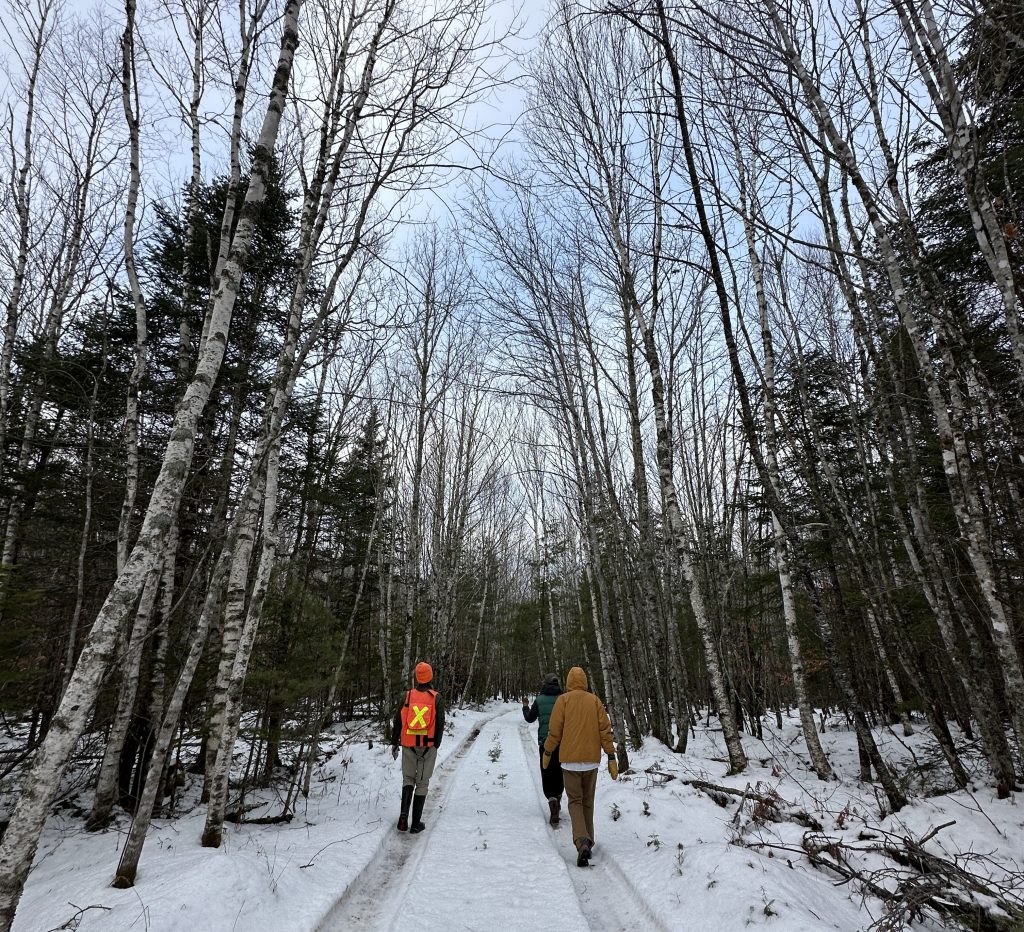
Forested land in Pleasant River will be protected from development. (Nova Scotia Working Woodlands Trust)

About 200 hectares (500 acres) of ecologically significant forest in North Queens will be protected from development by the Nova Scotia Working Woodlands Trust.

The property in Pleasant River is the first one bought by the trust. The acquisition represents about 12.5 per cent of the organization’s goal to protect 4,000 acres by this spring.

Mary Jane Rodger is the executive director of the trust.

“This is a really exciting step for us, obviously, because it’s the first property we’ve ever purchased,” Mary Jane Rodger, the trust’s executive director, told QCCR, “but then also because of some of the unique habitat features and species at risk that exist in North Queens.”

Rodger says the Pleasant River property is a mixed-wood forest that’s about 35 years old. The trust will keep about 100 acres of it wild, while using the remaining land as a demonstration woodlot to help teach sustainable forestry practices.

“Our organization really has the capacity to help this property achieve its full ecological as well as economic potential. Within our model, we’re heavily vested in the working forest aspect as well as the kind of more traditional conservation aspect. So a portion of this property will be permanently protected.

She said the organizaiton will be “showing woodlot owners different ways to steward their lands or manage their woodlot in a way that you get to cut down trees, but still leave most of them standing and hopefully still be economically profitable.”

The property is also significant because it helps the trust get closer to its goal of accessing the carbon offsets market. That will help raise money to cover the long-term costs of protecting and preserving the forest. 

“Land conservation in itself is an expensive endeavor. You have to send someone out to a woodlot every year to make sure there’s no cutting over boundary lines or invasive species or impacts from climate change. So we need to make sure that as an organization, we have the stability to continue to operate into the future because the nature of what we do is very, very long-term.”

The trust bought the property from Neil Emenau for about $300,000. It partnered with the Mersey Tobeatic Research Institute, with funding from Parks Canada and the Southwest Nova Biosphere Region.

The Pleasant River plot is next to the 3,000-hectare (7,400-acre) Pu’tlaqne’katik (“shaving lake” or “shingle lake”) Wilderness Area, which is protected by the Nova Scotia Nature Trust.

The woodlands trust says the acquisition enhances an important conservation corridor around Kejimkujik National Park, which will help foster ecological diversity and strengthen wildlife habitat. The land will be protected from development and conventional clearcutting.

“We see so many lakes and rivers, in Queens County and in Lunenburg County get subdivided and you lose a lot of that ecological integrity when people clear their land all the way to the lake. Another key component of this property is there’s quite a significant river frontage along Pleasant River that will remain forested forever.”

And it will still be accessible to the public.

“So we’re hoping that we can encourage folks to access the property for hiking, snowshoeing, skiing, whatever it might be. I know the ATV community does use it as a thoroughfare as well, which we’d be happy to work with them to continue that access.”

Rodger says the trust hopes to get its charitable status this year, so that it will be more attractive for landowners to sell their properties.

Email: rickcconradqccr@gmail.com

Listen to the audio version of this story below

Nova Scotia bans people from woods to deal with wildfire risk

Department of Natural Resources staff member Mark Shaw works to put out fires in the Upper Tantallon area on May 30, 2023. (Province of Nova Scotia / File)

UPDATED TUES., AUG. 5 at 5:20 p.m.

With drought conditions affecting most of Nova Scotia, Premier Tim Houston announced Tuesday that the province is banning all activities in the woods and on trails, with few exceptions.

“We’re hearing from rural fire departments that are worried about low water levels in the ponds and lakes that they use and really about their overall ability to respond to emergencies,” Houston said at an early afternoon news conference.

“As tinder-dry conditions continue to persist from one end of the province to the other, the risk of wildfires increases and the risk is very, very high right now.

“Effective 4 p.m. today, we’re telling Nova Scotians stay out of the woods. We are restricting travel and activities that really aren’t necessary for most of us. Hiking, camping, fishing and the use of vehicles in the woods are not permitted. Trail systems through woods are off limits. Camping is allowed but only in official campgrounds.”

Houston said the fine for violating the new restrictions is the same as flouting the burn ban — $25,000. So far this year, seven people have been fined. Officials didn’t disclose where those fines were levied.

The province implemented a provincewide ban on open fires on July 30. Hot, dry conditions are expected to last in Nova Scotia for at least two weeks. 

“I know it’s inconvenient and I know it’s the height of summer vacation … but we have to stay out of the woods. It’s a small price to pay right now to avoid the kind of devastation we saw from the wildfires in 2023. And nobody wants that.

“We need all Nova scotians to help keep our firefighters safe along wih everyone else by following the measures we’ve put in place. I’m counting on you to do the right thing. Don’t light a campfire, stay out of the woods and stay safe.”

Commercial activities in the woods will also be restricted. Forestry, mining and any other work must be approved by a local Department of Natural Resources office.

Beaches and parks are still open, but any fires are banned. Private landowners may use their own properties but can’t allow others to use their wooded areas.

Fireworks are also part of the ban. In response to a reporter’s question about whether the penalty for setting off fireworks during a burn ban should also be increased to $25,000, the premier said “that sounds like a good idea to me. (It) should be.” It was unclear whether the fine would be increased.

Houston said the move to restrict activities in the woods was made based on advice from Natural Resources officials.

Minister Tory Rushton said Nova Scotia has already had about 100 wildfires so far this year. He said they were extinguished quickly, but the kind of blaze that officials have battled is different.

“The fires we’re seeing right now are burning deeper into the root system and going deep underground and that kind of fire takes a long time to put out which is exhausting our resources,” Rushton said.

“The aim is to limit unnecessary travel in the woods and activities.”

Dave White, president of the Queens County ATV Association, told QCCR on Tuesday that he supports the province’s decision.

“I think that the premier and Minister Rushton are absolutely making the right call and relying on the right people to give them good information,” White said. 

“As much as I want everybody to have recreational opportunities, now is not the time.”

White said his group and others are meeting with provincial officials on Wednesday to find out what the new restrictions mean for major ongoing work on trail maintenance.

“Those are commercial practices, but I suspect that those will be suspended until conditions improve. Obviously, our priority is to protect our woods and that leads to our community, and our friends, family and our firefighters. That’s the No. 1 thing that we’re looking at right now.”

His group and the Queens Rails to Trails Association have posted on their Facebook pages that all trails are closed.

“It’s important that people follow this. The opportunity to use our trails will come again,” White said.

“Our standard line is we’re not just building rails, we’re also building community, and that means working together to keep everybody safe and happy and healthy.”

Parks Canada issued an advisory late Tuesday afternoon (read that here) detailing these closures in Queens County:

  • All trails in Kejimkujik National Park and National Historic Site
  • Backcountry camping at Kejimkujik National Park and National Historic Site
  • All trails at Kejimkujik National Park Seaside

Front-country camping, beaches, and day-use areas (including Jakes Landing equipment rentals) at Kejimkujik National Park and National Historic Site are still open.

The Region of Queens issued its own news release late Tuesday afternoon with details about which parks and trails are closed in the county. (Read the full news release here.)

The following municipal trails are closed:

  • Pine Grove Park, including Anniversary Trail which connects Pine Grove
    Park to the Trestle Trail
  • Trestle Trail, including the extension that begins at White Point Road and
    George Street and continues running parallel to George Street to connect
    to the Trestle Trail, ending on Bristol Avenue
  • Meadow Pond Trail
  • Queens Place Trail

People who use the Trestle Trail or other wooded trails to get to other parts of Liverpool or Queens County should use Queens County Transit or a taxi service while the restrictions are in place, the region says in the release.

Path Lake Park and Scout Camp Park are also closed. Other non-wooded municipal parks throughout Queens such as
Tupper Park, Centennial Park, Privateer Park, Port Medway Lighthouse Park, sports fields and playgrounds remain open.

The covered picnic areas at Beach Meadows Beach Municipal Park are off limits, because they’re surrounded by wooded areas, but the beach is still open.

The municipal leaf and yard waste site in Western Head is also closed immediately. The region will be posting closure notices in those areas affected, the release said.

White pointed out that Queens County has many options for exercise, including beaches, parks, the walking track at Queens Place Emera Centre and the new all-weather outdoor track at Liverpool Regional High School.

“We still have lots of options for recreation,” White said.

Thousands of hectares and many homes were destroyed and thousands of people evacuated in wildfires in May and June 2023 in Shelburne County and Tantallon. 

The restrictions announced last week and Tuesday will stay in place until Oct. 15, or until conditions improve with several days of steady rain.

Email: rickconradqccr@gmail.com

Listen to the audio version of this story below