New year, new costs: Water bills in Liverpool, Brooklyn to jump by 85 per cent

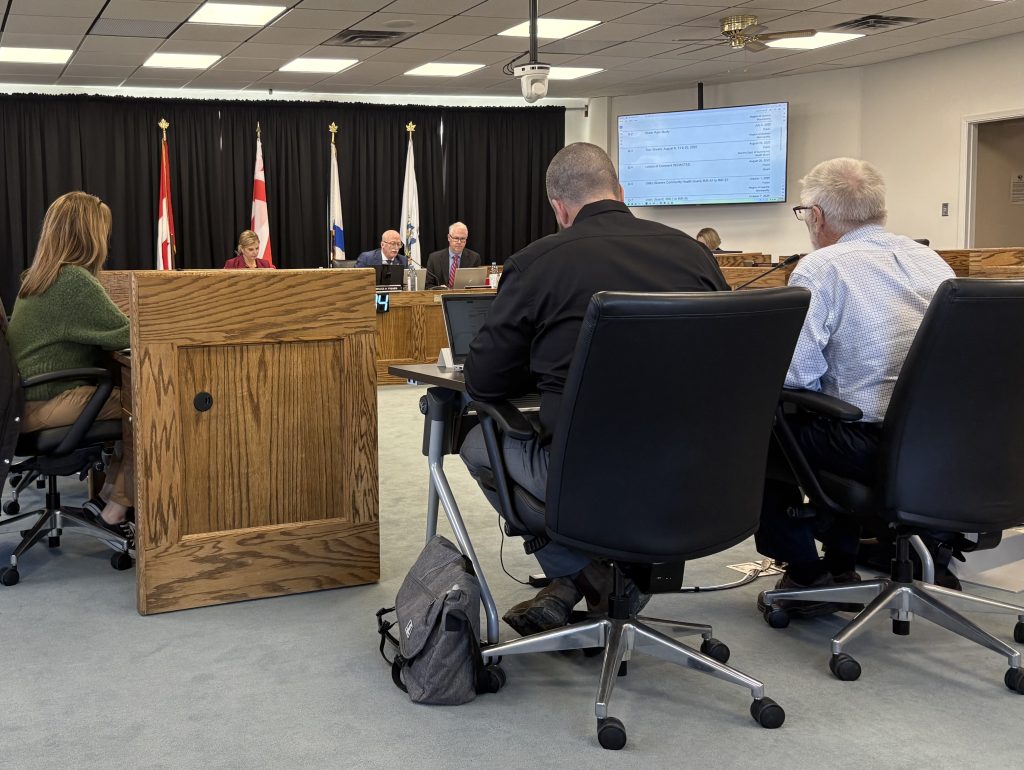
The Nova Scotia Regulatory and Appeals Board has approved increases for customers of the Region of Queens Water Utility. (Rick Conrad)
More than 1,200 water utility customers in Liverpool and Brooklyn will see a significant spike in their bills this year.
In a decision released Dec. 22, the Nova Scotia Regulatory and Appeals Board has approved an 85 per cent increase in water bills for customers of the Region of Queens Water Utility. Once the full increases take effect, it will mean an extra $300 per year for most residential customers.
The new rates took effect Jan. 1, but the board also ordered the utility to phase in the increases to 2027 to help mitigate “rate shock”. It also ordered that interest on the utility’s debt to the municipality be eliminated, and to adjust the utility’s earnings and debt forecasts.
“The Board finds that the utility is in a difficult position,” board members wrote.
“The Board also finds that, other than the minor adjustments directed above, the required revenues in the application are just and reasonable, and necessary to produce safe, reliable water. Yet its rate increases clearly fall within the definition of ‘rate shock’.”
The average residential customer will now pay $531.28 a year, an immediate 60 per cent increase. It will eventually rise to $664.08 in 2027.
At a hearing on Nov. 19, the region said the utility needed to increase rates dramatically to deal with a mounting $1.4-million deficit.
Mayor Scott Christian told QCCR this week that the board’s decision allows the water utility to pay off some of its deficit and continue to provide good-quality drinking water to its customers.
“I think it’s a fair judgement. It gets us to a place where we can run a water utility in a sustainable way, while helping to cushion the blow a little bit to the consumer in terms of the spike in that rate.”
In November, regional councillors approved a utility assistance rebate for water customers on low incomes. People are eligible for up to a $200 annual break on their water bills.
With that rebate applied, the municipality projects less than a one per cent increase this year for people in the lowest income bracket and about a 40 per cent increase by 2027.
Christian said he understands that even with the rebate, some people will still struggle with the higher water costs.
“The utility for a long time was run in a way that didn’t position us to have a sustainable, solvent utility. I understand for sure that people are having a tough time making ends meet. Any additional cost to folks for running a household is always challenging.”
The Queens Community Health Board had opposed the rate increases at the November hearing.
Board chair Tara Druzina did not want to do an interview this week, but said in an emailed statement that the board is concerned about the size of the rate increases “and the impact they will have on households already under financial pressure.”
She applauded council’s adoption of the rebate, but said the region still needs to address affordability concerns for all users.
The review board also “strongly encouraged” the municipality to begin replacing customers’ water meters, most of which are at least 50 years old.
A 2024 report for the utility found that it was losing up to 69 per cent of its treated water, either through leaks or because the old water meters were inaccurate.
“So it was a bit of a moment of clarity for me that sure, some of it is seeping, weeping, leaking, older pipes,” Christian said.
“But then some of it too is that we’re actually delivering the water and it’s being underreported. It helps us to identify an action in addressing that and getting those metres in place that can actually more accurately report that water consumption.”
Christian said the municipality will begin working on replacing those old meters.
He said he’s not sure when the rate increases will be reflected on people’s water bills.
Email: rickconradqccr@gmail.com
Listen to the audio version of this story below