Nova Scotia vaccination rollout continues despite delay

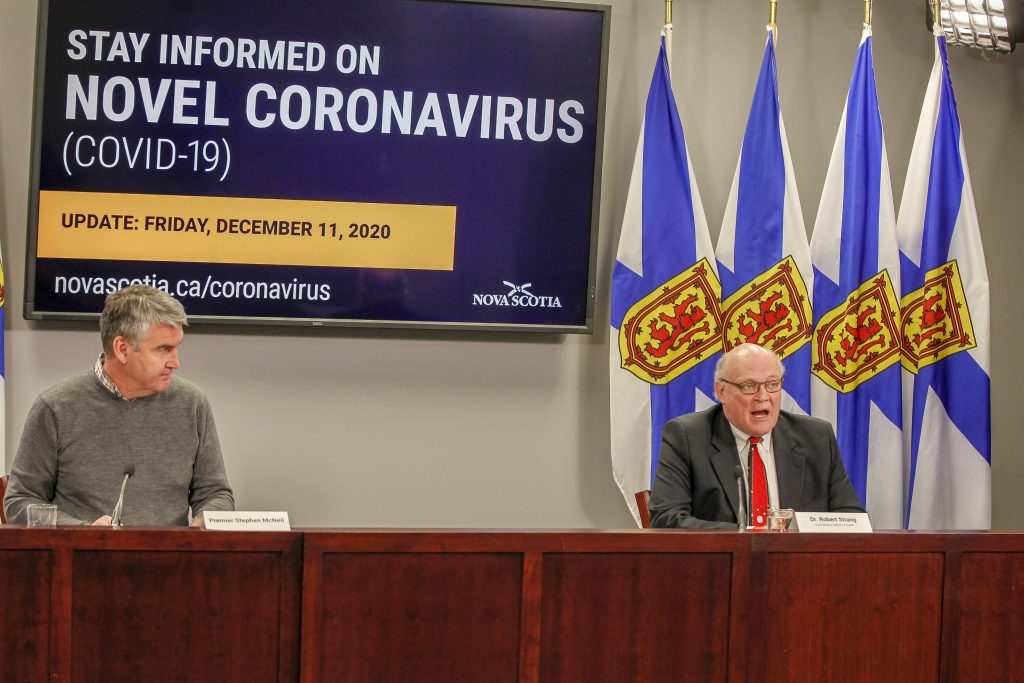
Dr. Robert Strang provides COVID-19 update. Photo Nova Scotia Government

Nova Scotia’s chief medical officer of health says until they can establish a stable supply of COVID-19 vaccine they will continue to hold back the second doses.

Dr. Robert Strang was commenting on news that the manufacturer of the two-dose vaccine Pfizer has said it will reduce the amount of vaccine being shipped to Canada.

That will allow Pfizer to temporary close one of their facilities in Belgium in order to expand production to meet demand.

Premier Stephen McNeil says the province has set up their vaccine schedule to protect against these kind of interruptions.

“We are continuing to give the first shot and hold back the second shot to guarantee people a full vaccination,” said McNeil. “We will continue to do this until we are guaranteed there will be no interruption in supply.”

The province has been allocated 140,000 doses of vaccine for the first 90 days of the year, 13,000 of which have already been received and administered or have been designated to be administered.

First in line in Nova Scotia are frontline healthcare workers and nursing home residents. The second phase will see the vaccine enter the general population starting with the most elderly.

“We’re hopeful to be able to, not January but maybe February or March, to pilot a couple of clinics, one in Halifax, one in Truro,” said Dr. Strang.

He calls the COVID-19 vaccination program the most complex ever rolled out in Nova Scotia.

The province announced two new COVID-19 cases today. Since the start of the second wave in October there have been 461 confirmed cases of COVID-19 in Nova Scotia. Four hundred twenty-nine are resolved and there are currently 32 active cases, none of which require hospitalization.

The low case numbers indicate the public health measures have been working according to Dr. Strang.

He is concerned some people have not been completely forthcoming when contacted by public health officials. He and the premier assured Nova Scotians their information is kept confidential and it can help stop the spread of the coronavirus.

Dr. Strang says he is pleased to see the majority of people are following protocols to keep each other safe and he had a message for those who don’t.

“I would ask any Nova Scotians who think that public health measures don’t apply to them, to think again and to stop. And think about the rest of the province, the rest of Nova Scotians and the sacrifices that so many of us have made.”

Dr. Strang was blunt when asked when he expected life to return to normal.

“That’s a million dollar question,” said Dr. Strang. “Public health people like myself, experts on the virus, I think we’re all on the same page that most of 2021, we need to continue to be following COVID restrictions and COVID protocols.”

Dr. Strang says officials need time to get vaccine out and get enough people vaccinated to create herd immunity. The also need to learn if the vaccine will keep people from spreading the virus even if they don’t show any symptoms.

He expects it will be six to nine months before we’ll begin to know how a post-COVID world will look.

Reported by Ed Halverson 
E-mail: edhalversonnews@gmail.com
Twitter: @edwardhalverson

To listen to the broadcast of this story, press play below.

COVID-19 Vaccine has arrived in Nova Scotia

COVID-19 immunization clinic setting up.

COVID-19 immunization clinic setting up. Photo: Nova Scotia Government

Nova Scotia has received the first 1,950 doses of the Pfizer COVID-19 vaccine.

Starting Wednesday, December 16, the first immunization clinic will be open in Halifax for those working in COVID-19 units in hospitals, emergency departments, critical care units, birth and early labour units at the IWK Health Centre and regional care units.

Once frontline healthcare workers receive their vaccinations, long term care residents and staff will be next in line followed by Nova Scotians over the age of 80.

Deputy chief medical officer of health for Nova Scotia Dr. Gaynor Watson-Creed says healthcare workers were bumped to the front of the line because the number of long-term care staff and residents greatly exceeds the number of initial doses in the province.

“We don’t want to waste the vaccine. We don’t want to let it sit and wait until we accumulate more. Let’s start, at least with the healthcare workers who can come to it and continue to figure out how we work on getting it out to long-term care facilities,” said Watson-Creed.

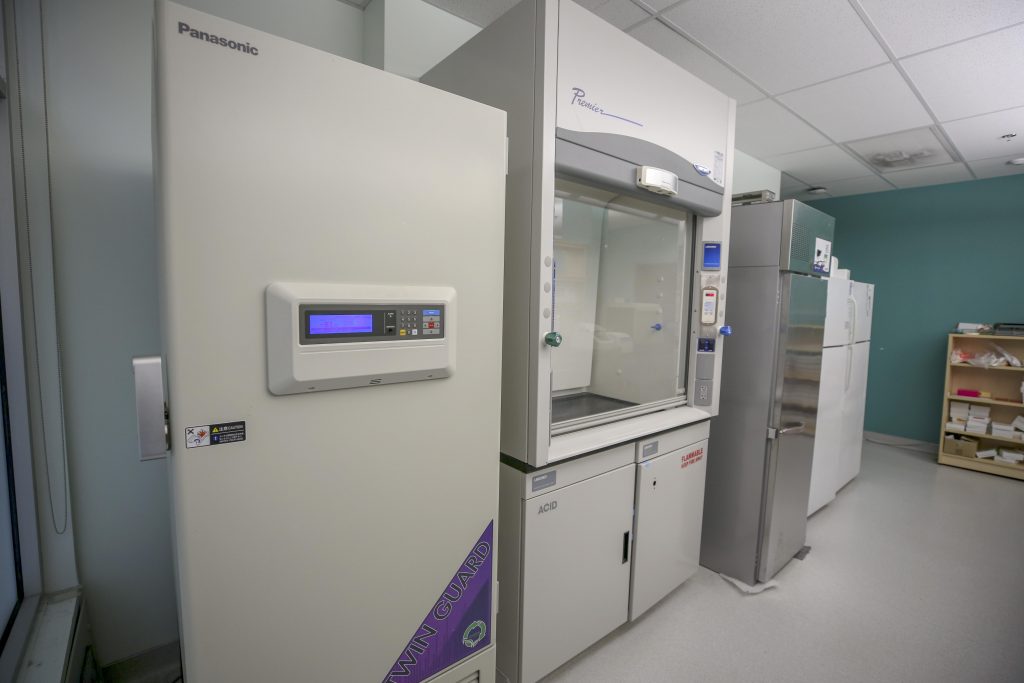
The vaccine is being stored in a super-cold freezer at Dalhousie University. It must be kept at -70 degrees Celsius during transport, which is why, for now those looking to be vaccinated must come to Halifax.

The Nova Scotia Health Authority is working to find freezer units and appropriate spaces to set up distribution points around the province.

Two doses are required for someone to be effectively vaccinated so the province will be holding back half of the 1,950 doses on hand to ensure everyone being vaccinated can receive the proper amount.

The person in charge of COVID-19 Planning and Implementation for the Nova Scotia Health Authority Dr. Shelly McNeil says it’s important people receive the correct dosage to provide the best chance of immunization.

“We know that the vaccine was highly effective up to a couple of months after the second dose,” said McNeil. “So we know that people do need the two doses to get maximum response but we don’t know how long that protection will last beyond a couple of months at this stage.”

McNeil says the province expects to receive 5,800 doses of the vaccine by the end of December.

Dr. Watson-Creed says another manufacturer; Moderna has a vaccine ready for distribution and are just waiting for Health Canada approval.

“We are hoping to get it before the end of December or early January but we are waiting for more information on that. It doesn’t have quite the same requirements as the Pfizer vaccine does,” said Watson-Creed. “We will definitely be adding it into the mix to see if we can use that to extend out the populations of interests but the details are still being worked out.”

Dr. Watson-Creed says it’s an exciting day for Nova Scotians who have been waiting for the hope of a vaccine.

“I, myself, am completely surprised to find us here in December after having started this long journey at the beginning of this year. I think it truly is a milestone and I think it’s one of those things we’ll all remember where we were when COVID-19 vaccines arrived in our province.”

Reported by Ed Halverson 
E-mail: edhalversonnews@gmail.com
Twitter: @edwardhalverson

School holidays extended across Nova Scotia

Premier Stephen McNeil and Dr Robert Strang announce extended holiday

Premier Stephen McNeil and Dr Robert Strang announce extended holiday. Photo: Nova Scotia Government

Christmas is coming early for Nova Scotia students.

Premier Stephen McNeil announced public schools will be closing December 18 and will remain closed until January 11, extending the festive holiday by nine days.

The premier said government is changing the holiday out of an abundance of caution.

“Christmas is coming and we are concerned that as family and friends gather, even in small groups, COVID could show up’ said McNeil. “Just look what happened in some of our western provinces after Thanksgiving weekend. They saw an uptick in cases.”

While students will enjoy an extra week off, school staff will be back January 4 to undergo five days of professional development.

The province’s chief medical officer of health Dr. Robert Strang announced nine new COVID-19 cases bringing the total active number in Nova Scotia to 65.

In the past two days, four cases have been found at The Eden Valley Poultry processing plant in Berwick. Strang announced the plant will be shut for two weeks as a result.

He says the closure is a warning that Nova Scotians can’t let their guard down and relax the precautions they’re taking against spreading the coronavirus.

“Is a stark reminder that we’re not through this yet and things can change very quickly. I know that people are anxious and ready to get back to something a little more normal but moving too quickly away from these restrictions can do the opposite.,” said Strang. “It can put us right back to where we were a month ago and prolong the need for extensive restrictions around COVID.”

Strang says help is on the way in the form of the Pfizer COVID-19 vaccine, which is expected to arrive in Nova Scotia December 15.

He says public health have been running mock drills to ensure they are prepared to meet the stringent handling requirements of the vaccine.

“It is a complicated operation especially with the Pfizer vaccine, given its unique storage and handling requirements. But I hope people can see by the work that’s gone on that we are absolutely ready to receive vaccine and start administering that,” said Strang.

The premier closed the update by saying the virus moves quickly through communities and tracking it will help chart the course for the province over the next few weeks.

“Movement matters. Where we go, what we do, who we’re with and how we behave. I know how important Christmas is to families, especially those who are spread out across our province. But it is our job to do our best to keep you safe. We will have more to say about this next week.”

Reported by Ed Halverson 
E-mail: edhalversonnews@gmail.com
Twitter: @edwardhalverson

Healthcare workers will be first to receive COVID-19 vaccine

New ultra-low temperature freezer will keep vaccine at -70 degrees Celsius

New ultra-low temperature freezer will keep vaccine at -70 degrees Celsius. Photo courtesy Nova Scotia Government

Nova Scotia will be receiving the first batch of COVID-19 vaccines next week.

The province’s chief medical officer of health Dr. Robert Strang announced frontline health care workers dealing with COVID-19 in the central zone will be the first to receive the 1,950 doses of the Pfizer COVID-19 vaccine once it is approved by Health Canada.

“We need to protect and preserve our frontline workers so they are around and can treat, not only those with COVID but everyone else as well,” said Strang.

Each week, beginning December 15, the province expects to receive a supply of the vaccine until it receives its full allotment of 150,000 doses, before the end of March 2021. The Pfizer vaccine requires two doses to be effective which means 75,000 Nova Scotians can be immunized from this supply.

Because the vaccine is delicate and difficult to transport as it must remain at a temperature of -70 Celsius, the focus will be placed on the central zone which currently has the largest number of cases.

The Moderna vaccine, which is expected to be available by the end of the month, is stable at temperatures of -20 Celsius which is consistent with other vaccines.

Strang said Nova Scotia is following the National Advisory Committee on Immunizations (NACI) guidance on COVID-19 vaccines. During the first three months of 2021, the focus will be to immunize: long-term care residents and staff, seniors living in the community beginning with those who are over 80 years of age, then people over 75 and then people over 70 and health-care workers directly involved in patient care.

Strang expects more vaccine will be made available by the federal government throughout the year and it may take some time before it can be administered to everyone who wants to be vaccinated.

“And so we’re probably looking at the fall of 2021 before we’re actually finished with the full COVID immunization program and every Nova Scotian has had an opportunity to get COVID vaccine,” said Strang.

The province also announced testing is now available to everyone whether they are showing symptoms or not. To register, go to the Nova Scotia government coronavirus website.

Strang again cautioned people that Christmas will have to look different this year. While he is still recommending against any travel during the holidays, he said if people choose to ignore the recommendation they need to be aware of what restrictions are in place at their destination if they are travelling outside the province as well as what conditions they need to follow when they return.

“We may still have restrictions on travel within the province, that is yet to be determined,” said Strang. “But regardless if we do or not, staying close to home, avoiding non-essential travel out of the province, focusing on small gatherings, small numbers, making sure if you are getting together, try to do it as much as possible with consistent people over time.”

Strang said sacrificing holiday time with loved ones this year will be rewarded in the long run.

“If we have fewer people around our tables this year that means that everyone is going to be here next year to celebrate. I believe that’s a price we’re all willing to pay.”

Reported by Ed Halverson 
E-mail: edhalversonnews@gmail.com
Twitter: @edwardhalverson